
Driving in Rain, Fog, and Snow: Adapting Your Habits to the Conditions

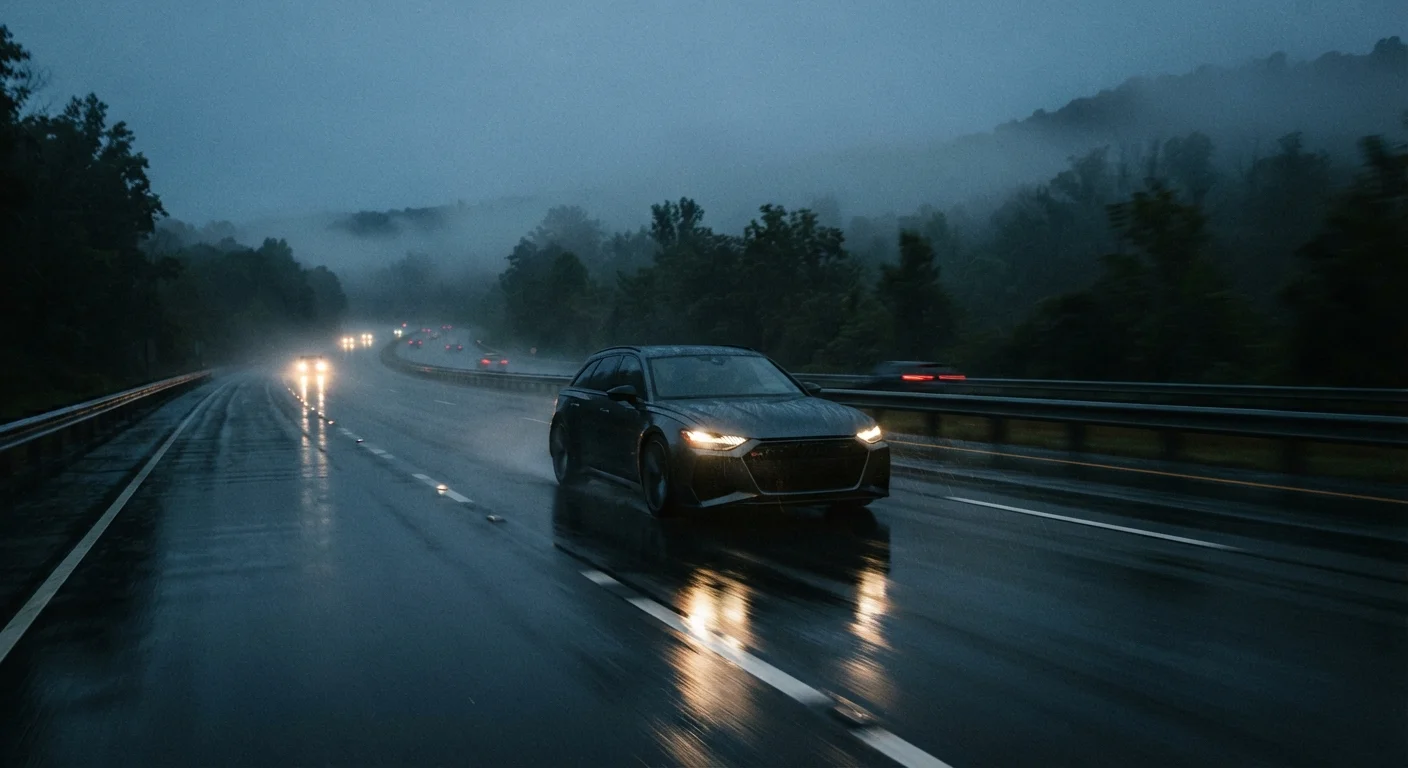
Photo: InsightsBlock.com | Access Information With Ease editorial
Key Takeaways
- Reducing speed is the single most effective adjustment in any adverse weather condition.
- Rain, fog, and snow each create distinct hazards that require different technique responses.
- Proper vehicle maintenance - tires, wipers, lights - is foundational to safe driving in poor conditions.
- Increasing following distance gives you critical extra seconds to react when traction is reduced.
- Low-beam headlights, not high beams, improve visibility in fog without worsening glare.
Why Weather Demands a Different Mindset
Most drivers treat their habits as fixed regardless of conditions. That's a mistake. Rain, fog, and snow alter three fundamental variables simultaneously: traction, visibility, and stopping distance. When any one of those degrades, your margin for error shrinks - and when all three degrade together, routine driving becomes genuinely hazardous.
According to data from the Federal Highway Administration, nearly 21% of vehicle crashes each year are weather-related, with wet pavement and rain accounting for the largest share. Snow and ice contribute significantly during winter months. Understanding what each condition actually does to your vehicle's physics - and adjusting accordingly - is the foundation of adverse-weather safety.
This guide is focused on technique and habit adjustment. For keeping your vehicle mechanically ready, see our car maintenance resource hub for practical guidance on tires, wipers, and lights.
Driving in Rain: Traction and Hydroplaning
Rain reduces road friction immediately, but the greatest danger often comes in the first 10-15 minutes of a storm, when oil and debris mix with water to create an especially slippery surface before rain washes it away.
Reduce speed significantly below the posted limit in wet conditions
Double your following distance in rain - triple it in heavy rain
Turn on headlights whenever wipers are in use
Brake early and gently on snow and ice
Avoid cruise control in rain, fog, or snow
Hydroplaning - where your tires ride on a film of water rather than the road surface - can occur at speeds as low as 35 mph on worn tires or heavily puddled roads. If you feel the steering go light, ease off the accelerator gradually rather than braking sharply. Steer straight or very gently toward your intended path until traction returns.
Headlights should be on any time wipers are running - it's legally required in many states and makes you significantly more visible to other drivers.
Driving in Fog: Seeing and Being Seen
Fog is one of the most underestimated hazards on the road. Drivers frequently overestimate how far they can see, a phenomenon researchers sometimes call the "speed-fog illusion." Your actual stopping distance can easily exceed your visible stopping distance in dense fog.
“In fog, drivers consistently overestimate how far ahead they can see. The brain fills in what it expects, not what is actually there. That gap between perception and reality is where crashes happen.”
— Traffic Safety Research Community, Paraphrased observation from published road safety research on fog-related crash causation
Use low-beam headlights in fog, not high beams. High beams reflect off water droplets and create glare that reduces your effective visibility. If your vehicle has dedicated front fog lights, use them - they cast a lower, wider beam designed for these conditions.
Keep your speed well below the posted limit, stay alert for stopped vehicles, and be prepared for conditions to change rapidly, especially near bodies of water or valleys where fog pools quickly.
For a broader look at how low visibility affects driver performance, our guide on night driving hazards covers many overlapping challenges.
Driving in Snow and Ice: Momentum and Smoothness
Snow and ice punish abrupt inputs. Hard braking, sharp steering, and sudden acceleration all reduce your control on slippery surfaces. The core principle for winter driving is smoothness: every input should be gradual and deliberate.
On ice, stopping distances can be ten times longer than on dry pavement. That number is not an exaggeration - it fundamentally changes how much following distance you need. A gap that feels generous in summer may be dangerously short in freezing conditions.
Know what kind of brakes your vehicle has. Modern vehicles with ABS (Anti-lock Braking System) are designed to be applied with steady, firm pressure - pumping the brakes as you would with older systems actually reduces their effectiveness. If ABS activates, you'll feel a pulsing sensation; maintain firm pressure and steer normally.
Black ice - a nearly transparent glaze that forms on bridges, overpasses, and shaded road sections - is especially dangerous because it's nearly invisible. Treat any road surface that looks unusually dark or reflective with caution, particularly in temperatures near or below freezing.
For high-speed environments where adverse weather amplifies risk even further, see our highway driving safety guide for additional technique guidance.
Vehicle Readiness: The Other Half of the Equation
No driving technique compensates fully for a vehicle that isn't prepared for poor conditions. Tread depth directly determines how effectively tires channel water and grip snow. Most tire manufacturers and safety organizations recommend replacing tires before tread depth falls below 4/32 of an inch for winter conditions - although the legal minimum in most states is 2/32 of an inch.
21%
Annual US crashes that are weather-related
According to Federal Highway Administration data, weather-related crashes account for roughly 1.2 million incidents annually, with wet pavement as the leading contributor.
10×
Stopping distance increase on ice vs. dry pavement
Safety researchers and driving educators widely cite that stopping distances on ice can be up to ten times longer than those measured on dry roads at the same speed.
4/32"
Recommended minimum tread depth for winter driving
Many tire and safety organizations recommend replacing tires before tread falls below 4/32 of an inch in winter conditions, compared to the 2/32" legal minimum in most US states.
Windshield wipers degrade with UV exposure and temperature cycling. If yours are streaking or skipping, replace them before winter arrives - not after your first snowstorm. Similarly, verify that your defrost system - front and rear - operates correctly before you need it.
Headlights that are cloudy or dim significantly reduce your visibility in rain and fog. Restoration or bulb replacement is a straightforward maintenance item that can meaningfully improve nighttime and adverse-weather performance. Our car maintenance hub covers when and how to address these items.
This article is for general informational purposes. Driving conditions, road regulations, and vehicle specifications vary. Always follow posted speed limits, local traffic laws, and the guidance of qualified automotive professionals for vehicle maintenance and safety decisions.
The content provided on our blog site traverses numerous categories, offering readers valuable and practical information. Readers can use the editorial team’s research and data to gain more insights into their topics of interest. However, they are requested not to treat the articles as conclusive. The website team cannot be held responsible for differences in data or inaccuracies found across other platforms. Please also note that the site might also miss out on various schemes and offers available that the readers may find more beneficial than the ones we cover.