
Cognitive Distortions: The Thought Patterns That Quietly Skew Your Thinking

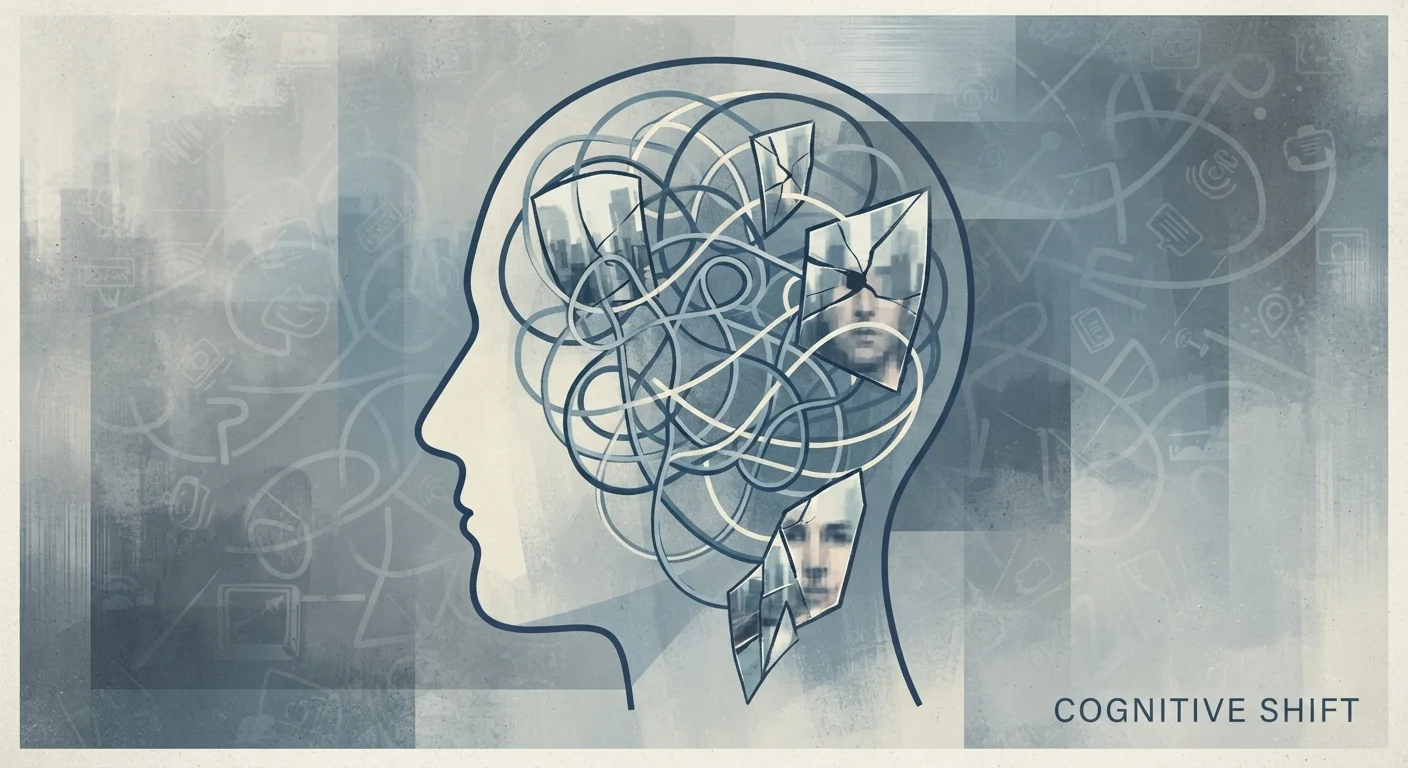
Photo: InsightsBlock.com | Access Information With Ease editorial
What Are Cognitive Distortions?
Cognitive distortions are habitual patterns of thinking that systematically misrepresent reality. First described in detail within cognitive behavioral therapy (CBT) research, these mental shortcuts often feel completely reasonable in the moment - which is precisely what makes them difficult to notice. They are not signs of weakness or mental illness; most people experience them regularly.
The concept was developed through the clinical work of psychiatrist Aaron Beck in the 1960s and later expanded by psychologist David Burns, who catalogued common distortions and made them accessible to a general audience. Today, awareness of these patterns is a foundational element of many evidence-based approaches to mental wellness and stress management.
Cognitive distortion
An automatic, biased pattern of thinking that consistently misrepresents reality. These patterns feel convincing but often reflect internal emotional states rather than objective facts.
Cognitive behavioral therapy (CBT)
A structured, evidence-based form of psychotherapy that examines the relationship between thoughts, feelings, and behaviors. It is one of the most researched psychological treatments available.
Cognitive restructuring
A technique used in CBT that involves identifying distorted thoughts, evaluating the evidence for them, and developing more balanced, accurate alternatives.
Catastrophising
A cognitive distortion in which a person automatically assumes the worst possible outcome will occur. It often involves both magnifying the likelihood of a bad outcome and minimizing one's ability to cope with it.
Emotional reasoning
The cognitive distortion of treating an emotion as proof of a factual state - for example, concluding that a situation is dangerous simply because it feels frightening.
Overgeneralisation
Drawing a broad, sweeping conclusion based on a single incident or a small sample of events, typically using absolute language like 'always' or 'never.'
Understanding that a thought is distorted doesn't automatically make it go away - but it does create space between the trigger and your reaction. That pause is where meaningful mental shifts can begin. If you've encountered common mental health myths, you may recognize how distorted thinking can reinforce them.
This article is for general informational and educational purposes only and is not a substitute for professional mental health advice, diagnosis, or treatment. If you are experiencing persistent distress, please consult a qualified mental health professional.
The Most Common Cognitive Distortions
While researchers have catalogued well over a dozen distinct patterns, several appear especially frequently in everyday thinking.
| Origin of the term | Aaron Beck's cognitive therapy research (1960s) (Expanded for general audiences by David Burns, Feeling Good (1980)) |
| Number of commonly cited distortions | 10-15 distinct patterns (Varies by CBT framework and source) |
| Primary therapeutic approach | Cognitive Behavioral Therapy (CBT) (American Psychological Association) |
| Who experiences distortions | Most people, across all backgrounds (General consensus in cognitive psychology literature) |
| First step to change | Awareness and identification of the pattern (Core principle of cognitive restructuring) |
- All-or-nothing thinking (black-and-white thinking): Viewing situations in absolute terms - success or failure, perfect or worthless - with no middle ground. Example: receiving one piece of critical feedback and concluding you are entirely incompetent.
- Catastrophising: Automatically assuming the worst possible outcome will occur, and that it will be unbearable. Often called "magnification" when paired with minimizing positive events.
- Mind-reading: Assuming you know what others are thinking - typically that they are judging or thinking negatively of you - without any real evidence.
- Overgeneralisation: Drawing a sweeping conclusion from a single event (e.g., "I always fail at this kind of thing").
- Personalisation: Holding yourself responsible for external events that are not fully in your control, or taking things personally that aren't directed at you.
- Emotional reasoning: Treating feelings as facts - assuming that because you feel a certain way, the situation must objectively be that way (e.g., "I feel stupid, therefore I must be stupid").
- Should statements: Applying rigid rules to yourself or others using words like "should," "must," or "ought to," which can breed guilt, frustration, and resentment.
- Mental filter: Focusing exclusively on one negative detail while ignoring the broader context or positives - like fixating on a single critical comment within otherwise glowing feedback.
No single distortion operates in isolation. They frequently cluster together, amplifying one another and making a distorted interpretation feel especially convincing.
Recognising and Reframing Distorted Thoughts
Awareness is the first and most important step. Keeping a simple thought journal - noting the situation, the automatic thought, and the emotion it triggered - can help surface patterns that normally run on autopilot.
Reframing Is Not the Same as Positive Thinking
Once identified, cognitive distortions can often be examined using a process called cognitive restructuring: questioning the evidence for and against the thought, considering alternative interpretations, and arriving at a more balanced perspective. This is not the same as "positive thinking" - the goal is accuracy, not forced optimism.
Common reframing questions include: What evidence actually supports this thought? What evidence contradicts it? Would I apply this same standard to a friend in my situation? What is a more realistic interpretation?
It's worth noting that recognising distortions is a skill that develops with practice. Many people find it helpful to work through this process with a therapist trained in CBT or a related approach. Just as myths about learning can hold people back unnecessarily, the mistaken belief that "this is just how I think" can prevent someone from developing healthier mental habits. Always consult a qualified mental health professional for guidance tailored to your personal circumstances.
The content provided on our blog site traverses numerous categories, offering readers valuable and practical information. Readers can use the editorial team’s research and data to gain more insights into their topics of interest. However, they are requested not to treat the articles as conclusive. The website team cannot be held responsible for differences in data or inaccuracies found across other platforms. Please also note that the site might also miss out on various schemes and offers available that the readers may find more beneficial than the ones we cover.