
Laminate vs. Hardwood Flooring: A Side-by-Side Look at Durability, Feel, and Upkeep

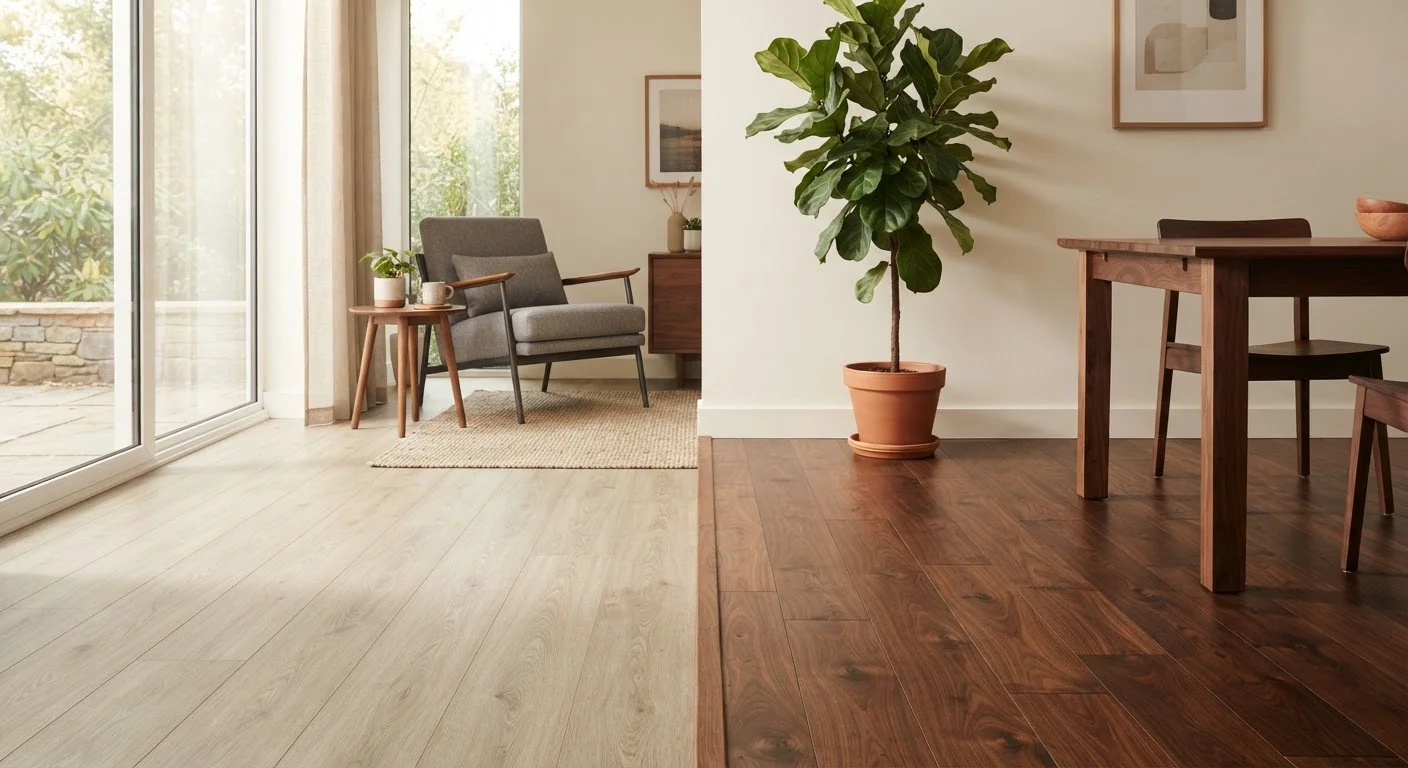
Photo: InsightsBlock.com | Access Information With Ease editorial
Key Takeaways
- Laminate costs less upfront and resists scratches better, but cannot be sanded or refinished.
- Hardwood can be refinished multiple times, potentially lasting 50-100 years with proper care.
- Neither material is ideal for wet areas like bathrooms, though some laminate products have improved moisture resistance.
- Hardwood generally adds more perceived value to a home than laminate flooring.
- Maintenance requirements differ significantly - laminate is more forgiving of everyday wear.
- Your subfloor type, household traffic, and budget all shape which choice makes practical sense.
What Each Material Actually Is
Understanding what you're buying is the first step to choosing well. Hardwood flooring is milled from solid timber - each plank is a single piece of natural wood from species like oak, maple, or walnut. Its natural grain, warmth, and variation are genuine, not simulated.
Laminate flooring, by contrast, is a manufactured product. A high-resolution photographic layer printed to mimic wood grain is bonded to a dense fiberboard core, then topped with a clear protective wear layer. Modern printing technology has made laminate impressively realistic in appearance, but it remains a composite material rather than a natural one.
This structural difference is the root of nearly every performance distinction between them.
| Criterion | Laminate Flooring | Hardwood Flooring |
|---|---|---|
| Material composition | Manufactured composite with photo layer | Solid milled natural timber |
| Typical upfront cost | Generally lower | Generally higher |
| Scratch resistance | High (hard wear layer) | Moderate (varies by species) |
| Refinishable | No | Yes, multiple times |
| Moisture tolerance | Moderate (some products improved) | Low (warps with excess moisture) |
| Lifespan potential | 15-25 years typical | 50-100 years with refinishing |
| Underfoot feel | Can feel hollow or lightweight | Solid, warm, natural |
| Perceived home value impact | Modest | Generally positive |
Durability and How Each Floor Holds Up Over Time
Laminate's wear layer gives it a meaningful advantage against surface scratches and scuffs - a practical consideration in homes with heavy foot traffic, pets, or children. However, laminate cannot be refinished. Once the wear layer is compromised or the surface is visibly worn, replacement is the only remedy.
Hardwood is softer at the surface but resilient over the long arc of ownership. A well-maintained hardwood floor can be sanded and refinished three to five times or more, depending on the plank thickness. This means a floor installed today could look fresh again in 20 years with the right care - something laminate simply cannot offer.
3-5x
Times hardwood can be refinished
Solid hardwood planks at standard thickness can typically be sanded and refinished multiple times before replacement is needed.
15-25 yrs
Average laminate floor lifespan
With proper care and in low-to-moderate traffic areas, quality laminate flooring generally lasts between 15 and 25 years before showing significant wear.
~$3-$8
Typical laminate cost per sq ft installed
Material and installation costs vary widely by region and product quality; always obtain local estimates for accurate budgeting.
Both materials are vulnerable to standing water. Prolonged moisture exposure causes laminate to swell at the seams and can cause hardwood to cup or warp. Neither should be installed in areas with routine water exposure without specific product guidance from the manufacturer.
Feel, Sound, and Everyday Living
Walk across both floors barefoot and the differences become immediately apparent. Hardwood has a natural warmth and solidity underfoot that many homeowners describe as a premium sensory experience. Sound tends to feel grounded rather than hollow.
Laminate, particularly thinner products, can produce a hollow or slightly clicking sound underfoot, and may feel less substantial. Higher-quality laminate with a thicker core and an attached underlayment significantly reduces this gap, but the difference in feel is still noticeable to most people.
In terms of temperature, both materials can feel cool in winter without radiant heat beneath them. If you use underfloor heating, confirm compatibility with your specific product before installation - not all laminate or engineered hardwood products are rated for use with radiant heat systems.
Engineered Hardwood: A Middle Ground Worth Knowing
Maintenance: What Each Floor Needs
Day-to-day upkeep is similar for both: regular sweeping or vacuuming to remove grit that can cause micro-scratches, and damp (not wet) mopping with appropriate cleaners. Never saturate either surface with water.
Where they diverge is in long-term care. Hardwood floors can be spot-repaired, screen-sanded for light surface scratches, or fully refinished when worn. Laminate cannot - minor chips and deep scratches are typically permanent unless the damaged plank is replaced. Fortunately, laminate's click-lock installation system often makes individual plank replacement more straightforward than it would be with nailed-down hardwood.
Hardwood may also need periodic re-coating with a fresh layer of finish (polyurethane or oil, depending on the original treatment) to maintain its protective seal - typically every 5 to 10 years depending on traffic.
The content provided on our blog site traverses numerous categories, offering readers valuable and practical information. Readers can use the editorial team’s research and data to gain more insights into their topics of interest. However, they are requested not to treat the articles as conclusive. The website team cannot be held responsible for differences in data or inaccuracies found across other platforms. Please also note that the site might also miss out on various schemes and offers available that the readers may find more beneficial than the ones we cover.