
Disputing Errors on Your Credit Report: A Step-by-Step Walkthrough

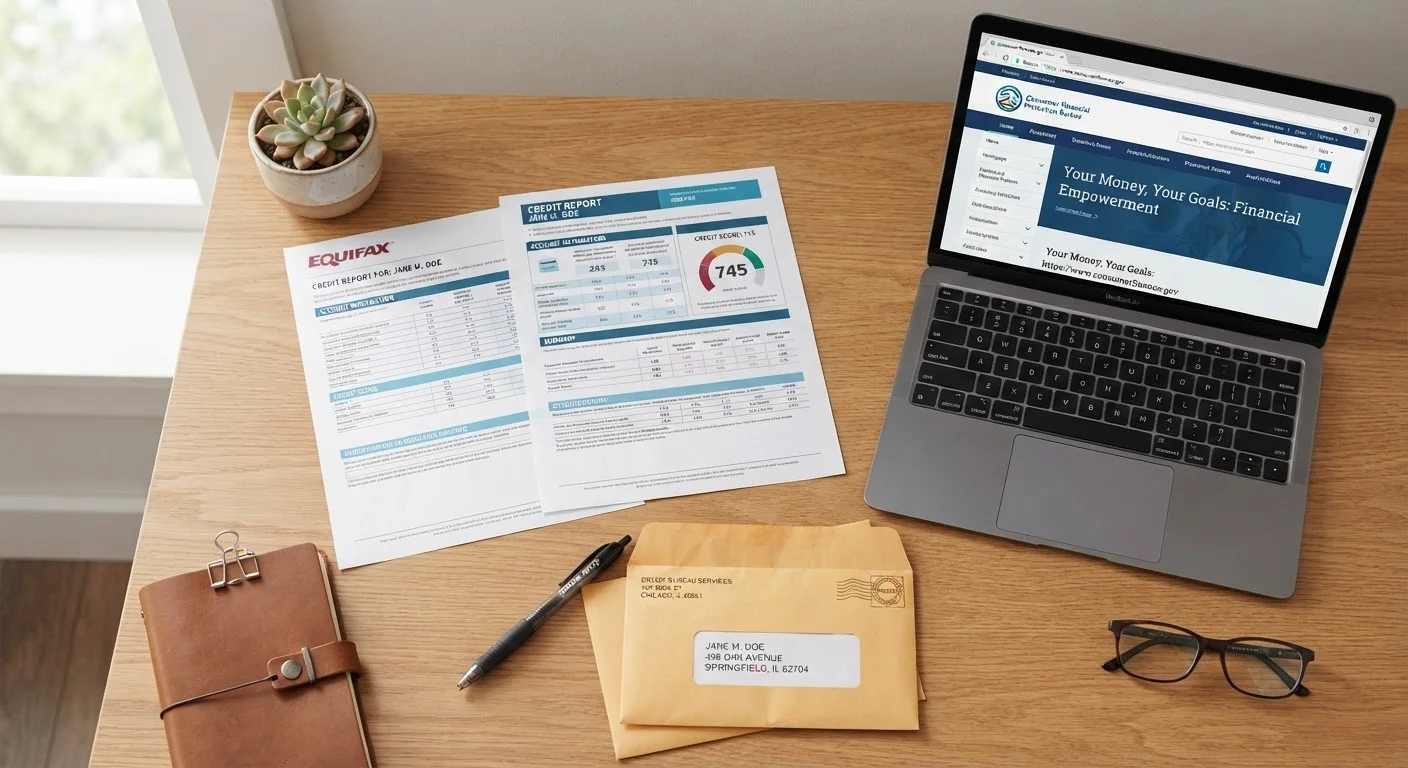
Photo: InsightsBlock.com | Access Information With Ease editorial
Key Takeaways
- Credit report errors are common and can affect your score - checking your reports regularly is essential.
- You have a federally protected right to dispute inaccurate information with each credit bureau at no cost.
- Bureaus are generally required to investigate disputes within 30 days of receiving them.
- Submitting disputes in writing with documentation creates a stronger, trackable record.
- If a bureau doesn't resolve your dispute satisfactorily, you can escalate to the CFPB or pursue other remedies.
Why Credit Report Errors Are Worth Taking Seriously
Research by the Federal Trade Commission has found that a meaningful share of consumers have at least one error on a credit report that could affect their score. Even a modest score decrease - caused by a misreported late payment or an account that isn't yours - can translate into higher interest rates on loans, rejected applications, or unfavorable insurance terms in states where credit-based pricing is permitted.
It's also worth separating two commonly confused concepts: your credit report is the raw data file maintained by each bureau, while your credit score is a numerical interpretation of that data. An error lives in the report; its effects ripple into your score. For a fuller explanation of how these two things relate, see Credit Reports and Credit Scores Are Not the Same Thing.
The dispute process is governed by the Fair Credit Reporting Act (FCRA), a federal law that gives consumers the right to challenge inaccurate or incomplete information - and requires bureaus to investigate and respond within defined timeframes. You don't need a lawyer or a paid service to use it.
AnnualCreditReport.com
The federally authorized site where consumers can access their free credit reports from Equifax, Experian, and TransUnion.
Supporting documentation
Bank statements, payment confirmations, court documents, or letters that substantiate your dispute claim.
Certified Mail service (USPS)
Provides timestamped proof of delivery when submitting a written dispute by post.
CFPB Complaint Portal (consumerfinance.gov)
Used to escalate unresolved disputes or file complaints against bureaus or furnishers.
How to Dispute an Error: Follow These Steps
What you will need
Obtain your credit reports from all three bureaus
Visit AnnualCreditReport.com - the only federally authorized source for free credit reports - and request your reports from Equifax, Experian, and TransUnion. All three bureaus may have different data, so an error on one report may not appear on the others.
Download or print each report and review them carefully. Errors you may encounter include: accounts that don't belong to you, incorrect payment history, duplicate accounts, outdated personal information, or accounts listed as open when they've been closed.
Identify and document the specific error
Before filing anything, clearly define what is wrong and why. Vague disputes - such as "I don't recognize this account" - are less effective than specific, evidence-supported claims. Note the account name, account number, the nature of the error, and what the correct information should be.
Gather any documents that support your position: payment confirmations, bank statements, a letter from the creditor, identity theft reports if applicable, or a court discharge notice for a bankruptcy item. The stronger your documentation, the easier the bureau's investigation becomes.
Submit your dispute to the relevant bureau(s)
Each major bureau accepts disputes through three channels: online portals, phone, and written mail. Written disputes generally create the most durable paper trail, especially if you anticipate needing to escalate.
Your dispute letter or form should include: your full name and address, a clear description of the item in dispute, the reason it is inaccurate, the correction you're requesting, and copies (never originals) of your supporting documents. Include your date of birth and the last four digits of your Social Security number so the bureau can locate your file.
Submit separately to each bureau that shows the error - they do not share dispute filings with each other automatically.
Track the 30-day investigation window
Under the Fair Credit Reporting Act (FCRA), bureaus are generally required to complete their investigation within 30 days of receiving your dispute (45 days in certain circumstances). During this time, the bureau contacts the creditor or lender that reported the information - known as the furnisher - to verify the data.
Keep a log: note the date you submitted, the method used, any confirmation number or tracking information, and the expected response deadline. If you submitted by certified mail, your Return Receipt postcard confirms the delivery date.
Review the bureau's written response
The bureau must send you written results of its investigation. If the error was corrected or removed, request an updated copy of your report to confirm the change. If the investigation upheld the existing information - meaning the furnisher verified it as accurate - the item stays on your report.
You still have options. You can request that the bureau add a 100-word consumer statement to your file explaining your position. You can also contact the furnisher directly to dispute the data at the source, which sometimes produces a different outcome.
Escalate if the dispute is not resolved
If you believe the bureau or furnisher has not complied with FCRA requirements, you can file a complaint with the Consumer Financial Protection Bureau (CFPB) at consumerfinance.gov. You may also file with the Federal Trade Commission (FTC). In cases involving willful noncompliance, consumers may have the right to seek damages in federal court - consulting an attorney who specializes in consumer law is advisable before taking that step.
Before applying for a mortgage, auto loan, or other major credit product, clearing up errors first can meaningfully affect the terms you're offered. See our pre-application credit checklist for a broader view of what to address before you apply.
Disputing Does Not Guarantee Removal
Once your report reflects accurate information, maintaining that accuracy over time comes down to consistent financial habits. Our guide to habits that support a stronger credit profile covers what lenders and scoring models actually reward over the long run.
Send Disputes via Certified Mail
This article is for general informational purposes only and does not constitute financial, legal, or credit counseling advice. Consult a qualified professional for guidance specific to your situation.
The content provided on our blog site traverses numerous categories, offering readers valuable and practical information. Readers can use the editorial team’s research and data to gain more insights into their topics of interest. However, they are requested not to treat the articles as conclusive. The website team cannot be held responsible for differences in data or inaccuracies found across other platforms. Please also note that the site might also miss out on various schemes and offers available that the readers may find more beneficial than the ones we cover.