
Why Paying Only the Minimum on a Credit Card Costs You So Much

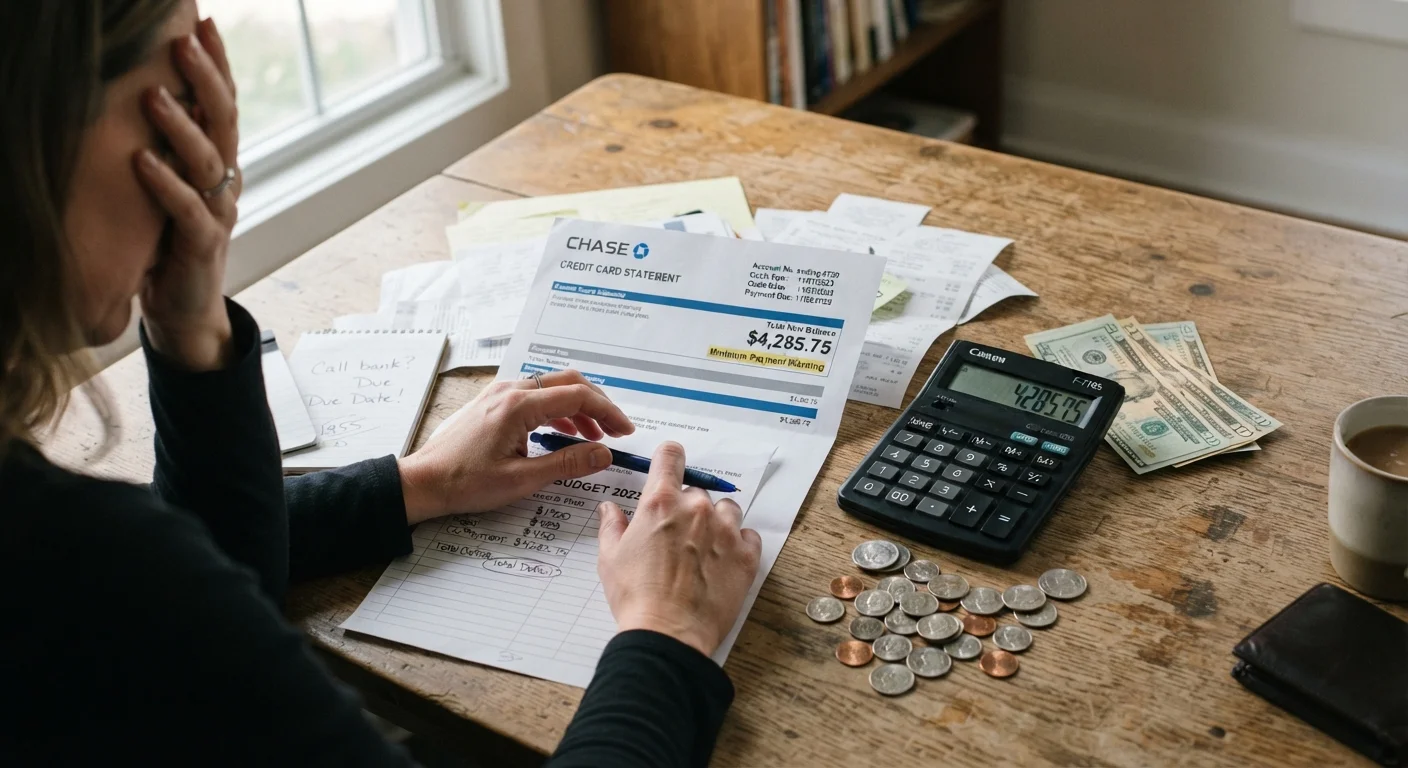
Photo: InsightsBlock.com | Access Information With Ease editorial
Key Takeaways
- Minimum payments keep accounts current but can extend repayment by years or even decades.
- Most of a minimum payment goes toward interest, not the principal balance.
- The total interest paid over time can exceed the original purchase amount.
- Paying even a modest amount above the minimum dramatically shortens repayment time.
- Federal law requires issuers to disclose on statements how long minimum-only repayment will take.
Where Your Minimum Payment Actually Goes
When a credit card issuer charges interest, it is applied to your balance before your payment reduces principal. On a $3,000 balance at a 22% annual percentage rate (APR), the monthly interest charge alone is roughly $55. If your minimum payment is $60, only about $5 of that payment chips away at what you actually owe.
This is the core of the minimum payment trap: the structure is heavily weighted toward servicing interest, not eliminating debt. As long as the balance stays high, interest charges stay high - and the cycle continues.
“The minimum payment is designed to keep you as a customer as long as possible. Paying only the minimum is one of the most expensive financial habits a person can have.”
— Jean Chatzky, Personal finance author and financial journalist
The math becomes more visible on your credit card statement. Federal law, through the CARD Act of 2009, requires issuers to print a minimum payment warning showing how long payoff takes and the total interest cost at that pace. Many cardholders are surprised to see figures like 8 or 10 years on a balance they expected to clear in one or two.
How the Numbers Add Up Over Time
Consider a $3,000 balance at a 22% APR - close to the national average rate for cards that carry a balance. If the minimum is set at 2% of the balance (with a $25 floor), and you pay only that amount each month, the repayment timeline stretches beyond 15 years and total interest paid can exceed the original balance.
22%+
Average APR on cards carrying a balance
According to Federal Reserve data, interest rates on revolving credit card balances have risen sharply in recent years, making slow repayment increasingly costly.
15+ years
Estimated payoff time on minimum-only payments
On a $3,000 balance at a 22% APR with a 2% minimum payment structure, repayment can stretch well past a decade when only the minimum is paid each cycle.
>$1,000
Potential interest savings from a fixed higher payment
Switching from the sliding minimum to a fixed payment modestly above that floor can save over $1,000 in total interest on a mid-size balance at typical rates.
Increasing the payment to a fixed $100 per month - rather than the sliding minimum - cuts the repayment period to roughly 3.5 years and saves well over $1,000 in interest, depending on the exact rate. The amount of extra cash required each month is relatively modest; the impact on total cost is substantial.
This dynamic also applies to other forms of consumer borrowing. Car loan interest follows similar compounding logic, but credit cards typically carry far higher rates, making the cost of slow repayment even steeper.
Breaking the Pattern: Practical Steps
The most direct fix is to pay more than the minimum every month - and to keep that payment fixed rather than letting it drift down as the balance falls. Here's how to approach it:
- Set a fixed monthly payment. Choose an amount above the minimum you can sustain, and treat it like any other bill. Avoid adjusting it downward just because the required minimum has dropped.
- Target the highest-rate balance first. If you carry balances on multiple cards, directing extra payments toward the card with the highest APR reduces total interest cost faster.
- Use windfalls deliberately. Tax refunds, bonuses, or other lump sums applied to high-rate debt can significantly shorten your repayment horizon. Whether to save or pay down debt with extra cash depends on your interest rates and financial cushion.
- Avoid adding new charges. Paying extra while continuing to charge new purchases to the card can offset progress entirely.
Minimum payments are not inherently wrong - they exist for situations where cash is genuinely tight. The problem is treating them as a long-term repayment strategy. Habits that extend debt repayment often start with small, normalized decisions like this one.
This article is for general informational and educational purposes only and does not constitute personalized financial or legal advice. Consult a qualified financial professional for guidance specific to your situation.
Frequently Asked Questions
The content provided on our blog site traverses numerous categories, offering readers valuable and practical information. Readers can use the editorial team’s research and data to gain more insights into their topics of interest. However, they are requested not to treat the articles as conclusive. The website team cannot be held responsible for differences in data or inaccuracies found across other platforms. Please also note that the site might also miss out on various schemes and offers available that the readers may find more beneficial than the ones we cover.