
The Compounding Effect: Why Small, Consistent Deposits Grow Into Large Sums

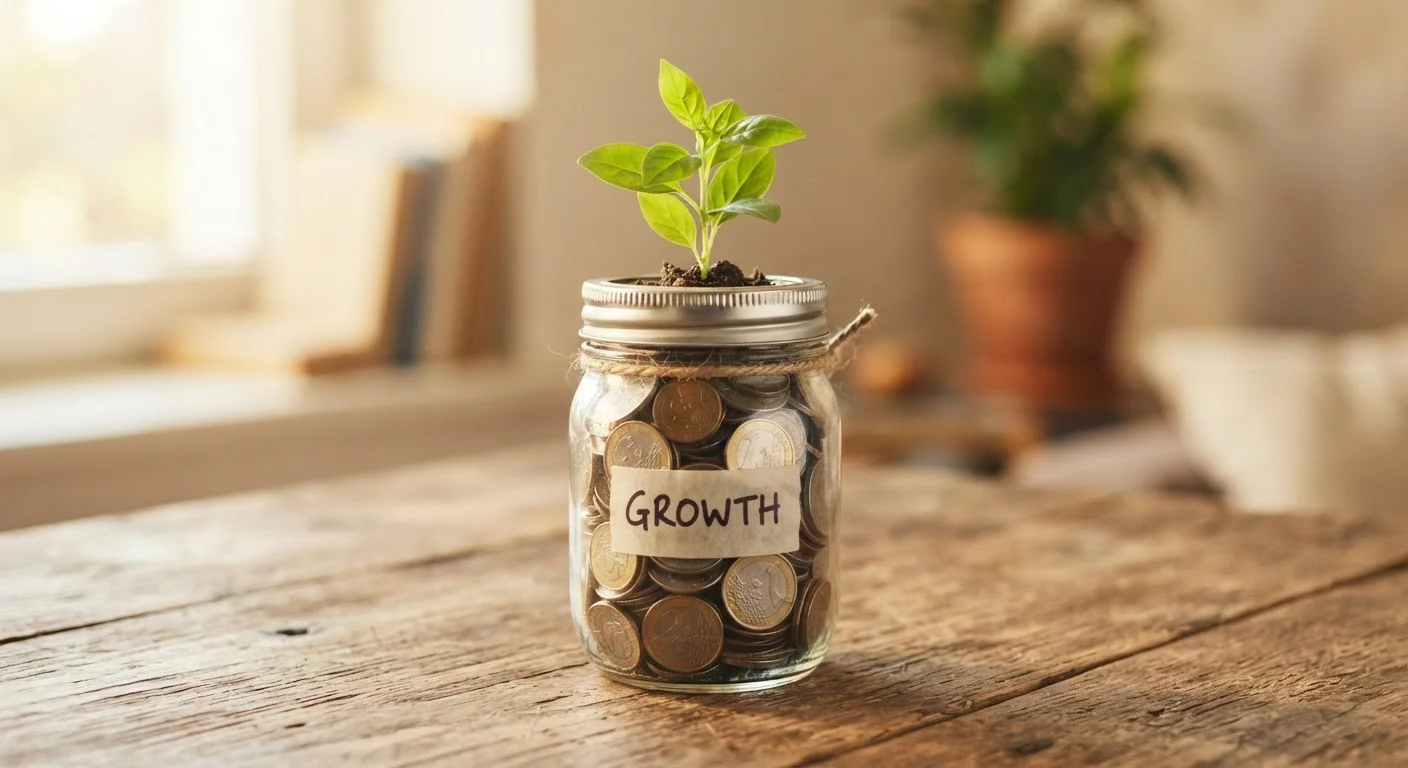
Photo: InsightsBlock.com | Access Information With Ease editorial
Key Takeaways
- Compound interest grows your savings by earning returns on previous returns, not just your original deposit.
- Starting earlier has more impact on long-term growth than contributing larger amounts later.
- Even small, regular deposits can accumulate meaningfully over a decade or more.
- Compounding works against you in debt - the same mechanics that grow savings inflate what you owe.
- Automating contributions removes reliance on willpower and keeps compounding uninterrupted.
How Compounding Actually Works
The math behind compounding is straightforward, but its long-term effect is easy to underestimate. When you deposit money into a savings account or investment, you earn a return on that balance. The next period, your return is calculated on the original deposit plus the interest already credited. That extra layer of earnings compounds again in the following period, and so on.
Consider a simple illustration: $1,000 deposited at a 5% annual rate earns $50 in year one, leaving a $1,050 balance. In year two, the 5% applies to $1,050 - generating $52.50 instead of $50. The difference seems trivial early on, but over 30 years that single deposit grows to roughly $4,300 without any additional contributions. The growth isn't linear - it curves upward, accelerating the longer the money remains untouched.
Compounding frequency also shapes outcomes. An account that compounds monthly applies a small slice of the annual rate each month, meaning interest is added to your balance 12 times per year rather than once. Daily compounding is even more frequent. When comparing savings products, the Annual Percentage Yield (APY) - not the stated annual interest rate - reflects the actual yearly return after compounding is factored in.
~$4,300
Value of $1,000 compounded at 5% over 30 years
Illustrative calculation based on annual compounding with no additional contributions - actual results vary by rate, frequency, and account type.
18 years
Approximate time to double money at 4% annual rate
Estimated using the Rule of 72, a common financial approximation; actual outcomes depend on compounding frequency and rate consistency.
10+ years
Typical threshold where compounding acceleration becomes visible
Financial educators generally note that the compounding curve becomes meaningfully steep after a decade or more of uninterrupted growth.
Why Starting Early Outweighs Starting Big
Time is the most powerful variable in compounding - more influential than the amount you contribute or even the rate you earn. A person who begins depositing $100 a month at age 25 will, in most scenarios, accumulate significantly more by retirement than someone who waits until 35 to contribute $200 a month, even though the late starter puts in more money per period.
This counterintuitive outcome is sometimes called the "time value of compounding." Early deposits have more periods to generate returns, and those returns have more periods to generate their own returns. The longer the runway, the more pronounced the curve.
This is also why financial professionals frequently emphasize contributing to tax-advantaged accounts like 401(k)s or IRAs as early as possible - not because the amounts need to be large, but because the timeline matters so much. For general educational context, it is worth noting that individual outcomes depend heavily on contribution amounts, rates of return, taxes, and fees. Past investment performance does not guarantee future results.
Building a Habit That Keeps Compounding Uninterrupted
Compounding requires one thing above all else: consistency. Gaps in contributions or withdrawals interrupt the cycle. This is why building a reliable savings habit - rather than saving only when it feels convenient - has an outsized effect on long-term outcomes.
Automating transfers is one of the most effective ways to keep contributions continuous. When deposits move from checking to savings or investment accounts on a set schedule, they happen regardless of short-term spending pressures or competing priorities. See how to set up automated saving for a practical guide to structuring this system.
If your budget feels tight, the starting amount matters less than the habit itself. Even modest regular deposits establish the pattern and let compounding begin. Our guide to building a savings habit on a limited budget walks through how to find and protect small amounts each month. Once savings are in motion, the psychological reinforcement of watching balances grow - however slowly - tends to strengthen the behavior over time. For more on what makes these habits durable, see savings habits that tend to stick.
This article is for general informational and educational purposes only. It does not constitute personalized financial, investment, or tax advice. Consult a qualified financial professional before making decisions based on your individual circumstances.
Frequently Asked Questions
The content provided on our blog site traverses numerous categories, offering readers valuable and practical information. Readers can use the editorial team’s research and data to gain more insights into their topics of interest. However, they are requested not to treat the articles as conclusive. The website team cannot be held responsible for differences in data or inaccuracies found across other platforms. Please also note that the site might also miss out on various schemes and offers available that the readers may find more beneficial than the ones we cover.