
The Honest Pros and Cons of Extended Car Warranties for Older Vehicles

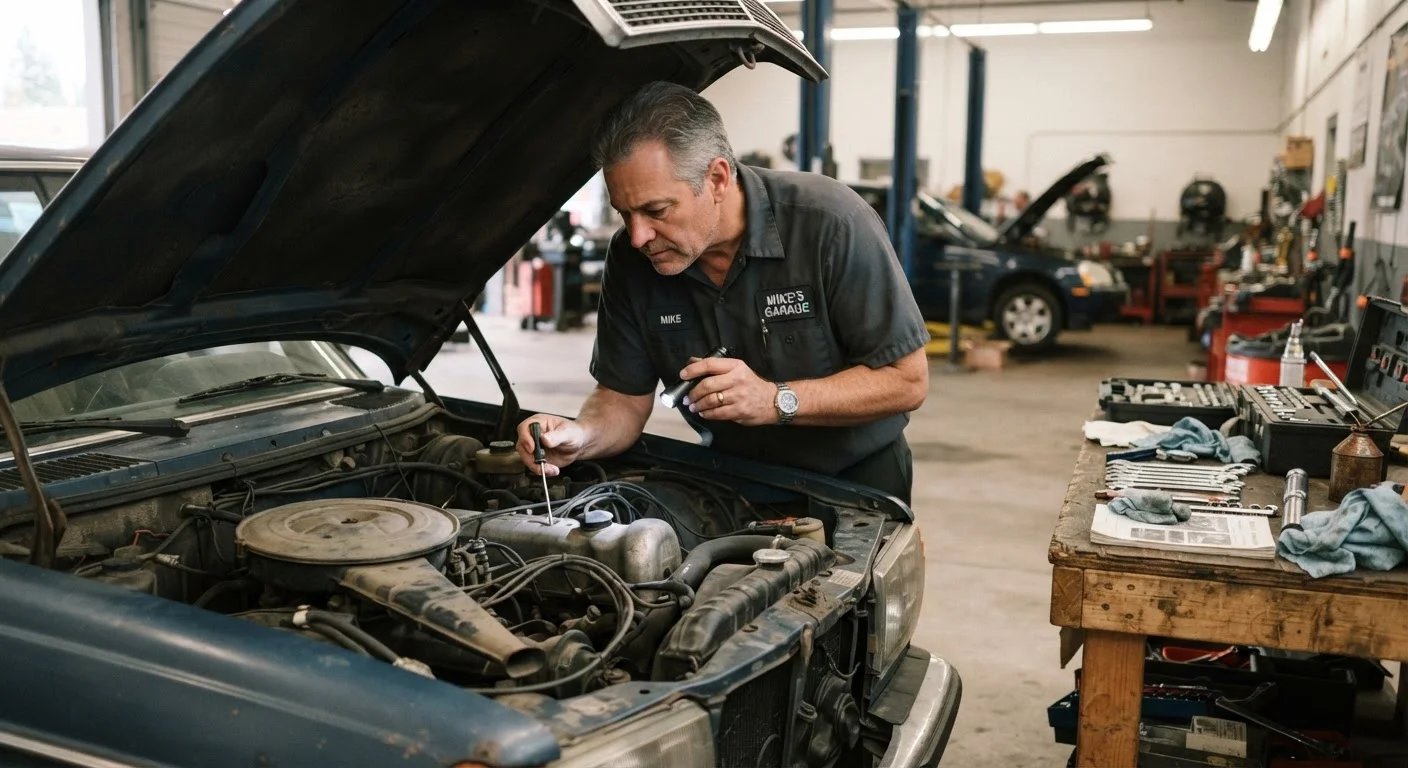
Photo: InsightsBlock.com | Access Information With Ease editorial
Key Takeaways
- Extended warranties on older vehicles can offset major repair bills, but exclusions often limit real-world value.
- Many plans exclude pre-existing conditions and high-wear components, which are common failure points in aging cars.
- The vehicle's reliability history and your financial situation matter more than the warranty's marketing language.
- Reading the contract in full - especially exclusion clauses - is essential before committing to any plan.
Protection against large, unexpected repair bills
Major components like engines and transmissions can cost thousands to repair or replace. A qualifying claim can offset costs that would otherwise be financially disruptive.
Predictable monthly costs replace unpredictable repair expenses
Fixed premiums allow budget-conscious drivers to plan ahead rather than absorb variable repair costs that can spike without warning.
Roadside assistance often included
Many plans bundle towing, lockout help, and rental car reimbursement, which adds practical day-to-day value beyond just major repairs.
Peace of mind for complex or high-mileage vehicles
Older vehicles with aging electronics or known failure-prone systems can generate genuine anxiety; coverage can reduce that stress, even if it does not always pay out.
Extensive exclusions limit real-world coverage
Pre-existing conditions, wear-and-tear items, and a long list of named exclusions can disqualify many of the repairs older vehicles actually need.
Total premium cost often exceeds claims paid
Actuarially, most warranty holders pay more in premiums than they receive in covered repairs - that margin is how administrators remain profitable.
Claim denials and disputes are common
Third-party administrators may require extensive documentation, pre-authorization, or disagree on whether a repair is covered, creating friction even for legitimate claims.
Restricted to authorized repair facilities
Many plans limit repairs to a network of approved shops, which can be inconvenient or unavailable in certain regions, especially during a breakdown away from home.
Provider insolvency is a genuine risk
Third-party warranty companies have gone out of business, leaving policyholders with no recourse for remaining claims - a risk that does not exist with factory-backed coverage.
What Extended Warranties Actually Cover
An extended warranty - more accurately called a vehicle service contract - is a paid agreement that covers certain repair costs after a manufacturer's warranty expires. For older vehicles, these plans are typically sold by third-party administrators rather than automakers, and the scope of coverage varies enormously.
Most contracts fall into two broad categories: exclusionary plans, which cover everything except what is explicitly listed, and inclusionary (or named-component) plans, which cover only the parts specifically named. Exclusionary plans generally offer wider protection but carry higher premiums. Inclusionary plans are cheaper but can leave major systems - like advanced driver-assistance electronics or newer transmission components - uncovered.
Understanding this distinction upfront is critical. A plan marketed as "bumper-to-bumper" for an older vehicle is almost never as comprehensive as the factory warranty that phrase originally described. Reviewing the actual contract language, not just the sales summary, is the only way to know what you are truly purchasing.
Service Contract vs. Warranty: A Key Distinction
The Real Advantages
There are genuine scenarios where an extended warranty delivers tangible financial protection.
Protection against large, unexpected repair bills
Major components like engines and transmissions can cost thousands to repair or replace. A qualifying claim can offset costs that would otherwise be financially disruptive.
Predictable monthly costs replace unpredictable repair expenses
Fixed premiums allow budget-conscious drivers to plan ahead rather than absorb variable repair costs that can spike without warning.
Roadside assistance often included
Many plans bundle towing, lockout help, and rental car reimbursement, which adds practical day-to-day value beyond just major repairs.
Peace of mind for complex or high-mileage vehicles
Older vehicles with aging electronics or known failure-prone systems can generate genuine anxiety; coverage can reduce that stress, even if it does not always pay out.
For drivers of vehicles known for expensive powertrain or electronic failures, a well-structured plan can prevent a single repair bill from becoming a financial emergency. This is especially relevant for cars approaching or exceeding 100,000 miles - a threshold where many major components enter higher-risk territory. See our guide to keeping high-mileage cars reliable for context on which systems typically need attention at this stage.
The predictability factor also has real value. Converting an unpredictable repair expense into a fixed monthly payment can help drivers on tight budgets manage cash flow - provided the plan actually pays out when claims are filed.
The Drawbacks You Need to Know
The limitations of extended warranties are numerous and frequently underemphasized at the point of sale.
Extensive exclusions limit real-world coverage
Pre-existing conditions, wear-and-tear items, and a long list of named exclusions can disqualify many of the repairs older vehicles actually need.
Total premium cost often exceeds claims paid
Actuarially, most warranty holders pay more in premiums than they receive in covered repairs - that margin is how administrators remain profitable.
Claim denials and disputes are common
Third-party administrators may require extensive documentation, pre-authorization, or disagree on whether a repair is covered, creating friction even for legitimate claims.
Restricted to authorized repair facilities
Many plans limit repairs to a network of approved shops, which can be inconvenient or unavailable in certain regions, especially during a breakdown away from home.
Provider insolvency is a genuine risk
Third-party warranty companies have gone out of business, leaving policyholders with no recourse for remaining claims - a risk that does not exist with factory-backed coverage.
Claim denial rates, dispute processes, and required documentation can all create friction that reduces the practical value of a plan - even when the repair is theoretically covered. It is worth noting that third-party warranty administrators are not regulated uniformly across all states, so consumer protections vary by location.
The cumulative cost is another concern. A plan charging $100 per month over three years totals $3,600 in premiums before any deductibles or excluded repairs. Drivers who instead deposited that amount into a dedicated savings account would have a substantial repair fund - one they control entirely, with no exclusions. Our article on keeping car costs in check over the long haul covers this self-insurance approach in more detail.
How to Evaluate Whether One Makes Sense for Your Situation
There is no universal answer, but several factors tilt the calculation in a meaningful direction.
~55%
Extended warranty holders who file at least one claim
Consumer research consistently suggests a majority of warranty holders never file a claim, meaning premiums generate no direct repair benefit for those drivers.
$1,500-$4,000+
Typical annual premium range for older vehicle plans
Premiums vary widely based on vehicle age, mileage, coverage tier, and administrator, with higher-mileage vehicles typically commanding the highest rates.
Your vehicle's reliability record matters significantly. A car with a strong track record of low repair costs - supported by owner data and repair frequency studies - is less likely to generate claims that justify premium costs. Conversely, models known for expensive component failures present a stronger case for coverage.
Your financial cushion is equally important. If a $2,500 transmission repair would create real hardship, the predictability of a warranty plan has legitimate value. If you maintain a dedicated emergency fund, self-insuring is often the more cost-efficient path.
Before signing anything, read the exclusion list in full, clarify how claims are filed and approved, confirm which repair shops are authorized, and check the administrator's complaint history with your state's insurance or consumer protection office. These steps are just as important as understanding the sticker price of the contract itself - a lesson that applies broadly to car ownership costs, as outlined in our financial checklist for car buyers.
This article provides general information about vehicle service contracts and is not personalized financial or legal advice. Terms, coverage, and consumer protections vary by provider and state. Always read the full contract and consult a licensed professional if you are uncertain about your specific situation.
The content provided on our blog site traverses numerous categories, offering readers valuable and practical information. Readers can use the editorial team’s research and data to gain more insights into their topics of interest. However, they are requested not to treat the articles as conclusive. The website team cannot be held responsible for differences in data or inaccuracies found across other platforms. Please also note that the site might also miss out on various schemes and offers available that the readers may find more beneficial than the ones we cover.