
Blind Spots, Mirrors, and the Gaps They Leave

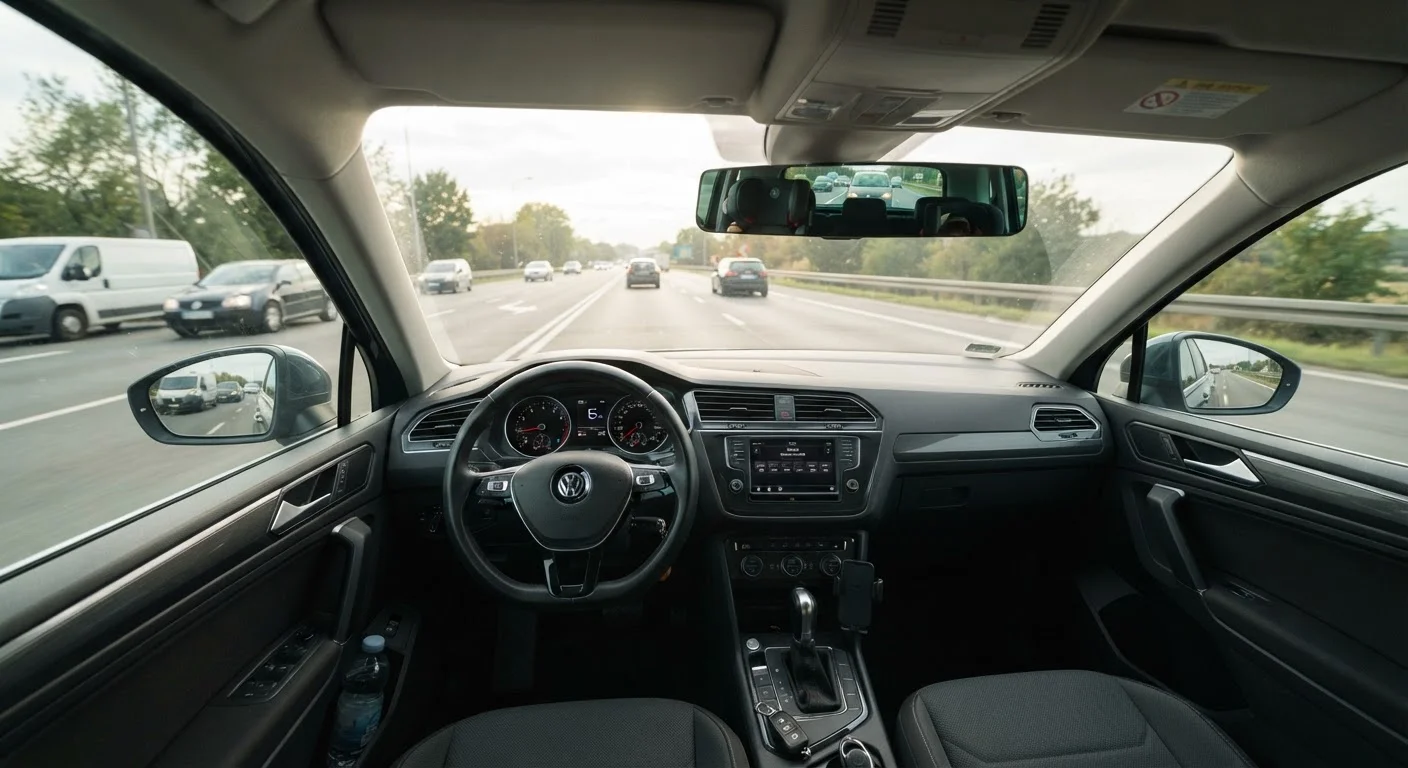
Photo: InsightsBlock.com | Access Information With Ease editorial
Why No Mirror Setup Is Complete
Every vehicle has areas its mirrors simply cannot cover. This isn't a flaw in mirror design - it's geometry. Mirrors reflect light from a fixed angle, and no combination of glass can wrap around a three-dimensional vehicle to show every adjacent lane, corner, and nearside zone simultaneously.
The National Highway Traffic Safety Administration (NHTSA) has identified blind spot-related lane changes as a consistent factor in sideswipe and merge crashes. Understanding where those gaps exist is the first step toward compensating for them.
| U.S. backup camera mandate | Required on all new passenger vehicles since May 2018 (NHTSA Federal Motor Vehicle Safety Standard No. 111) |
| Classic highway blind zone | Rear quarter area alongside rear doors, behind the C-pillar |
| Passenger-side mirror warning | "Objects in mirror are closer than they appear" - required on U.S. convex passenger mirrors (FMVSS No. 111) |
| Vehicles most affected by large blind zones | Pickup trucks, SUVs, vans, and large sedans with high trunk lines |
| Key supplement to mirrors | Physical shoulder check before every lane change |
For drivers navigating high-speed environments, those gaps become especially consequential. See our guide to highway driving safety for strategies specific to merging and multi-lane roads.
The Main Blind Zones: Where They Are and Why
Most passenger vehicles share predictable blind zones regardless of mirror quality or adjustment:
- Rear quarter zones (left and right): The area roughly alongside the rear doors and just behind the C-pillar - the structural column between the rear side window and the rear windshield. This is the classic highway blind spot where a vehicle can sit fully out of view in all three mirrors.
- Front corners: The area directly in front of and to the sides of the hood. Pedestrians and cyclists can occupy this space during low-speed turns at intersections.
- Directly behind the vehicle: Standard rearview mirrors show only what is within a narrow vertical arc. A child, low object, or pet standing immediately behind the bumper may be invisible - the reason backup cameras have become federally mandated on new vehicles sold in the U.S. since 2018.
- Near-side low zones: The area directly beside the front doors and along the lower sides of the vehicle. Cyclists and motorcyclists can occupy this space and fall between the side mirror's lower edge and the driver's peripheral vision.
Blind spot
An area around a vehicle that cannot be directly observed through mirrors from the driver's seated position. Every vehicle has multiple blind spots of varying size.
C-pillar
The structural column on either side of a vehicle between the rear side window and the rear windshield. Its width directly affects the size of rear quarter blind zones.
Convex mirror
A curved mirror surface that provides a wider field of view than a flat mirror. Objects seen in a convex mirror appear smaller and farther away than they actually are.
Shoulder check
A brief head turn by the driver to visually scan the rear quarter zone beside and behind the vehicle. It directly covers the area most commonly missed by mirrors.
Blind spot monitoring
An active driver assistance technology that uses sensors to detect vehicles in rear quarter blind zones and alerts the driver, typically via a warning light or sound.
Larger vehicles amplify these zones significantly. Pickup trucks, SUVs, and vans extend rear and front blind areas compared with compact sedans due to longer hoods, higher ride heights, and limited rear window sight lines.
Adjusting Mirrors to Reduce - Not Eliminate - Gaps
Proper mirror adjustment can substantially shrink the rear quarter blind zones, though it cannot eliminate them. A widely referenced method involves adjusting side mirrors outward until your own vehicle's body is barely visible at the inner edge of each mirror. This widens the field of coverage toward adjacent lanes at the cost of no longer seeing your own vehicle body - a trade-off that improves hazard detection for experienced drivers.
The rearview mirror should be centered on the rear window opening with the full window filling the glass. Adjust from the driver's seated position, not while leaning.
Key caveats:
- Mirror adjustment alone does not cover the near-side low zones or front corners.
- Curved or convex side mirrors (common on the passenger side of many U.S. vehicles) widen the field of view but make objects appear farther away than they are.
- No adjustment removes the need for physical head checks before lane changes.
Staying current on vehicle condition matters too - a misaligned or vibrating mirror degrades even well-set coverage. Our monthly car check guide includes mirror and visibility items worth reviewing regularly.
Physical Checks: The Step Mirrors Cannot Replace
A shoulder check - briefly rotating your head to look toward the rear quarter zone before changing lanes or merging - directly covers the area mirrors most commonly miss. Driving instructors and road safety researchers consistently identify the shoulder check as a non-negotiable complement to mirror scanning, not a backup for poor mirror habits.
For parking lot and low-speed maneuvers, a full 360-degree visual scan before moving - including checking front corners and looking behind the vehicle before reversing - addresses zones no camera or mirror fully covers.
Reduced visibility conditions compound every blind zone. Night driving shrinks effective mirror range and makes it harder to detect movement in adjacent lanes. Rain and dirty mirrors further degrade coverage.
Blind Spot Monitoring Has Real Limitations
Technology such as blind spot monitoring systems can flag vehicles in rear quarter zones using radar or ultrasonic sensors. These systems are a useful supplement, but they have known limitations - they may not detect fast-approaching motorcycles or cyclists and can generate false positives. Treat them as an alert layer, not a replacement for shoulder checks and proper mirror use.
The content provided on our blog site traverses numerous categories, offering readers valuable and practical information. Readers can use the editorial team’s research and data to gain more insights into their topics of interest. However, they are requested not to treat the articles as conclusive. The website team cannot be held responsible for differences in data or inaccuracies found across other platforms. Please also note that the site might also miss out on various schemes and offers available that the readers may find more beneficial than the ones we cover.