
Speed Limits, Stopping Distance, and Why the Numbers Matter

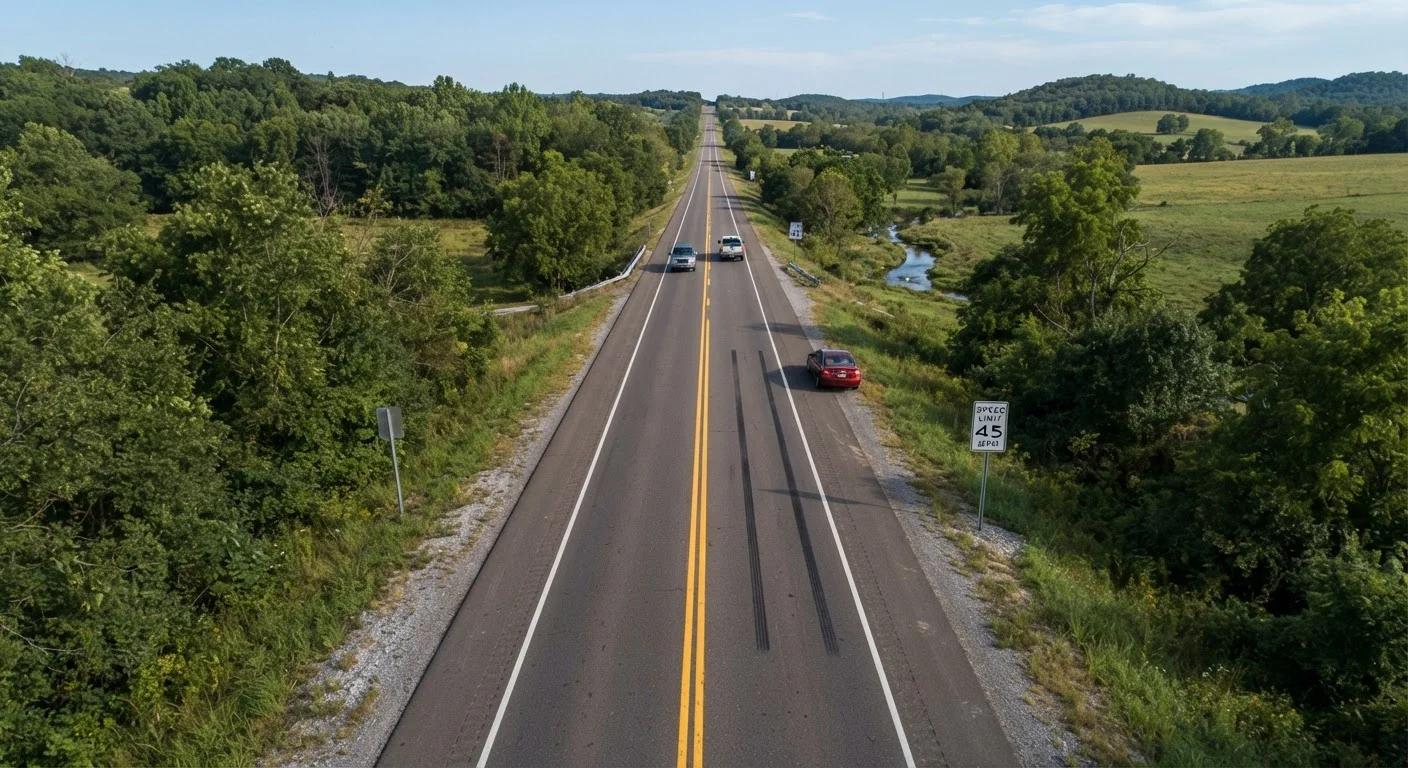
Photo: InsightsBlock.com | Access Information With Ease editorial
Key Takeaways
- Stopping distance is made up of reaction distance plus braking distance - both grow as speed increases.
- Braking distance scales with the square of speed, so small increases in mph cause large jumps in stopping distance.
- At 60 mph, total stopping distance can exceed 240 feet - roughly 18 car lengths.
- Road conditions, tire quality, and driver fatigue all extend stopping distance beyond ideal calculations.
- Speed limits are set to align with the stopping distances that give drivers a realistic margin of safety.
The Two Components Every Driver Should Know
When most drivers think about stopping, they picture pressing the brake pedal and the car slowing to a halt. In reality, stopping has already been underway for a fraction of a second longer than that - and those fractions of seconds translate into feet that can make the difference between a near-miss and a collision.
Total stopping distance breaks into two distinct phases. Reaction distance is how far your vehicle travels while your brain registers a hazard and your foot moves to the brake. Traffic engineers typically use 1.5 seconds as a standard reaction time, though distraction, fatigue, and age all push that number higher. At 60 mph, 1.5 seconds translates to roughly 132 feet traveled before braking starts.
Braking distance is what happens after you press the pedal. On dry pavement with well-maintained tires, physics dictates how quickly friction can bleed off your speed. Add these two figures together and you have your total stopping distance - a number that grows faster than most drivers intuitively expect as speed increases.
For a deeper look at how space between vehicles connects to these same principles, see the science behind the 3-second rule.
240 ft
Approximate stopping distance at 60 mph
Under dry conditions with average reaction time, per traffic engineering standards used in road design.
2×
Increase in stopping distance on wet pavement
Wet roads roughly double stopping distance compared to dry asphalt due to reduced tire-to-road friction.
4×
Braking distance multiplier when speed doubles
Because braking distance scales with the square of velocity, doubling speed quadruples the braking distance required.
Why Small Speed Increases Have Outsized Consequences
The relationship between speed and braking distance is not linear - it's exponential. Braking distance scales with the square of velocity. This means going from 40 mph to 60 mph doesn't just add half again as much stopping distance; it more than doubles the braking portion of the equation.
Consider these approximate figures on dry pavement under normal conditions:
- 30 mph: total stopping distance around 75 feet
- 40 mph: total stopping distance around 118 feet
- 60 mph: total stopping distance around 240 feet
- 70 mph: total stopping distance around 315 feet
A 10 mph difference between 60 and 70 mph adds roughly 75 feet - more than five car lengths. On a highway where vehicles, merge points, and debris appear suddenly, those extra feet frequently determine whether a crash is avoided.
Speed limits are calibrated with these numbers in mind. Roads with limited sightlines, frequent intersections, or pedestrian crossings carry lower limits precisely because stopping distances must fit within the geometry of the environment. Exceeding the posted speed means your stopping distance may now extend beyond what the road was designed to accommodate.
How Road Conditions and Vehicle Factors Extend the Numbers
The figures above assume ideal conditions: dry asphalt, well-maintained tires, a focused driver in a properly functioning vehicle. Real-world driving rarely offers all of those at once.
Wet pavement significantly reduces tire-to-road friction, often doubling stopping distances compared to dry conditions. Snow and ice can extend them by four to eight times, depending on surface temperature and tire type. This is why speed advisories during rain or snow are not merely cautious suggestions - they reflect genuine physics.
Tire condition matters as well. Tread worn to the minimum legal depth of 2/32 of an inch provides dramatically less grip than new rubber, particularly in wet conditions. Underinflated tires also degrade braking performance. Vehicle weight plays a role too: heavier vehicles carry more momentum and generally require more distance to stop, even with equivalent braking systems.
Driver state compounds all of this. Fatigue, distraction, and impairment all extend reaction time beyond the 1.5-second baseline. A drowsy driver might take three or more seconds to recognize a hazard and respond - at 60 mph, that's an additional 180 feet of travel before braking even begins. Night driving adds further complexity, combining reduced visibility with the fatigue that builds in the late hours.
Check Your Tires Before Winter Driving
Applying This Knowledge Behind the Wheel
Understanding stopping distance changes how a thoughtful driver behaves - not through fear, but through informed calibration. A few practical applications stand out.
Adjust following distance for speed. Higher speeds require more space from the vehicle ahead. The 3-second rule provides a baseline on dry roads, but expanding to 4 or 5 seconds at highway speeds or in adverse conditions accounts for the longer stopping distances involved.
Treat speed limits as designed minimums of safety margin, not arbitrary ceilings. When road conditions degrade - wet pavement, low visibility, heavy traffic - adjusting speed downward maintains the stopping distance margin the road geometry assumes.
Inspect your tires regularly. Tread depth and proper inflation are among the most accessible factors within a driver's control that directly affect braking performance.
These habits are central to what safety professionals describe as defensive driving. For a comprehensive look at how anticipating hazards reduces collision risk, the principles of defensive driving provide a strong framework. Drivers sharing high-speed roads may also benefit from highway-specific safety guidance, where stopping distances are longest and margins smallest.
Frequently Asked Questions
The content provided on our blog site traverses numerous categories, offering readers valuable and practical information. Readers can use the editorial team’s research and data to gain more insights into their topics of interest. However, they are requested not to treat the articles as conclusive. The website team cannot be held responsible for differences in data or inaccuracies found across other platforms. Please also note that the site might also miss out on various schemes and offers available that the readers may find more beneficial than the ones we cover.