
Reading a Nutrition Facts Label Without Getting Lost

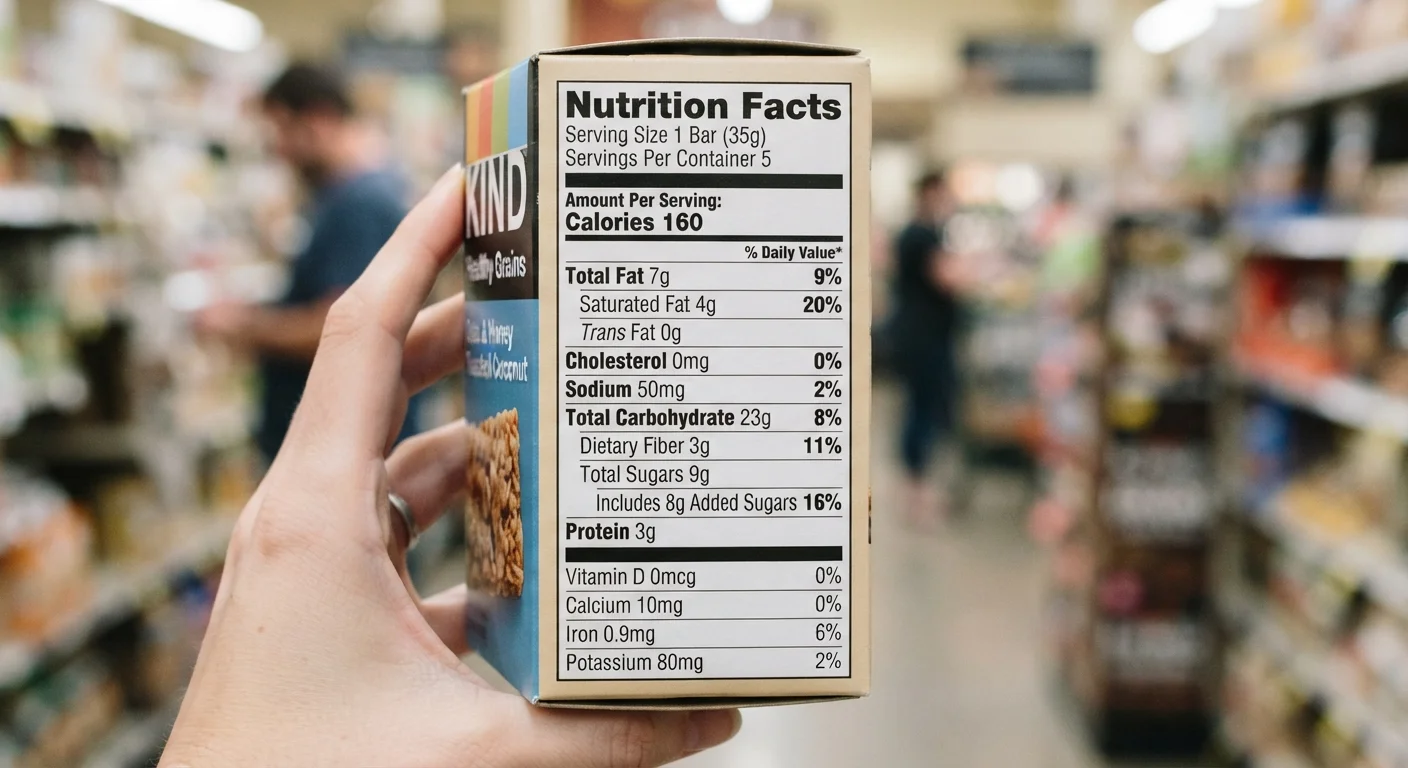
Photo: InsightsBlock.com | Access Information With Ease editorial
Key Takeaways
- Serving size is the anchor for every number on the label - always check it first.
- Percent Daily Value (%DV) shows how much a nutrient contributes to a 2,000-calorie reference diet.
- Aim for higher %DV in fiber, vitamins, and minerals; lower %DV in saturated fat, sodium, and added sugars.
- Ingredients are listed in descending order by weight, revealing what dominates the product.
- No single number tells the whole story - evaluate the label as a complete picture.
Why the Nutrition Facts Label Exists
The Nutrition Facts panel is a federally regulated tool created by the FDA to give consumers standardized, verifiable information about packaged foods. First introduced in 1994 and significantly updated in 2020, the label reflects evolving nutritional science and public health priorities. Understanding its structure isn't about achieving a perfect diet - it's about making more deliberate choices when you're standing in a grocery aisle with limited time.
If you're newer to thinking about food and nutrition broadly, the practical starting point for nutrition beginners offers helpful context before diving into label specifics.
Labels Inform, Not Prescribe
The steps below walk through the label from top to bottom - the same sequence the FDA uses when designing the panel - so you build understanding in the order the information actually appears.
Packaged Food Product
Provides the actual Nutrition Facts panel you will practice reading.
FDA Reference Daily Intake Chart
Lists the daily reference values used to calculate %DV figures on labels, available free at fda.gov.
How to Read the Label, Step by Step
What you will need
Locate the Serving Size and Servings Per Container
Every calculation on the label hinges on serving size, which appears at the very top of the panel in large, bold type. The serving size reflects an amount people typically eat in one sitting, expressed in a familiar unit (e.g., 1 cup, 3 crackers) alongside the gram equivalent.
Directly below, servings per container tells you how many of those portions are in the whole package. Before reading anything else, mentally note whether you typically consume one serving or more.
Read the Calorie Count in Context
Calories are displayed prominently below the serving information. This number represents the total energy delivered per serving from all macronutrients - fat, carbohydrates, and protein. Calories alone don't determine whether a food is nutritious; a handful of nuts and a handful of chips may have similar calorie counts but very different nutritional profiles.
Use calories as one data point, not a final judgment. For a fuller picture of what a food delivers per calorie, the concept of nutrient density is a useful framework.
Review the Macronutrient Breakdown
Below calories, the label lists total fat, total carbohydrate, and protein in grams. Each macronutrient is broken down further:
- Fat is split into saturated fat and trans fat (aim to limit both) plus unsaturated fats, which are not further labeled but can be inferred.
- Carbohydrates are broken into dietary fiber, total sugars, and added sugars - a mandatory line added in the updated label format. Added sugars are those incorporated during processing, distinct from naturally occurring sugars.
- Protein is listed in grams but typically lacks a %DV because daily needs vary widely by individual.
For a deeper understanding of one of the most beneficial carbohydrate components, see the guide on dietary fiber.
Interpret Percent Daily Value (%DV)
The right-hand column shows %DV for most nutrients. These percentages are based on a 2,000-calorie reference diet established by the FDA and tell you how much of your day's recommended intake one serving provides.
Use %DV to quickly categorize nutrients:
- Nutrients to get enough of: fiber, vitamin D, calcium, iron, potassium - look for higher %DV.
- Nutrients to limit: saturated fat, sodium, added sugars - look for lower %DV.
Scan the Micronutrient Section
Updated Nutrition Facts labels (required since 2020 for most manufacturers) mandate disclosure of vitamin D, calcium, iron, and potassium - nutrients that public health data identified as commonly under-consumed in the US population. Older vitamins A and C are no longer required, though manufacturers may still list them voluntarily.
Each is shown with both a milligram or microgram amount and a %DV. To learn more about what these nutrients do in the body, the micronutrients overview covers their roles and common food sources.
Read the Ingredient List
The ingredient list appears below the Nutrition Facts panel and follows one strict rule: ingredients are listed in descending order by weight. The first ingredient makes up the largest proportion of the product; the last makes up the least.
Look at the first three to five ingredients to understand what you're primarily eating. A long list isn't automatically a red flag, but unfamiliar entries near the top - particularly various forms of added sugar or refined grains - provide useful context that the numbers alone may not capture. This connects closely to understanding whole foods versus processed foods.
Use %DV as a Quick Compass
Multi-Serving Packages Add Up Fast
Putting It All Together at the Store
Reading a Nutrition Facts label becomes faster with practice. Rather than scrutinizing every line on every product, many shoppers develop a personal priority list - perhaps checking sodium first for blood pressure awareness, or added sugars for those monitoring intake. The label gives you the raw data; your individual context shapes which numbers matter most.
For most people, labels are most useful as a comparison tool. Holding two similar products side by side and comparing the %DV for key nutrients - or checking where added sugars rank in the ingredient lists - gives a clearer signal than evaluating one product in isolation.
Once you're comfortable reading labels, applying that knowledge to meal planning becomes the next productive step. The weekly grocery planning checklist shows how to translate label literacy into consistent, balanced shopping trips. For a broader look at how to build nutritionally sound meals from the foods you choose, the guide on building a balanced plate offers practical principles across different dietary approaches.
This article is for general informational and educational purposes only and does not constitute medical or dietary advice. Nutritional needs vary by individual. Consult a registered dietitian or qualified healthcare provider for guidance specific to your health situation.
The content provided on our blog site traverses numerous categories, offering readers valuable and practical information. Readers can use the editorial team’s research and data to gain more insights into their topics of interest. However, they are requested not to treat the articles as conclusive. The website team cannot be held responsible for differences in data or inaccuracies found across other platforms. Please also note that the site might also miss out on various schemes and offers available that the readers may find more beneficial than the ones we cover.