
Reading a Paint Sheen Chart: Flat, Eggshell, Satin, Semi-Gloss, and Gloss Explained

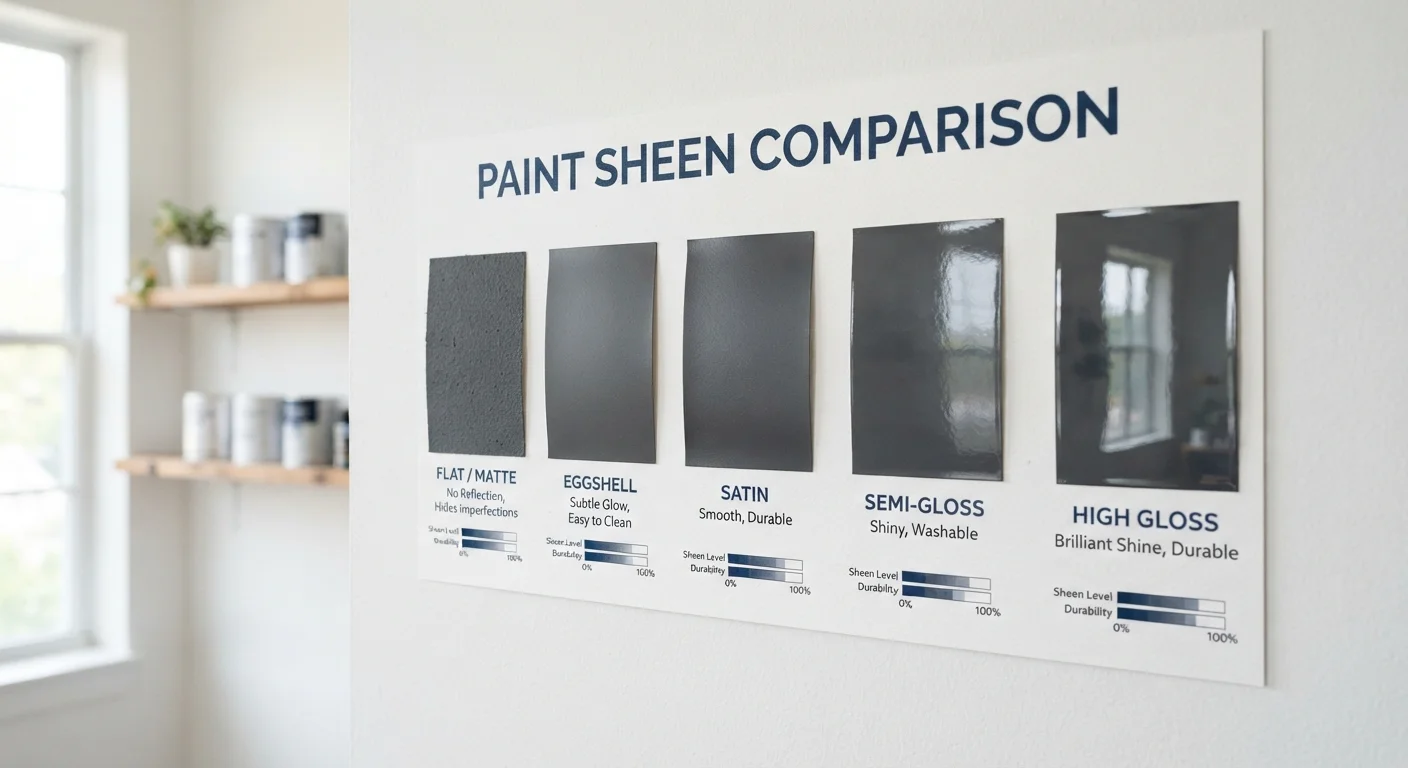
Photo: InsightsBlock.com | Access Information With Ease editorial
What Paint Sheen Actually Means
When you look at a paint sheen chart at a hardware store, you're looking at a scale of light reflectivity - how much light a dried paint surface bounces back to your eye. The higher the sheen, the more light it reflects, the more durable the surface tends to be, and the more it will reveal imperfections in the wall beneath it.
Sheen is determined largely by the ratio of pigment to binder in the paint formula. More binder relative to pigment produces a smoother, harder, shinier film. Less binder - more pigment - produces a softer, porous, matte surface. Every finish level is a deliberate trade-off between aesthetics, washability, and surface forgiveness.
Understanding where each finish sits on that spectrum helps you make confident choices room by room - and avoid the frustration of repainting because the wrong finish was used on a high-traffic wall. Before you even open a can, it's also worth knowing when primer is actually necessary, since surface prep directly affects how sheen looks once cured.
| Number of standard sheen levels | 5 (Flat, Eggshell, Satin, Semi-Gloss, Gloss) |
| Most washable interior finish | High-Gloss |
| Recommended finish for ceilings | Flat / Matte |
| Standard finish for interior trim | Semi-Gloss |
| Best finish for hiding wall imperfections | Flat |
| Recommended sample cure time before evaluating | 24-48 hours |
The Five Sheen Levels, Explained
Flat (Matte)
Flat paint has zero to minimal reflectivity. It absorbs light rather than bouncing it back, which makes it excellent at hiding surface flaws - dents, patches, slightly uneven texture - because shadows can't form as easily. The downside: it's the least washable finish. Scrubbing can remove the paint film itself, not just the dirt. Best for: ceilings, low-traffic adult bedrooms, formal dining rooms, and walls with significant imperfections.
Eggshell
Named for the subtle sheen of an actual eggshell, this finish reflects a small, soft amount of light. It's marginally more washable than flat and still hides moderate surface imperfections reasonably well. It strikes a popular balance for living spaces. Best for: living rooms, hallways, and adult bedrooms where occasional cleaning is needed.
Satin
Satin sits in the middle of the chart - noticeably shinier than eggshell, with a soft velvety appearance. It cleans well with mild soap and water, holds up to moderate moisture and abrasion, and is widely used in family-oriented spaces. It does begin to highlight surface imperfections, so wall prep matters more here. Best for: kitchens, bathrooms, kids' rooms, laundry rooms, and high-traffic hallways.
Semi-Gloss
Semi-gloss is noticeably reflective and very easy to wipe clean. Its harder film resists moisture, staining, and repeated scrubbing. It is also the standard choice for woodwork and trim - surfaces that take daily contact and benefit from visual definition. See our guide to interior trim types for a closer look at where semi-gloss typically gets applied. Best for: door frames, baseboards, crown molding, window casings, bathroom walls, and cabinet interiors.
Gloss (High-Gloss)
High-gloss paint is the most reflective and most durable finish available. It creates an almost lacquer-like surface that is extremely easy to clean but will mercilessly reveal every surface flaw, brush mark, and roller stipple. Surface preparation must be meticulous. Best for: cabinet doors, furniture, exterior doors, and accent details where a sleek, dramatic look is intentional.
Sheen
The degree of light reflectivity in a dried paint surface, typically ranging from flat (no reflection) to high-gloss (mirror-like reflection). Higher sheen generally means greater durability and washability.
Light Reflectance Value (LRV)
A numerical measure of how much light a paint color or finish reflects, on a scale of 0 (absorbs all light) to 100 (reflects all light). It helps compare products across different brands.
Binder
The ingredient in paint that holds pigment particles together and adheres them to a surface. Higher binder content typically produces a harder, shinier, more washable finish.
Matte Finish
Another term for flat paint. Produces a non-reflective, velvety surface that is especially effective at concealing wall imperfections but is less resistant to scrubbing than higher-sheen finishes.
Paint Film
The dried, cured layer of paint adhered to a surface. Its thickness, hardness, and surface texture determine how well the finish resists moisture, staining, and abrasion.
Practical Tips for Choosing the Right Finish
A few decision-making principles can help you apply the sheen chart with confidence:
- Match sheen to moisture exposure. Any room that sees regular steam, splashing, or condensation - bathrooms, kitchens - should use at least satin on walls and semi-gloss on trim.
- Match sheen to traffic level. High-touch surfaces - doors, stair railings, chair rails, mudroom walls - wear better with semi-gloss than eggshell.
- Lower sheen on ceilings, almost always. Flat or matte ceiling paint minimizes the appearance of imperfections and prevents a cave-like reflective quality overhead.
- Consider the light in the room. High-sheen finishes in a very sunny room can create glare. In a north-facing or dim room, a touch of sheen can add brightness.
- Test before committing. Most paint counters offer small sample quantities. Apply a patch of at least 12 inches square, let it fully cure (usually 24-48 hours), and evaluate it in both daylight and artificial light before buying full gallons.
One often-overlooked point: different brands label their sheens slightly differently. One manufacturer's "satin" may be nearly as shiny as another's "semi-gloss." When in doubt, ask to see the actual light-reflectance value (LRV) or sheen percentage listed on the product data sheet rather than relying solely on the finish name.
The content provided on our blog site traverses numerous categories, offering readers valuable and practical information. Readers can use the editorial team’s research and data to gain more insights into their topics of interest. However, they are requested not to treat the articles as conclusive. The website team cannot be held responsible for differences in data or inaccuracies found across other platforms. Please also note that the site might also miss out on various schemes and offers available that the readers may find more beneficial than the ones we cover.