
What Homeowners Often Get Wrong About Priming Before They Paint

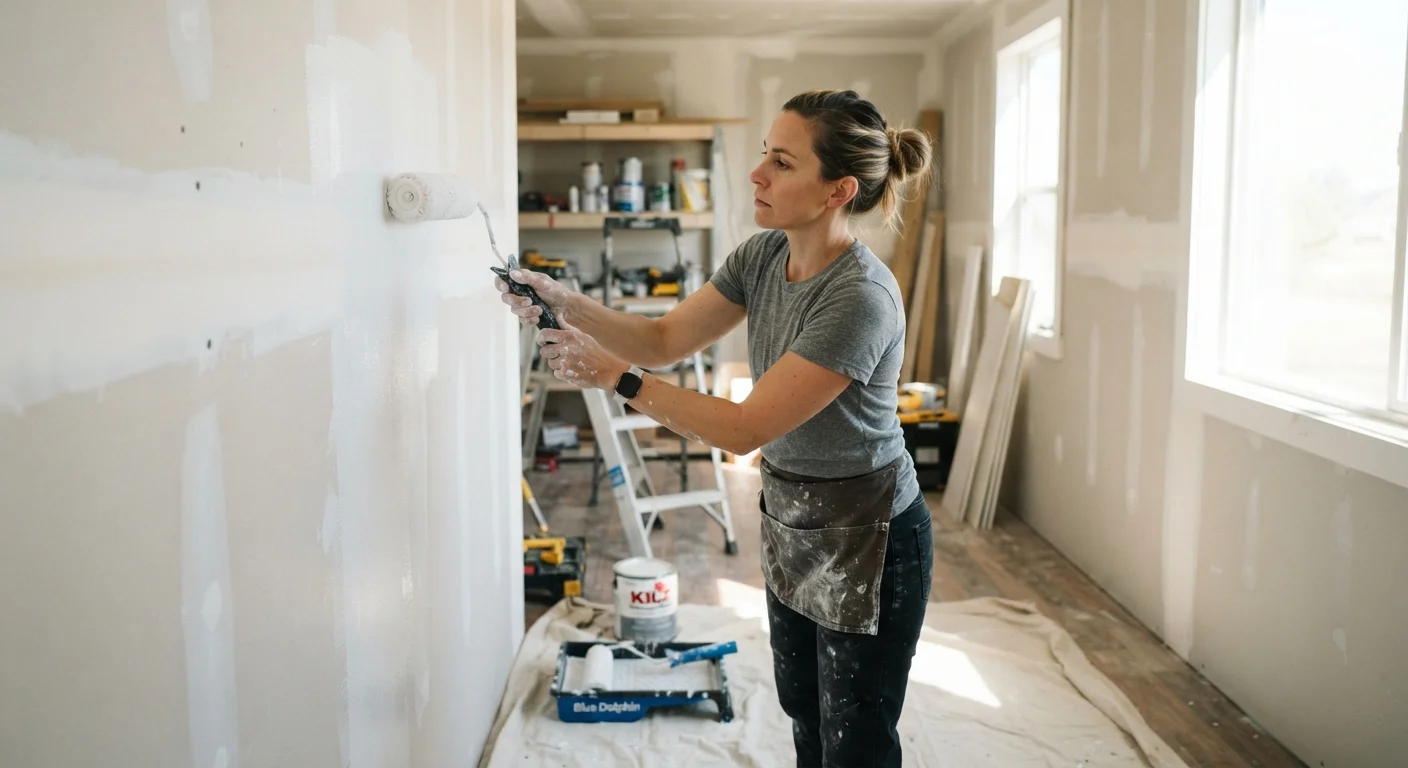
Photo: InsightsBlock.com | Access Information With Ease editorial
Key Takeaways
- Primer and paint-and-primer-in-one products serve different purposes - knowing when to use each saves time and money.
- Bare drywall, new wood, and stain-prone surfaces almost always require a dedicated primer coat.
- Painting over glossy surfaces without proper prep leads to peeling - primer alone isn't the fix.
- Tinted primer reduces the number of topcoat layers needed when making dramatic color changes.
- Skipping primer on the right surface can actually be fine - context determines the call.
Why Primer Confusion Is So Common
Walk into any home improvement store and you'll find shelves stacked with primers, paints, and combined paint-and-primer products - each marketed with overlapping claims. It's no wonder homeowners struggle to know which step is truly necessary. The confusion costs real money: either in wasted product applied where it isn't needed, or in redone paint jobs caused by skipping it when it was.
The core issue is that primer isn't a watered-down version of paint. It's a separate chemistry designed to bond to unprepared surfaces, seal porous materials, and create a uniform base. Paint, by contrast, is engineered to provide color, sheen, and durability on a surface that's already stable. Understanding that distinction - rather than treating primer as optional prep - changes how you approach every painting project.
For guidance on choosing the right finish once your surface is ready, see our paint sheen guide for a breakdown of flat, eggshell, satin, and gloss options.
Myth
Paint-and-primer-in-one products eliminate the need for a separate primer coat in every situation.
Fact
Combined products work well on previously painted surfaces in good condition but are not a substitute for dedicated primer on bare or problem surfaces.
Paint-and-primer-in-one formulas are thicker than standard paint and include some bonding agents, but they don't replicate the deep penetration of a true primer on porous or raw substrates. On bare drywall, for example, the paper facing absorbs so much of the first coat that color and sheen will look uneven regardless of how many topcoats follow. A PVA (polyvinyl acetate) drywall primer seals that porosity in one pass - something a combined product typically cannot match. Use paint-and-primer products confidently when repainting over a sound, previously painted wall. On anything bare or problematic, a dedicated primer step is still the more reliable approach.
Myth
Priming over a glossy surface is enough preparation before painting.
Fact
Glossy surfaces must be mechanically abraded before primer or paint will adhere properly - primer alone cannot bond to an intact gloss layer.
Gloss finishes create a hard, slick surface that resists adhesion. Primer is designed to bond to substrates, not to overcome the physics of a sealed, non-porous film. The correct sequence is to sand or degloss the surface first - typically with 120- to 150-grit sandpaper or a liquid deglosser - then apply primer, then topcoat. Skipping the abrasion step commonly results in peeling within months, particularly in areas with temperature or humidity swings like kitchens and bathrooms. The extra 20 minutes of sanding is almost always worth the effort.
Myth
Any primer will handle stains, smoke damage, or water marks.
Fact
Standard primers do not reliably block stains, tannins, or odors - only shellac-based or oil-based stain-blocking primers are formulated to seal these issues.
There are several distinct primer categories on the market: PVA primers (best for new drywall), bonding primers (best for slick or previously painted surfaces), and stain-blocking primers (designed for water stains, smoke damage, tannin bleed, and odors). Applying a standard latex primer over a water stain will, in most cases, allow that stain to bleed through the topcoat. Shellac-based primers provide the strongest stain and odor block but require denatured alcohol for cleanup. Water-based stain-blocking primers offer a more user-friendly middle ground for lighter staining situations. Matching the primer type to the specific problem is what produces a clean result.
Myth
Priming always requires a full additional drying day before you can paint.
Fact
Many modern latex primers are touch-dry in as little as 30 to 60 minutes, with full recoat readiness in one to three hours under typical indoor conditions.
Drying times vary significantly by primer type, temperature, and humidity. Oil-based and shellac primers take longer - often several hours or overnight before topcoating. However, most standard water-based primers used for interior walls are ready to receive paint within a single work session. The critical factor is following the manufacturer's recoat window listed on the label, not assuming all primers behave the same. Painting too early over a still-wet primer can trap moisture and compromise adhesion; painting too late (after several days) on some products may require a light sand before topcoating to restore tooth.
Myth
Using more primer is always better - extra coats give extra protection.
Fact
Applying more primer than necessary adds cost and dry time without improving the finished result; one well-applied coat is the standard for most situations.
Primer's job is to create a stable, uniform base - once that's achieved, additional coats provide little benefit and can actually build up a thick film that is more susceptible to cracking over time. A single full coat of the correct primer, applied evenly and allowed to dry completely, is the target. The exception is heavily stained or extremely porous surfaces, where a second thin coat may be warranted after evaluating the first dried coat. In all other cases, the right primer type applied once correctly outperforms multiple coats of the wrong primer.
When Primer Matters Most - and When It Doesn't
The decision to prime should be driven by surface condition, not habit or convenience. Below are the situations where primer does meaningful work versus where a quality topcoat alone is sufficient.
Prime when:
- Covering bare or freshly patched drywall, which is highly absorbent and will drink paint unevenly without a sealer.
- Painting raw or new wood, which contains tannins that can bleed through and discolor the finish.
- Switching from a dark paint color to a significantly lighter one.
- Addressing water stains, smoke damage, or odor - a stain-blocking primer is specifically engineered for this.
- Painting over a surface that has never been painted before.
You may skip primer when:
- Repainting a wall in the same or similar color with a high-quality paint, provided the existing surface is clean, sound, and lightly scuffed.
- Working with a self-priming paint on a previously painted, non-glossy surface in good condition.
Don't Prime Over Dirty or Flaking Surfaces
Cabinet repaints are a category where primer decisions carry especially high stakes. Our article on repainting kitchen cabinets walks through why priming is a critical step in that specific process.
2-3x
More topcoats needed without primer on bare drywall
Paint manufacturers' technical data sheets commonly note that unprimed drywall requires two to three additional topcoat applications to achieve uniform color compared to properly primed drywall.
30-60 min
Typical dry time for water-based interior primers
Most latex-based interior primers reach touch-dry in 30-60 minutes under standard indoor conditions (around 70°F and 50% relative humidity), per general product guidance.
The content provided on our blog site traverses numerous categories, offering readers valuable and practical information. Readers can use the editorial team’s research and data to gain more insights into their topics of interest. However, they are requested not to treat the articles as conclusive. The website team cannot be held responsible for differences in data or inaccuracies found across other platforms. Please also note that the site might also miss out on various schemes and offers available that the readers may find more beneficial than the ones we cover.