
Swapping Out a Light Switch: What's Safe for a DIYer and What Isn't

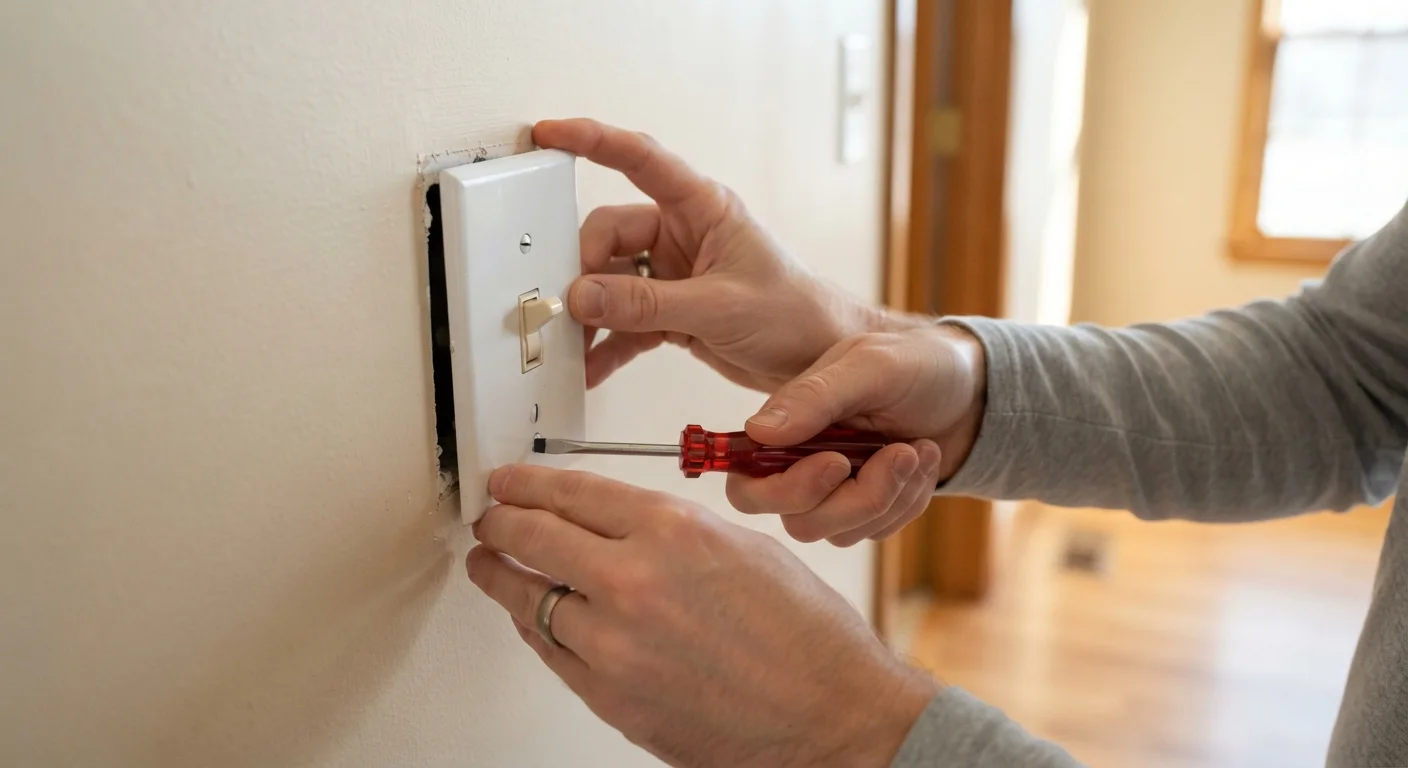
Photo: InsightsBlock.com | Access Information With Ease editorial
Key Takeaways
- Replacing a simple single-pole light switch is one of the more approachable electrical DIY tasks for homeowners.
- Always shut off the correct circuit breaker and verify power is off before touching any wiring.
- Three-way switches, dimmer wiring, and aluminum wiring scenarios are better left to a licensed electrician.
- Permits and inspections may be required for electrical work in your jurisdiction - check local codes first.
- When in doubt, the cost of an electrician is far less than the cost of a wiring mistake.
Low material cost for a simple switch replacement
A standard single-pole light switch typically costs only a few dollars at a hardware store, making the materials investment minimal even if you need to purchase a voltage tester.
Minimal tools required for basic switches
A flathead screwdriver, a Phillips screwdriver, and a non-contact voltage tester are generally sufficient for a straightforward switch swap.
Builds useful foundational electrical knowledge
Completing a simple switch replacement carefully helps homeowners better understand their home's wiring, making them more informed when communicating with electricians in the future.
Task is logically straightforward on standard wiring
A single-pole switch with standard wire colors involves a small number of connections that, once power is verified off, can be transferred methodically and safely.
Electrical mistakes can have serious consequences
Wiring errors can cause persistent faults, damage to fixtures, tripped breakers, or - in severe cases - electrical fires. The margin for error is low compared to most home DIY tasks.
Complexity escalates quickly beyond basic switches
Three-way switches, dimmers, smart switches, and older wiring configurations introduce variables that significantly increase the risk of an incorrect installation.
Permits may be required and are often overlooked
Many homeowners are unaware that local codes may require a permit even for switch replacements; unpermitted electrical work can complicate home sales and insurance claims.
Hidden wiring problems may go undetected
A DIYer focused on the switch itself may miss signs of overheating, improper connections, or an undersized junction box that a licensed electrician would identify and address.
No professional accountability or inspection record
DIY electrical work does not carry a licensed electrician's warranty or a formal inspection record, which some insurers and home buyers may view unfavorably.
Why Homeowners Consider Swapping a Switch Themselves
A light switch that no longer clicks reliably, feels loose, or simply looks dated is a common home annoyance. For many homeowners, replacing it feels like a natural DIY candidate - the materials are inexpensive, the tools are minimal, and countless tutorials make it look quick. That instinct isn't wrong, but electrical work demands a clear-eyed assessment of what you're actually dealing with before you unscrew the cover plate.
The core appeal is straightforward: a standard single-pole switch replacement typically involves just three connections - a hot wire, a neutral (in newer installations), and a ground. With the power properly off and the wires photographed before disconnection, re-attaching them to a new switch is a logical, low-risk process for someone who reads carefully and works methodically.
Just as with DIY automotive maintenance, the key is honestly distinguishing tasks that are within a careful layperson's reach from those that carry real consequences if done incorrectly.
Low material cost for a simple switch replacement
A standard single-pole light switch typically costs only a few dollars at a hardware store, making the materials investment minimal even if you need to purchase a voltage tester.
Minimal tools required for basic switches
A flathead screwdriver, a Phillips screwdriver, and a non-contact voltage tester are generally sufficient for a straightforward switch swap.
Builds useful foundational electrical knowledge
Completing a simple switch replacement carefully helps homeowners better understand their home's wiring, making them more informed when communicating with electricians in the future.
Task is logically straightforward on standard wiring
A single-pole switch with standard wire colors involves a small number of connections that, once power is verified off, can be transferred methodically and safely.
Where the Risks Start - and When to Stop
The moment the wiring inside the box doesn't match what you expected, the calculation changes. Common situations that warrant calling a licensed electrician include:
- Three-way switches: These control a light from two locations and involve a traveler wire configuration that confuses even experienced DIYers. Miswiring a three-way switch can create persistent faults that are difficult to trace.
- Aluminum wiring: Homes built between roughly the mid-1960s and mid-1970s may have aluminum branch-circuit wiring, which requires special devices and techniques. Connecting standard switches to aluminum wiring without proper precautions creates a fire risk.
- Unfamiliar wire colors or multiple cables: If the box contains more wires than expected, or colors that don't follow standard conventions, stop. Guessing at connections is dangerous.
- No ground wire present: Older homes sometimes lack a ground wire in switch boxes. Installing certain modern switches (including smart switches) without a ground requires specific knowledge of code-compliant workarounds.
- Dimmer switches: Not all dimmers are compatible with all light fixtures or bulb types. Incorrect dimmer installation can damage fixtures, create buzzing, or pose a fire hazard.
Electrical mistakes can have serious consequences
Wiring errors can cause persistent faults, damage to fixtures, tripped breakers, or - in severe cases - electrical fires. The margin for error is low compared to most home DIY tasks.
Complexity escalates quickly beyond basic switches
Three-way switches, dimmers, smart switches, and older wiring configurations introduce variables that significantly increase the risk of an incorrect installation.
Permits may be required and are often overlooked
Many homeowners are unaware that local codes may require a permit even for switch replacements; unpermitted electrical work can complicate home sales and insurance claims.
Hidden wiring problems may go undetected
A DIYer focused on the switch itself may miss signs of overheating, improper connections, or an undersized junction box that a licensed electrician would identify and address.
No professional accountability or inspection record
DIY electrical work does not carry a licensed electrician's warranty or a formal inspection record, which some insurers and home buyers may view unfavorably.
A licensed electrician can also identify other issues in the box - signs of overheating, improperly joined wires, or a box that's too small for its contents - that a DIYer might miss entirely.
The Safe DIY Process: What Good Preparation Looks Like
If you've assessed the situation and determined you have a simple single-pole switch with standard wiring, preparation is everything. Here's what a careful, safety-first approach involves:
- Turn off the correct breaker at your main panel, not just the wall switch. Label it if it isn't already.
- Verify the power is off using a non-contact voltage tester - a widely available, inexpensive tool that detects live current without touching wires. Do not skip this step or substitute it with assumption.
- Photograph the existing wiring before disconnecting anything. A clear photo of which wire connects where is your reference if you lose track.
- Work on one wire at a time when transferring connections to the new switch, keeping the other wires secure and separated.
- Check local permit requirements before starting. In many jurisdictions, even simple switch replacements technically require a permit and inspection. Requirements vary widely - your local building department is the authoritative source.
Check Your Local Code Before Starting
A non-contact voltage tester is the single most important safety tool for this task. They are inexpensive and unambiguous - if the tester indicates live voltage after you've shut off what you believe is the correct breaker, stop and investigate before proceeding.
Honest Cost-Benefit of DIY vs. Hiring an Electrician
The financial case for DIYing a switch swap is modest. A replacement switch costs a few dollars, and the task might take 20-45 minutes if everything goes smoothly. An electrician visit for a single switch will cost significantly more in labor, often with a minimum service charge.
That said, the calculus shifts when complications arise. An incorrectly wired switch that creates an intermittent fault, trips breakers, or - in a worst case - contributes to an electrical fire represents a cost that no amount of saved labor can justify. Electrical fires are among the most serious and least forgiving home hazards.
~51,000
US home electrical fires reported annually
The U.S. Fire Administration has cited figures in this range for home electrical fires, underscoring why correct wiring practices matter even in small repairs.
~$150-$300
Typical electrician cost for a switch replacement
Labor costs vary widely by region and include a minimum service charge; this range is a general estimate and actual costs depend on local market rates and job complexity.
If you open the box and feel any uncertainty about what you're seeing, the professional option is not an admission of defeat - it's a sound decision. Many electricians are willing to handle straightforward switch replacements efficiently, and having the work done correctly and inspected provides documented assurance that a DIY job cannot.
The content provided on our blog site traverses numerous categories, offering readers valuable and practical information. Readers can use the editorial team’s research and data to gain more insights into their topics of interest. However, they are requested not to treat the articles as conclusive. The website team cannot be held responsible for differences in data or inaccuracies found across other platforms. Please also note that the site might also miss out on various schemes and offers available that the readers may find more beneficial than the ones we cover.