
DIY Car Maintenance vs. Taking It to a Shop

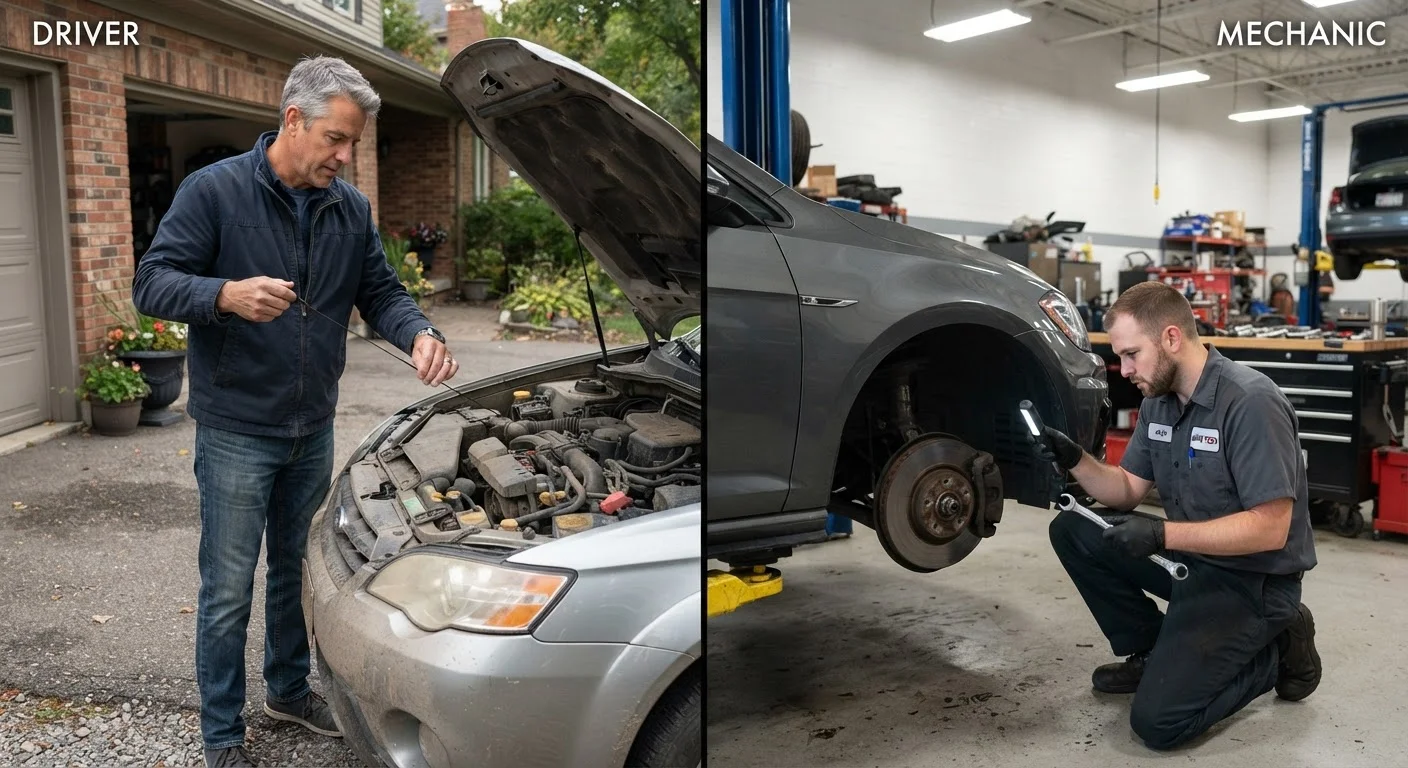
Photo: InsightsBlock.com | Access Information With Ease editorial
Key Takeaways
- Simple fluid checks, air filters, and wiper blades are safe and cost-effective DIY tasks for most drivers.
- Brake systems, suspension components, and airbag-related work should always go to a qualified mechanic.
- Attempting advanced repairs without the right tools or knowledge can void warranties and create safety hazards.
- Your owner's manual is the most reliable guide for which maintenance tasks apply to your specific vehicle.
- Labor savings from DIY can be significant, but only when the task is genuinely within your skill level.
Where DIY Makes Clear Sense
Several routine maintenance tasks are genuinely accessible to the average driver - no lift, no specialized training, and no advanced tools required. Handling these yourself can reduce your annual maintenance spend without introducing meaningful risk.
- Engine air filter replacement: Typically a tool-free job on most vehicles. A clogged filter can reduce fuel efficiency, and swapping it takes under ten minutes once you've located the housing.
- Wiper blade replacement: Straightforward enough that automakers expect owners to do it. Follow the fitment guide in your manual or the blade packaging.
- Checking and topping off fluids: Engine oil, coolant reservoir, windshield washer fluid, and brake fluid levels can all be visually checked between service intervals. Consult your owner's manual maintenance schedule for the correct fluid types.
- Cabin air filter: Usually accessible behind the glove box on many vehicles. Your manual will confirm location and replacement interval.
- Battery terminal cleaning: Corrosion on battery terminals can cause starting problems. Disconnecting the battery and cleaning terminals with a wire brush is manageable for most people - but follow the correct disconnection sequence (negative first) to avoid electrical issues.
For a fuller picture of what these tasks typically cost at a shop versus doing them yourself, routine maintenance cost ranges offer a useful reference point.
Where Professional Service Is the Right Call
Other jobs involve safety systems, calibrated components, or specialized tools that make DIY genuinely risky - not just inconvenient. Getting these wrong can result in brake failure, suspension damage, or airbag deployment at the wrong moment.
Safety Systems Are Not DIY Territory
- Brake system work: Pad replacement looks approachable, but brake caliper compression, rotor inspection, and hydraulic line integrity all involve safety-critical tolerances. A mistake here has direct consequences on stopping distance. Tire rotation, balancing, and alignment are related jobs that also belong in a shop for most drivers.
- Suspension and steering components: Ball joints, tie rods, and wheel bearings require specific torque specs and often a press - tools most home garages don't have. Incorrect installation can cause loss of vehicle control.
- Airbag and SRS system work: Supplemental restraint systems can deploy unexpectedly during service. This is not a DIY task under any circumstances.
- Timing belt or chain service: Misalignment by even a tooth can cause catastrophic engine damage. This requires engine-specific knowledge and precise tooling.
- Transmission service beyond fluid changes: Internal transmission work should go to a specialist.
Deferring any of these repairs because the shop visit feels expensive is a common mistake - one that tends to compound. Small repairs left unaddressed frequently become much larger bills.
The Gray Zone: Tasks That Depend on Your Skill Level
Some maintenance falls between clear DIY and clear shop territory. Oil changes are the most debated example. The task itself is straightforward mechanically, but it requires the right tools (a drain pan, filter wrench, jack stands if needed), correct disposal of used oil, and knowledge of the right oil specification for your vehicle. For drivers who enjoy working on their cars, it's a reasonable DIY job. For those who don't, a shop visit is often comparable in cost once supplies are factored in - and choosing the right oil type matters more than many drivers realize.
Start Simple, Build Confidence Gradually
Spark plug replacement is another middle-ground task. On older vehicles with straightforward engine layouts, it's manageable with basic tools. On modern engines with coil-on-plug designs or tight engine bays, it can be considerably more complex. Always check your specific vehicle's layout before committing.
If you're newer to car ownership and building your maintenance knowledge from the ground up, a practical introduction to car maintenance is a useful starting point before tackling anything hands-on.
One often-overlooked factor: warranty terms. Some manufacturer and extended warranties require documented service at qualified facilities. Performing certain repairs yourself - even correctly - can complicate a future warranty claim. Verify your coverage terms before picking up a wrench.
A Practical Framework for Deciding
Before starting any task yourself, run through these questions:
- Does a mistake create a safety risk? If yes, the job belongs in a shop.
- Do I have the correct tools? Substituting the wrong tool - especially on torque-sensitive fasteners - risks stripping threads or under-tightening critical components.
- Does my vehicle have any known quirks for this job? Owner forums and your owner's manual are the first places to check.
- Could this affect my warranty? Understand your coverage before proceeding.
- Am I honest about my skill level? Overestimating experience on a complex job costs more to fix than a shop visit would have.
The goal isn't to do everything yourself or nothing yourself - it's to make an informed call for each task. Staying current on common car maintenance myths also helps you avoid paying for services you don't need.
| Task | DIY Feasibility | Risk If Done Wrong | Tools Required | Shop Recommended? | |
|---|---|---|---|---|---|
| Engine air filter | High | Minimal | None to basic | No | |
| Wiper blades | High | Minimal | None | No | |
| Oil change | Moderate | Low-moderate | Drain pan, wrench, jack stands | Optional | |
| Spark plugs | Moderate | Moderate | Socket set, torque wrench | Depends on vehicle | |
| Brake pads/rotors | Low | High | Specialized tooling needed | Yes | |
| Suspension components | Very low | Very high | Press, torque specs required | Yes | |
| Airbag/SRS system | Not recommended | Severe | Specialized diagnostic equipment | Always | |
| Timing belt/chain | Very low | Catastrophic engine damage | Engine-specific tooling | Yes |
The content provided on our blog site traverses numerous categories, offering readers valuable and practical information. Readers can use the editorial team’s research and data to gain more insights into their topics of interest. However, they are requested not to treat the articles as conclusive. The website team cannot be held responsible for differences in data or inaccuracies found across other platforms. Please also note that the site might also miss out on various schemes and offers available that the readers may find more beneficial than the ones we cover.