
Decluttering an Entire Home Without Losing Your Mind

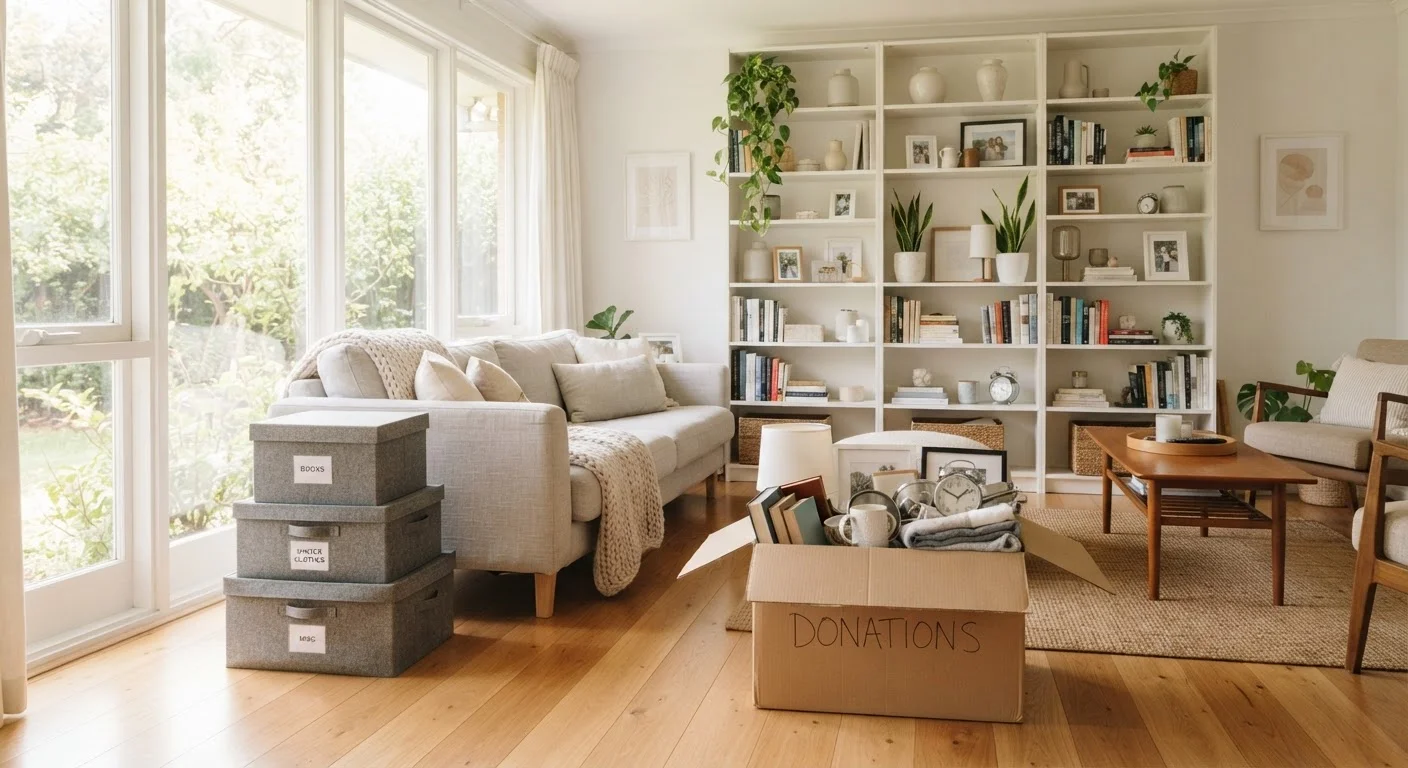
Photo: InsightsBlock.com | Access Information With Ease editorial
Key Takeaways
- Breaking the project into rooms or zones prevents overwhelm and builds momentum.
- Sorting items into clear categories - keep, donate, discard - speeds up decision-making.
- Tackling high-traffic areas first delivers visible results that motivate continued effort.
- Decluttering is more sustainable when you establish habits that prevent re-accumulation.
- Living with others requires communication and compromise on shared spaces.
Why Whole-Home Decluttering Feels So Hard
Decluttering an entire home is not a single task - it is dozens of smaller decisions stacked on top of each other. The emotional weight of those decisions, combined with the sheer physical volume of a full household, is what makes most people abandon the project halfway through. Understanding why it feels hard is the first step toward making it manageable.
Research in environmental psychology suggests that visual clutter raises cortisol levels and makes it harder to focus. In other words, a cluttered home does not just look overwhelming - it can genuinely feel that way. The good news is that visible progress, even in a single drawer or cabinet, produces a measurable sense of relief that motivates the next step.
If you live with others, differing tolerance levels for clutter can add friction to the process. See our guide to organizing shared spaces for strategies on navigating those conversations before you start sorting.
Work in Short, Focused Intervals
What You Need Before You Start
Gathering a few basic supplies before diving in prevents you from losing momentum mid-session.
What you will need
Large cardboard boxes or heavy-duty bags
Used to collect items destined for donation, recycling, or disposal.
Marker and labels or masking tape
Clearly marking boxes as Keep, Donate, or Discard prevents mix-ups during a long session.
Timer (phone or kitchen timer)
Setting work intervals (e.g., 45 minutes on, 15 minutes off) reduces decision fatigue and keeps pace.
Notepad or phone notes app
Jot down storage needs, items to replace, or follow-up tasks as they come up so they don't derail your focus.
The Room-by-Room Method: Step-by-Step
The most reliable approach for a full-home project is to work one clearly defined zone at a time - a single room, or even a single wall - rather than pulling items from everywhere at once. Follow the steps below in sequence for each area you tackle.
Choose your starting room strategically
Begin with a high-traffic, high-visibility space - typically the living room, kitchen, or entryway. Early wins in rooms you use every day create immediate relief and motivate you to continue. Avoid starting in sentimental areas like a child's bedroom or a storage unit full of inherited items; save those for when your decision-making stamina is already practiced.
Remove everything from the space
Empty the area completely before sorting. Pull items out of drawers, off shelves, and out of cabinets. Seeing everything together gives you an accurate picture of what you actually own and makes duplicates obvious. This step feels chaotic, but it is temporary and intentional.
Sort into three clear categories
Place every item into one of three labeled zones:
- Keep - used regularly and genuinely needed in this room
- Donate / Rehome - in usable condition but no longer serving you
- Discard - broken, expired, or beyond use
If you find yourself hesitating on an item, apply the 12-month rule: if you haven't used it in the past year and cannot name a specific upcoming use, it belongs in the donate or discard pile.
Remove donate and discard items from the home immediately
As soon as a room's sorting session is complete, move the donate and discard boxes out of the living space - into your car trunk, the garage, or directly outside for trash pickup. Items that stay in the home, even bagged, have a habit of being unpacked again.
Return kept items with intention
Before putting anything back, clean the empty surface or shelf. Then return only the items from your Keep pile, grouping them by function and frequency of use. Items used daily should be easiest to access; occasional-use items can go higher up or further back. Label shelves or bins if it helps the system stay clear for everyone in the household.
Repeat the process, room by room
Move through the home in a logical sequence - for example, public rooms first (living room, kitchen, dining area), then private rooms (bedrooms, home office), then storage spaces (bathroom cabinets, hallway closets, garage or basement last). Allow yourself at least one day between sessions to rest your decision-making capacity. This is a project measured in days or weeks, not hours.
Avoid the 'Whole House at Once' Trap
Keeping It From Piling Up Again
Decluttering is only half the equation. Without a system to manage incoming items, clutter will rebuild within months. The simplest rule is the one-in, one-out principle: when something new enters the home, something else leaves. Apply this consistently to clothing, kitchenware, and paper mail.
Designate a small donation basket in a visible spot - a closet shelf, a corner of the laundry room - so items you decide to pass on have somewhere to go immediately rather than migrating back into circulation. Empty the basket whenever it fills, aiming for roughly once a month.
Once your space is clear, low-cost organization solutions can help maintain order without a major financial investment. Our home organization on a tight budget guide covers practical, no-fuss systems that work in most home layouts.
Finally, treat decluttering as a recurring maintenance task rather than a one-time event. A 15-minute weekly sweep of high-traffic surfaces - countertops, entryway tables, bathroom ledges - keeps small accumulations from becoming large ones. Building that habit is worth more in the long run than any single marathon decluttering session.
The content provided on our blog site traverses numerous categories, offering readers valuable and practical information. Readers can use the editorial team’s research and data to gain more insights into their topics of interest. However, they are requested not to treat the articles as conclusive. The website team cannot be held responsible for differences in data or inaccuracies found across other platforms. Please also note that the site might also miss out on various schemes and offers available that the readers may find more beneficial than the ones we cover.