
Monthly Budget Review Checklist

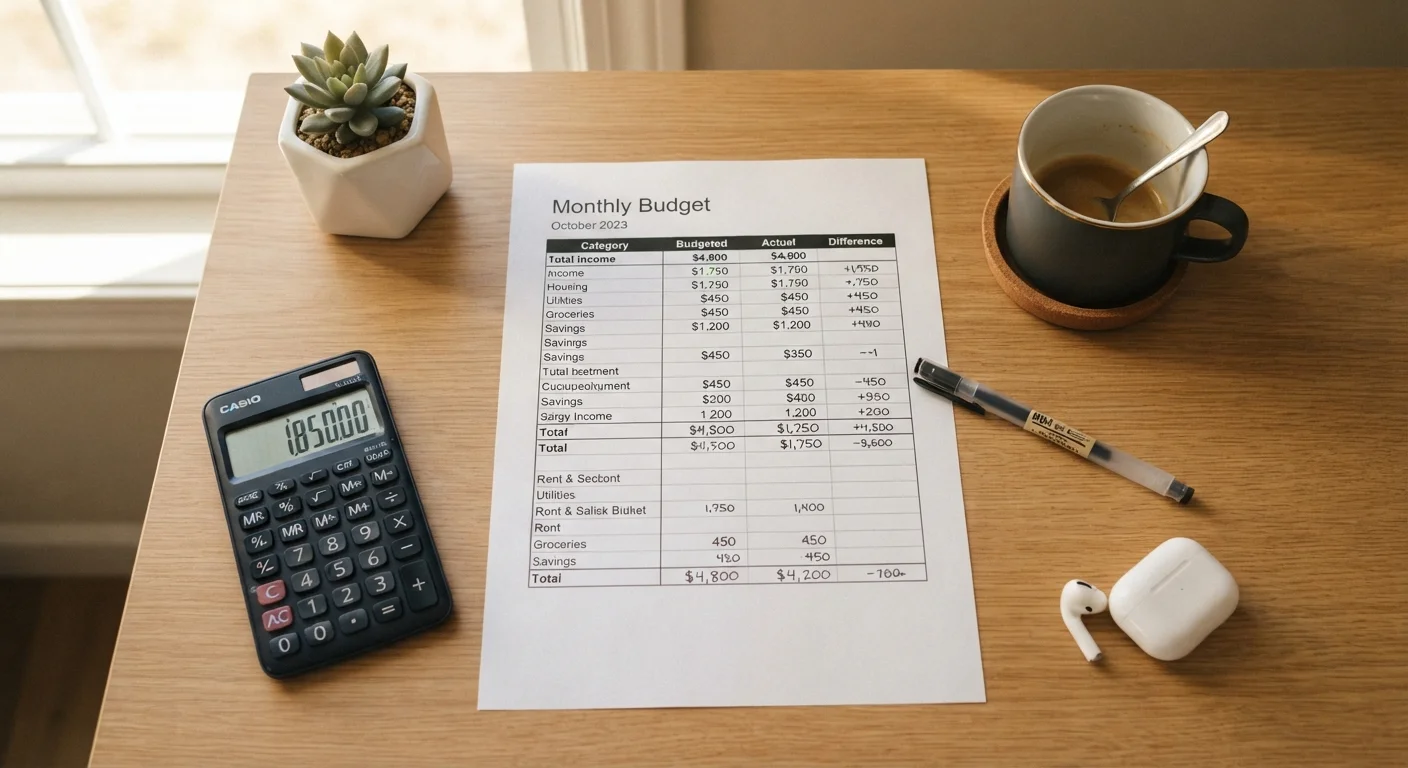
Photo: InsightsBlock.com | Access Information With Ease editorial
Key Takeaways
- Comparing planned spending to actual spending each month reveals patterns you cannot spot in real time.
- Recurring subscriptions and variable expenses are the most common sources of budget drift.
- Adjusting next month's budget based on this month's actuals is more effective than starting from a fixed template.
- A short monthly review prevents small overspends from compounding into serious financial problems.
- Consistent review habits build the self-awareness that underpins long-term financial stability.
Why a Monthly Budget Review Actually Matters
A budget you build but never revisit is little more than a good intention. The monthly review is where a budget becomes a functional financial tool - it closes the feedback loop between what you planned and what actually happened. Without it, small miscalculations accumulate silently until they show up as overdrafts, credit card balances, or depleted savings.
Most people who struggle with budgeting aren't failing at math - they're failing at consistency. A structured end-of-month review, done in under an hour, replaces guesswork with data. It tells you whether your budget categories reflect real life or just wishful thinking, and it gives you a clear starting point for the month ahead.
If you're building a budget for the first time or want to strengthen the foundation behind this review, see the complete guide to building and sustaining a personal budget for a full walkthrough. For those paid on a non-monthly schedule, budgeting by paycheck explains how to align your review cycle with your actual income timing.
Gather Your Data
Compare Planned vs. Actual Spending
Audit Recurring Charges
Review Savings and Debt Progress
Identify Patterns and Adjust
Final Checks
How to Use This Checklist
Work through this checklist on the last day of the month or the first day of the new one - before new charges begin mixing with old ones. You'll need access to your bank statements, credit card statements, and your original budget document or app. Having everything in one place before you start cuts the process to about 30 minutes.
Variances Are Data, Not Failures
Each item is marked by priority. Must items are the non-negotiable core of the review - skip them and you're flying blind. Should items add meaningful insight with modest extra effort. Nice-to-have items are worth doing when you have time and are working toward a specific financial goal.
Bank and Credit Card Statements
Provides the actual transaction data needed to populate your real spending totals by category.
Budget Spreadsheet or Budgeting App
Houses your planned budget figures and gives you a structured place to record and compare actuals.
Calculator
Useful for computing variances, savings rates, and debt payoff percentages without relying on mental math.
Notebook or Digital Notes App
Capture observations, action items, and month-over-month patterns during the review session.
If your household spending includes significant grocery costs, note that a consistent grocery planning habit can meaningfully reduce food-budget variance month to month. The weekly grocery planning checklist is a useful complement to this financial review.
Don't Skip Months During Busy Periods
This article is for general informational and educational purposes only and does not constitute personalized financial advice. Consult a qualified financial professional for guidance specific to your situation.
The content provided on our blog site traverses numerous categories, offering readers valuable and practical information. Readers can use the editorial team’s research and data to gain more insights into their topics of interest. However, they are requested not to treat the articles as conclusive. The website team cannot be held responsible for differences in data or inaccuracies found across other platforms. Please also note that the site might also miss out on various schemes and offers available that the readers may find more beneficial than the ones we cover.