
The Envelope Method: A Cash-Based Spending System Worth Understanding

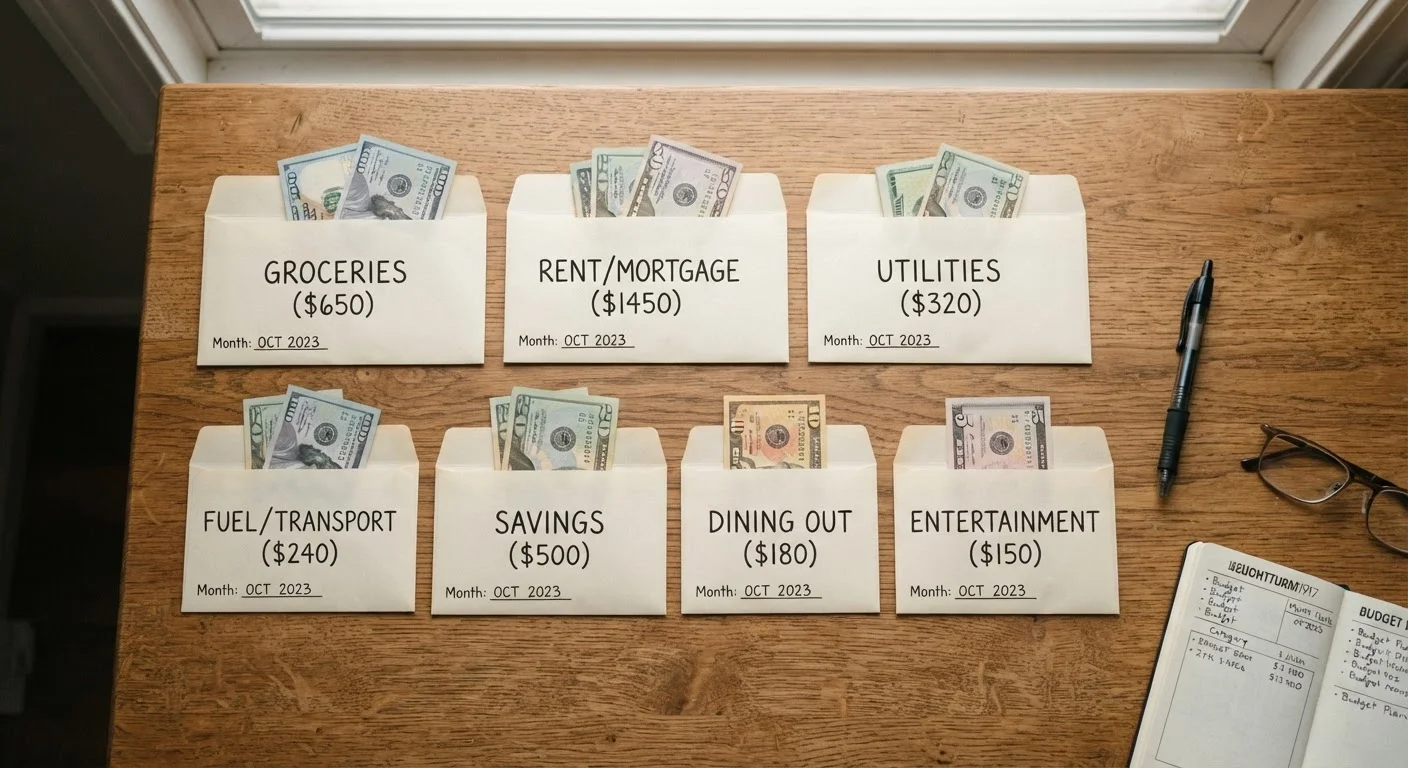
Photo: InsightsBlock.com | Access Information With Ease editorial
Key Takeaways
- The envelope method uses physical cash divided into labeled categories to cap monthly spending.
- It works by making overspending physically impossible - when the cash is gone, it's gone.
- The method is most effective for variable, discretionary spending rather than fixed bills.
- Its main drawbacks include security risks with cash and incompatibility with online purchases.
- Digital envelope systems replicate the logic but sacrifice some of the behavioral friction that makes cash effective.
- It suits people who overspend on impulse purchases more than those whose challenges are structural or income-related.
How the System Actually Works
The mechanics are straightforward. At the start of each pay period, you withdraw cash equal to your planned spending in variable categories. You then divide that cash into labeled envelopes - one per category. Common categories include groceries, dining out, gas, personal care, entertainment, and household supplies.
Throughout the month, you spend only from the relevant envelope. Buy groceries, pay from the grocery envelope. Go to a restaurant, pay from the dining envelope. When an envelope hits zero, that category is closed until the next funding cycle. No negotiating, no rounding up, no silent credit card overage.
Fixed expenses - rent, utilities, insurance, loan payments - are typically handled outside the envelope system through bank transfers or auto-pay. The envelopes focus on the categories where discretionary overspending most often occurs. For a broader view of which categories surprise people most, see where people's money actually goes each month.
Start With Just Two or Three Envelopes
The Behavioral Logic Behind Cash
Research in consumer psychology consistently finds that people spend more with cards than with cash - a phenomenon sometimes called the pain of paying. Handing over physical bills creates a moment of friction that tapping a card or clicking a button does not. The envelope method exploits this friction deliberately.
When cash is finite and visible, spending decisions feel more real. An empty envelope is an unambiguous signal that requires a conscious decision to override - whereas an overdrawn budget line in a spreadsheet or app is easy to rationalize or ignore until the end of the month.
“The pain of paying is real - cash payments activate the same areas of the brain associated with physical discomfort, making people more deliberate about spending decisions than card payments typically do.”
— Drazen Prelec, Professor of Management Science and Economics, MIT Sloan School of Management
This is also why purely digital envelope systems, while convenient, don't replicate the full effect. The system's behavioral power is tied to the physical medium, not just the category structure.
Where the Envelope Method Falls Short
The system has real limitations that its proponents sometimes understate.
- Cash security: Lost or stolen cash is gone permanently, unlike a card transaction that can often be disputed. Storing meaningful amounts at home carries its own risk.
- Online and subscription spending: The envelope method has no native solution for digital purchases, streaming subscriptions, or any transaction requiring a card. Workarounds exist but add friction.
- Irregular income: If your income varies month to month - freelancers, gig workers, commission-based earners - pre-allocating fixed cash amounts is harder and may require a different approach.
- Large irregular expenses: A car repair or medical bill doesn't fit neatly into monthly envelopes without a pre-built sinking fund envelope, which requires consistent discipline to maintain.
If the envelope method's analog nature feels limiting, comparing spreadsheet and app-based tracking systems covers the trade-offs of digital alternatives. For a more hands-off approach, automating your finances is a contrasting strategy worth reviewing.
When It Makes Sense to Try It
The envelope method tends to work best for a specific profile: someone with stable income who knows logically what they should spend but consistently overshoots in a handful of categories. If the problem is impulse spending on dining, clothing, or entertainment, the hard stop of an empty envelope provides exactly the kind of constraint that willpower alone often can't.
It's a poor fit when the underlying problem is income insufficiency, unpredictable expenses, or primarily digital spending patterns. It also requires a willingness to handle and track cash regularly - a habit that many people find inconvenient in an era of tap-to-pay.
For anyone building a budget from scratch, the complete guide to building and sustaining a personal budget provides a broader framework within which the envelope method can be one component rather than the entire system.
This article is for general informational and educational purposes only and does not constitute personalized financial advice. Consult a qualified financial professional regarding decisions specific to your circumstances.
Frequently Asked Questions
The content provided on our blog site traverses numerous categories, offering readers valuable and practical information. Readers can use the editorial team’s research and data to gain more insights into their topics of interest. However, they are requested not to treat the articles as conclusive. The website team cannot be held responsible for differences in data or inaccuracies found across other platforms. Please also note that the site might also miss out on various schemes and offers available that the readers may find more beneficial than the ones we cover.