
Common Credit Score Myths That Keep People from Making Progress

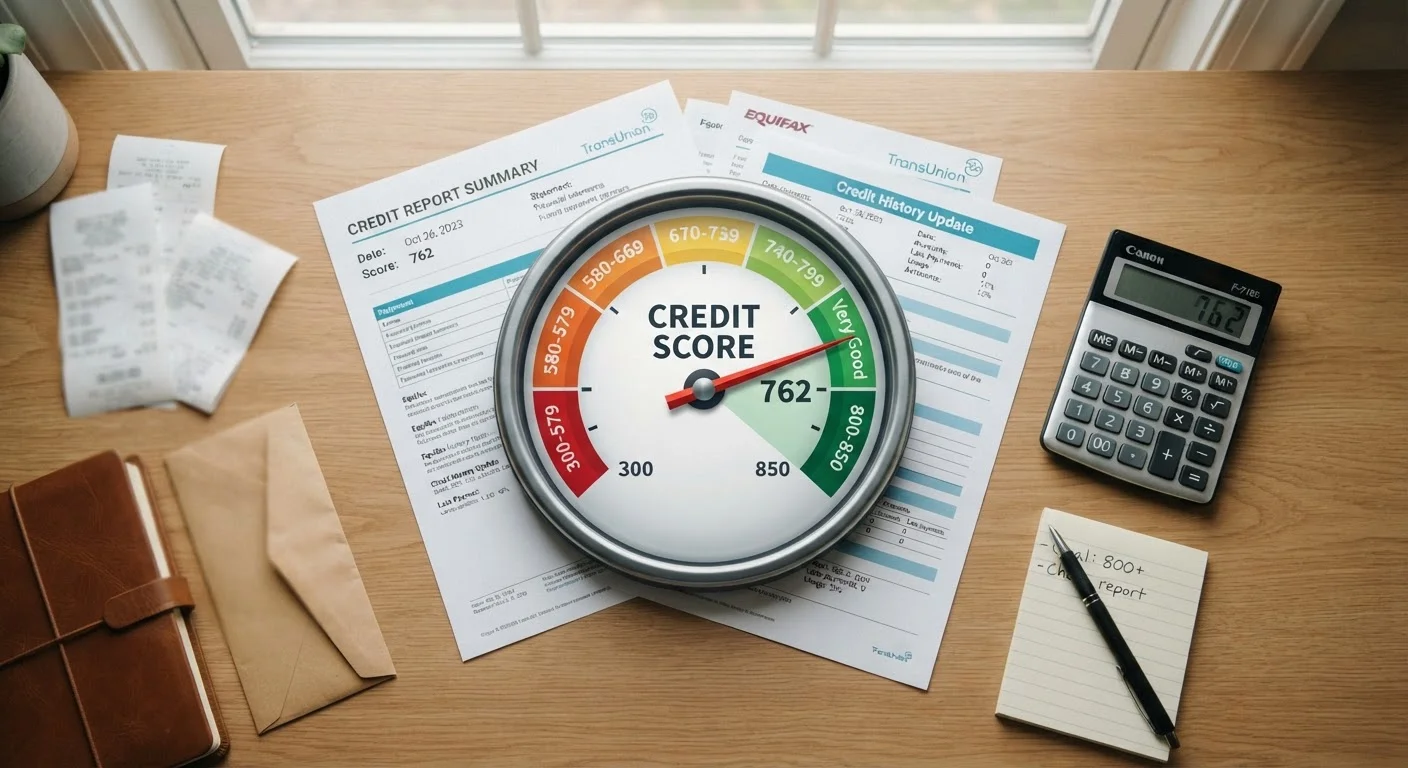
Photo: InsightsBlock.com | Access Information With Ease editorial
Key Takeaways
- Checking your own credit score is a soft inquiry and does not lower your score.
- Carrying a credit card balance month to month does not improve your credit score.
- Closing old credit cards can actually hurt your score by reducing available credit.
- A perfect 850 score is not required - lenders typically reward scores above 760 similarly.
- Derogatory marks like missed payments have declining impact over time and fall off after seven years.
Why Credit Score Myths Are So Costly
Misinformation about credit scores doesn't just cause confusion - it leads to real financial decisions that work against the people making them. Avoiding score checks out of fear, deliberately carrying balances, or closing accounts to look "tidy" are all behaviors rooted in myths that scoring models simply don't support. The good news: once you understand how scores are actually calculated, the path to improvement becomes straightforward.
Credit scores in the US are most commonly generated by FICO and VantageScore models, both of which draw from data held by the three major credit bureaus: Equifax, Experian, and TransUnion. The inputs are specific and documented - which means the myths can be tested against known facts. This article addresses the most widespread misconceptions directly.
Myth
Checking your credit score will lower it.
Fact
Checking your own score is a soft inquiry and has zero effect on your credit score.
This is one of the most persistent myths in personal finance, and it stops people from monitoring their own credit. There are two types of credit inquiries: hard inquiries, initiated by lenders when you apply for credit, and soft inquiries, which include checks you initiate yourself. Only hard inquiries can temporarily affect your score - and even then, the impact is typically small and short-lived. Checking your own score through a bureau, your bank, or a free monitoring service is always a soft inquiry. Avoiding your own score doesn't protect it; it just keeps you in the dark.
Myth
Carrying a balance on your credit card helps build credit.
Fact
Paying your balance in full each month is better for your score and your wallet.
This myth may have originated from a misunderstanding of how credit utilization works. Utilization - the ratio of your balance to your credit limit - does factor into scoring models, but lower utilization is better, not higher. Carrying a balance from month to month doesn't signal responsible use; it just costs you interest. As minimum payments can dramatically extend repayment time, letting balances linger is financially damaging with no scoring benefit.
Myth
Closing old or unused credit cards improves your score.
Fact
Closing accounts typically reduces your available credit and can raise your utilization ratio, lowering your score.
Length of credit history and total available credit both influence your score. When you close a card - especially an older one - you shorten your average account age and reduce your total credit limit. If you carry any balances on other cards, your utilization ratio rises immediately. The counterintuitive reality: an unused card in good standing is usually an asset, not a liability. If an annual fee is the concern, consider whether a product change to a no-fee version is available through your issuer.
Myth
You need a perfect 850 to get the best rates.
Fact
Lenders generally treat scores above roughly 760 similarly - the marginal benefit of chasing 850 is minimal.
Credit scoring models use ranges, and lenders set their own thresholds. In practice, moving from a 760 to an 820 rarely produces meaningfully different loan terms. Most lenders reserve their best rates for borrowers in the top tier, which begins well below a perfect score. This matters because people sometimes obsess over micro-optimizations - like gaming the exact timing of a payment - when the real leverage comes from fundamentals: on-time payments, low utilization, and a stable account history. See habits that support a stronger credit profile for where that effort is best directed.
Myth
A missed payment will ruin your credit permanently.
Fact
Late payments do serious short-term damage, but their impact fades over time and they disappear from your report after seven years.
A single missed payment reported to the bureaus can cause a significant score drop, and the damage is real. But credit scoring models weight recent behavior more heavily than older history. Consistent on-time payments after a delinquency gradually rebuild your standing. The timeline of what happens after a missed payment is predictable - and so is recovery, as long as you don't compound the problem with additional missed payments. Seven years is the standard reporting window for most negative items under the Fair Credit Reporting Act.
Myth
Your income and net worth directly affect your credit score.
Fact
Credit scores are based entirely on borrowing and repayment behavior - income and assets are not factors.
This confusion is understandable because lenders often ask for income information on applications. But that data goes into the lender's own underwriting decision, not into your credit score. Scoring models evaluate payment history, amounts owed, length of credit history, new credit, and credit mix. A high earner who misses payments will score lower than a modest earner with a spotless repayment record. Understanding the difference between credit reports and credit scores helps clarify exactly what data feeds into each.
What Actually Moves Your Score
Across scoring models, a handful of factors consistently carry the most weight. Payment history is the single largest component in FICO scoring - whether you pay on time, every time. Amounts owed, particularly your credit utilization ratio, is the second largest. Length of credit history, credit mix, and new credit account for the remainder.
35%
Weight of payment history in FICO scores
According to FICO's published scoring model breakdown, on-time payment history is the single largest factor - more than any other category.
30%
Weight of amounts owed (utilization) in FICO scores
FICO's model documentation identifies credit utilization as the second most influential factor, reinforcing why carrying high balances is counterproductive.
7 years
Standard reporting window for most negative items
Under the Fair Credit Reporting Act, most derogatory marks - including late payments and collections - must be removed from your credit report after seven years.
The practical implication: the highest-leverage actions are the least exciting ones. Pay on time. Keep balances low relative to limits. Don't open new accounts unnecessarily. Avoid closing old accounts without a clear reason. These aren't tricks - they're the behaviors scoring models are designed to reward. If errors in your credit file are undermining an otherwise solid record, the dispute process with the major bureaus is a documented and consumer-accessible path.
This article is for general informational purposes only and does not constitute personalized financial or legal advice. Consult a qualified financial professional for guidance specific to your situation.
The content provided on our blog site traverses numerous categories, offering readers valuable and practical information. Readers can use the editorial team’s research and data to gain more insights into their topics of interest. However, they are requested not to treat the articles as conclusive. The website team cannot be held responsible for differences in data or inaccuracies found across other platforms. Please also note that the site might also miss out on various schemes and offers available that the readers may find more beneficial than the ones we cover.