
Credit Scores Decoded: What the Number Actually Measures

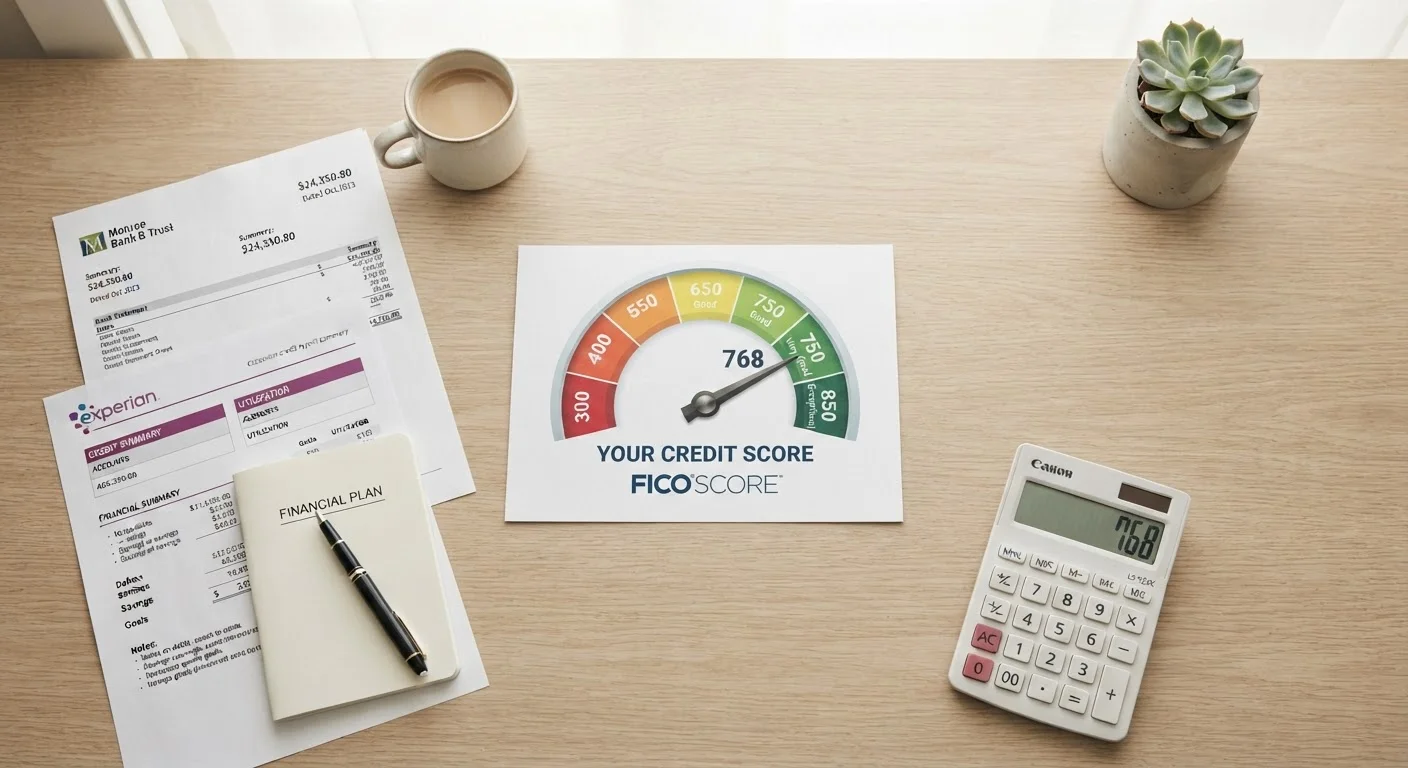
Photo: InsightsBlock.com | Access Information With Ease editorial
Key Takeaways
- Payment history is the single largest factor in most credit scoring models, accounting for roughly 35% of a FICO Score.
- Credit utilization - how much of your available credit you're using - is the second most influential factor at around 30%.
- A longer credit history generally helps your score, as does a diverse mix of credit types.
- Hard inquiries from new credit applications can temporarily lower your score.
- Your credit score and credit report are related but distinct - the score is derived from the report.
The Five Factors Behind Your Score
A credit score isn't a gut feeling - it's a formula. Most major scoring models break down into five categories, each weighted differently. Understanding the weight of each factor tells you exactly where to focus your energy.
- Payment history (≈35%): Whether you pay on time is the single biggest driver. One missed payment can meaningfully lower an otherwise strong score.
- Amounts owed / Credit utilization (≈30%): This measures how much of your available revolving credit you're using. Keeping utilization below 30% is a common benchmark; below 10% is often better.
- Length of credit history (≈15%): Older accounts in good standing help. This is why closing an old card you rarely use can sometimes hurt your score.
- Credit mix (≈10%): Having a variety of account types - revolving credit like cards plus installment loans like an auto or student loan - signals you can manage different obligations.
- New credit / Hard inquiries (≈10%): Applying for several new accounts in a short span can signal financial stress. Each hard inquiry may shave a few points temporarily.
These percentages reflect the FICO model, which is the most widely used by lenders. VantageScore assigns different weights but considers the same core factors. For a deeper look at what lives behind the score itself, see our piece on how credit reports and credit scores differ.
35%
Weight of payment history in FICO Score
According to FICO's published scoring framework, on-time payments are the single largest factor in your score calculation.
~200M
Americans with a scoreable credit file
The Consumer Financial Protection Bureau (CFPB) has reported that the vast majority of US adults have enough credit history to generate a score.
716
Average US FICO Score
Experian's State of Credit reports have placed the national average FICO Score in the 'good' range in recent years, though individual scores vary widely.
What Lenders Actually Do With Your Score
Lenders don't just check whether you qualify - they use your score to set terms. A borrower with a score of 760 and one with a score of 640 might both qualify for the same mortgage, but they'll likely receive meaningfully different interest rates. Over a 30-year loan, that rate difference can add up to tens of thousands of dollars in total interest paid.
Beyond mortgages, credit scores are used by landlords screening rental applicants, insurance companies setting premiums in many states, and employers in certain industries running background checks. Your number reaches further than most people realize.
It's worth noting that lenders often look at more than your score alone - income, debt-to-income ratio, and employment history all factor into credit decisions. The score is a starting point, not the whole picture. This article is for general informational purposes and does not constitute personalized financial or credit advice; consult a qualified financial professional for guidance specific to your situation.
Score Ranges and What They Signal
Under the FICO model, scores fall into five general bands:
| Score Range | Category | General Implication |
|---|---|---|
| 800-850 | Exceptional | Access to most favorable rates and terms |
| 740-799 | Very Good | Competitive rates across most products |
| 670-739 | Good | Approved for most credit; rates vary |
| 580-669 | Fair | May face higher rates or stricter requirements |
| 300-579 | Poor | Limited options; secured products may be needed |
Moving from one band to the next - say, from Fair to Good - can unlock meaningfully better borrowing terms. Small, consistent improvements in behavior compound over time. For a roadmap on building those habits, see habits that support a stronger credit profile.
Common Misunderstandings Worth Clearing Up
Several persistent myths lead consumers to make decisions that actually work against their score. Carrying a small balance on a credit card, for example, does not boost your score - it just generates unnecessary interest charges. Closing a paid-off card might feel tidy, but it reduces your available credit and can raise your utilization ratio.
Checking your own score also does no damage - that's a soft inquiry and is entirely invisible to lenders. Hard inquiries (from lender applications) do matter, but their impact is modest and fades within about 12 months. For a full breakdown of these misconceptions, common credit score myths is worth reading before you make any major credit decisions.
Finally, income is not in your credit score. A high earner with poor payment habits will have a lower score than a modest earner who pays on time every month. The score measures behavior, not wealth - a distinction that matters when you're building or rebuilding credit.
Frequently Asked Questions
The content provided on our blog site traverses numerous categories, offering readers valuable and practical information. Readers can use the editorial team’s research and data to gain more insights into their topics of interest. However, they are requested not to treat the articles as conclusive. The website team cannot be held responsible for differences in data or inaccuracies found across other platforms. Please also note that the site might also miss out on various schemes and offers available that the readers may find more beneficial than the ones we cover.