
Situations Where Debt Is a Tool, Not Just a Burden

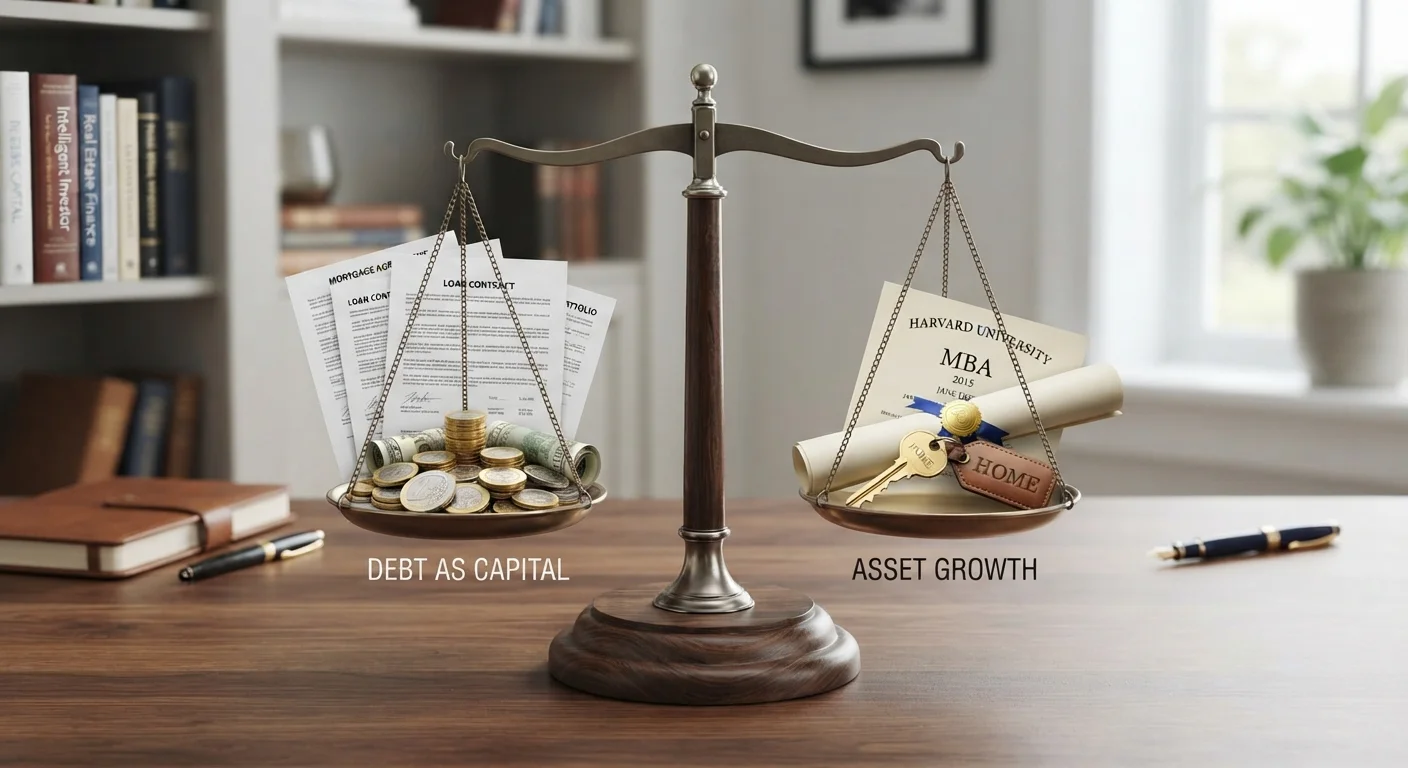
Photo: InsightsBlock.com | Access Information With Ease editorial
Key Takeaways
- Not all debt is harmful - some borrowing creates measurable long-term financial value.
- The interest rate, repayment terms, and purpose of a loan determine whether debt works for or against you.
- Strategic debt typically funds assets that appreciate or generate income, not consumption.
- Borrowing to build credit history can improve your financial options over time when managed carefully.
- Each debt decision requires honest assessment of your ability to repay and the true cost of borrowing.
Rethinking What Debt Actually Means
Debt carries a negative reputation that is, in many cases, well-earned. High-interest balances, missed payments, and borrowing beyond your means can cause lasting financial harm. But treating all debt as inherently bad misses something important: borrowing is a financial mechanism, and like most mechanisms, its impact depends entirely on how it's used.
The distinction that matters most is whether a loan funds something that retains or grows in value - or whether it finances consumption that disappears once purchased. Understanding this difference is foundational. If you want to brush up on the language before diving in, key debt terms every consumer should know is a useful reference.
Below are the situations where debt most commonly functions as a deliberate financial tool - along with the conditions that make each one reasonable rather than reckless.
Taking out a mortgage to purchase a home
For most US households, buying a home outright with cash isn't realistic. A mortgage makes homeownership accessible while allowing the buyer to build equity over time - equity being the portion of the home's value that belongs to the owner rather than the lender. As the loan balance decreases and, in many markets, property values shift upward, net worth can grow in ways that renting typically doesn't allow.
What makes mortgage debt relatively structured is the fixed repayment schedule, the asset backing the loan, and the fact that housing fulfills a need regardless of market conditions. That said, taking on more mortgage than your income can comfortably service turns this tool into a liability. Understanding how secured debt works is useful context here, since mortgages are secured loans - meaning the home itself is collateral.
A mortgage makes homeownership accessible and allows equity to build over time.
Financing education with a clear return in mind
Student loans are among the most debated forms of debt - and for good reason. When borrowing finances credentials that lead to meaningfully higher income, the math can work in the borrower's favor over a career. When it finances a degree with poor employment outcomes or far exceeds what the resulting salary can repay, it becomes a long-term burden.
The key variable is the ratio of expected post-graduation income to total debt load. A commonly cited rule of thumb among financial planners is to avoid borrowing more in total student loans than you expect to earn in your first year of employment - though individual circumstances vary widely, and this is general guidance rather than a formula. Borrowers should research their field's realistic starting salaries before committing to a loan amount.
Education debt works when the income it enables outpaces the cost of borrowing.
Borrowing to fund a viable small business
Business debt is used to acquire equipment, cover startup costs, or manage cash flow gaps - all with the expectation that the business generates enough revenue to repay the loan and then some. When the underlying business model is sound, borrowing to grow can accelerate returns that would otherwise take years to accumulate organically.
The risk is real: businesses fail, and personal guarantees on business loans can pull personal finances into the fallout. This is debt that demands rigorous planning, honest revenue projections, and ideally professional guidance before signing. But in principle, borrowing to create income-generating capacity is a fundamentally different act than borrowing to fund a vacation.
Business loans fund income-generating capacity - a fundamentally different use than consumption debt.
Using credit to build a credit history
Credit history is a factor in renting an apartment, qualifying for a mortgage, and sometimes even employment screening. Without a record of responsible borrowing, many financial doors stay closed. Opening a credit card, using it for routine expenses, and paying the balance in full each month is one way to establish that record without paying interest.
This only functions as a tool when the balance is cleared consistently. Carrying a balance to "build credit" is a misunderstanding - it adds interest costs without providing additional credit-building benefit over paying in full. The goal is demonstrated repayment behavior, not ongoing debt.
A paid-in-full credit card builds credit history without the cost of carrying interest.
Financing a vehicle needed for income
An auto loan on a depreciating asset is generally not considered strategic debt - vehicles lose value from the moment they leave the lot. But context changes the analysis. If reliable transportation is required to maintain employment or run a business, and cash reserves don't cover a purchase outright, financing a vehicle at a reasonable interest rate may be the more practical path than losing income while saving.
The calculation shifts if the loan is for a vehicle that's more expensive than the job requires, or if the monthly payment strains the budget. Borrowing the minimum needed to maintain reliable transportation is a different decision than financing a luxury upgrade on credit.
Vehicle debt can be justified when transportation directly enables income and the loan is proportionate.
Taking a low-interest loan to avoid depleting emergency savings
In some cases, a person may have the cash to cover a large expense but would drain their emergency fund to do so. If a low-interest financing option is available - say, a promotional rate or a personal loan well below the return on savings - preserving liquid reserves while borrowing may make financial sense.
This is a more nuanced scenario and depends heavily on the rates involved and the reliability of the repayment plan. It also requires honest discipline: borrowing to preserve savings only works if the monthly loan payments don't create new financial stress. A structured overview of managing what you owe can help frame whether existing obligations leave room for a new one.
Borrowing at a low rate to preserve liquid savings can make sense when the numbers support it.
Knowing When Borrowing Makes Sense
Each of the situations above shares a common thread: the borrower has a clear purpose, a realistic repayment plan, and a cost of debt that doesn't outpace the benefit received. That calculus is worth doing explicitly before any loan commitment.
Run the Real Cost Before Borrowing
It's equally worth knowing what debt looks like when it stops being a tool and starts becoming a trap. Common habits that extend debt repayment explores that side of the equation. And if you're already managing multiple obligations, how debt consolidation works may be worth reviewing.
This article is for general informational purposes only and does not constitute personalised financial or legal advice. Consult a qualified financial professional before making borrowing decisions based on your individual circumstances.
The content provided on our blog site traverses numerous categories, offering readers valuable and practical information. Readers can use the editorial team’s research and data to gain more insights into their topics of interest. However, they are requested not to treat the articles as conclusive. The website team cannot be held responsible for differences in data or inaccuracies found across other platforms. Please also note that the site might also miss out on various schemes and offers available that the readers may find more beneficial than the ones we cover.