
What Happens to Your Credit When You Miss a Payment

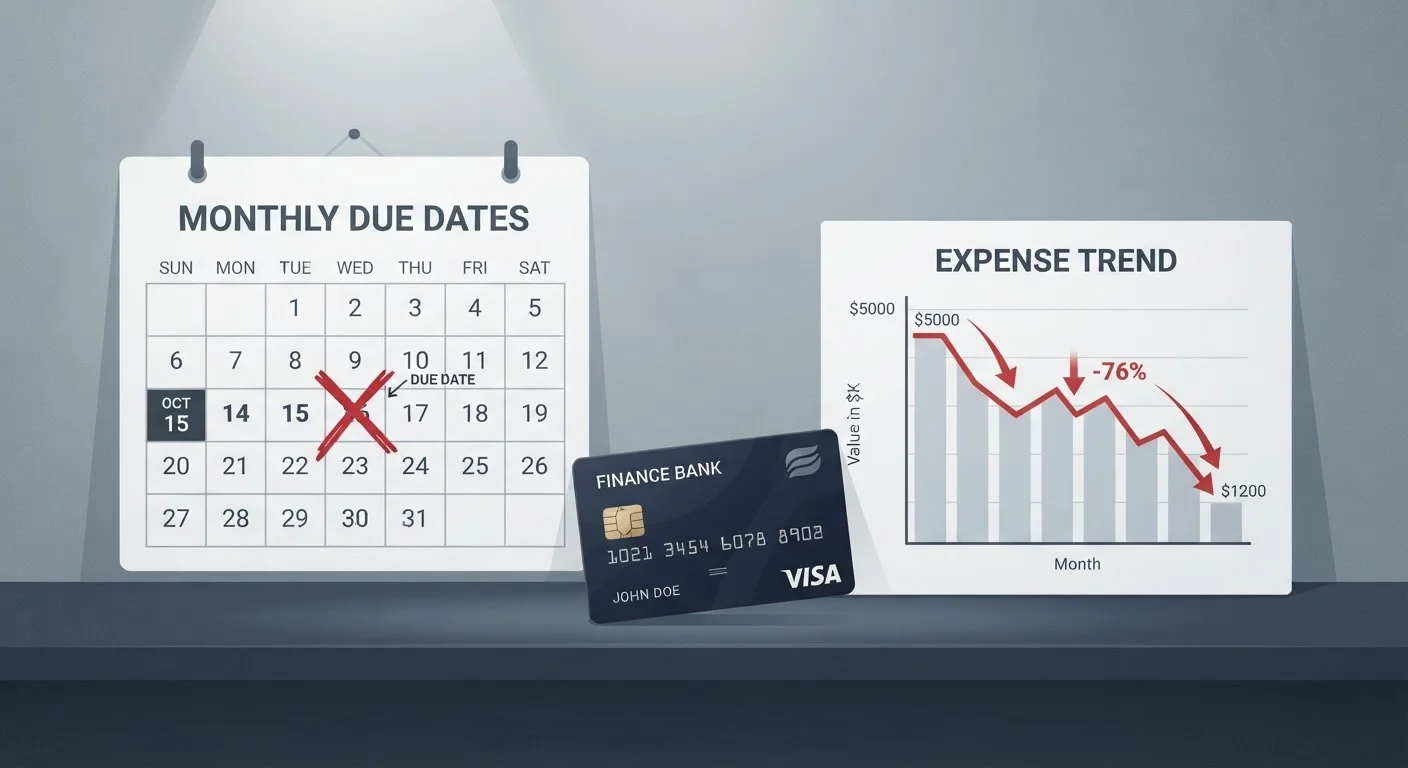
Photo: InsightsBlock.com | Access Information With Ease editorial
Key Takeaways
- A late payment doesn't hit your credit report until it's 30 days past due - you have a narrow window to catch up.
- A single 30-day late mark can drop a good credit score by 60-110 points, depending on your credit profile.
- Late payments stay on your credit report for up to seven years, though their impact fades significantly over time.
- Paying the overdue amount immediately limits further damage - even after the mark appears.
- Lenders often offer hardship programs or one-time forgiveness for isolated late payments; it's worth asking.
The Timeline: What Actually Happens After You Miss a Due Date
Missing a payment doesn't trigger immediate credit damage. In the first 1-29 days, the impact stays between you and your creditor. You'll likely owe a late fee - commonly $25-$40 for credit cards - and some issuers may apply a penalty APR that raises your interest rate going forward. None of this shows up on your credit report yet.
At day 30, the dynamic changes. Once a payment is a full billing cycle past due, federal law permits creditors to report it as delinquent to the credit bureaus - Equifax, Experian, and TransUnion. Once reported, the late payment becomes a public part of your credit history. At 60 and 90 days past due, additional delinquency markers can be added, each compounding the negative signal to future lenders.
If an account goes unpaid long enough - typically 120-180 days - a creditor may charge it off, meaning they classify the debt as a loss. A charge-off is one of the most damaging notations a credit report can carry, and the debt may then be sold to a collection agency, resulting in a separate collections entry.
35%
Weight of payment history in FICO scores
Payment history is the single largest factor in FICO's scoring model, making it the highest-priority behavior to protect.
7 years
How long a late payment stays on your report
Under the Fair Credit Reporting Act, accurate delinquency records can remain visible to lenders for up to seven years.
60-110 pts
Estimated score drop for one 30-day late payment
The drop is larger for consumers with higher starting scores and no prior delinquencies, according to published scoring research.
How Much Can One Late Payment Hurt Your Score?
Payment history is the single largest factor in most mainstream credit scoring models, accounting for roughly 35% of your score. That makes a missed payment disproportionately costly compared to almost any other factor.
The actual point drop varies based on your starting score and overall credit profile. Consumers with higher scores and clean histories tend to experience larger initial drops - sometimes 60-110 points - because that score reflects an unblemished track record. Someone who already has prior delinquencies may see a smaller marginal drop, but they're operating from a lower baseline to begin with.
The severity of the late mark also matters. A 90-day late payment signals greater financial distress than a 30-day mark and scores accordingly. Lenders reviewing your report manually also weigh recency and pattern: one isolated incident several years ago reads very differently than a pattern of recent delinquencies.
For more context on how payment behavior fits into the broader picture, see our article on habits that support a stronger credit profile over time.
Set Up Autopay for Minimums as a Safety Net
How to Limit the Damage - and Recover
If you've missed a payment or fear you're about to, the most important action is to pay the minimum owed as soon as possible. Every additional day of delinquency creates a more serious mark. If you catch the payment before 30 days have elapsed, it won't appear on your credit report at all - though you'll still owe any late fees assessed.
Once a delinquency has been reported, focus on keeping every other account current. Scoring models look at your overall payment pattern, and a single old mark surrounded by consistent on-time payments carries far less weight over time. According to the major credit bureaus, accurate negative information remains on your report for seven years, but its impact typically fades significantly after two to three years of clean behavior.
It's also worth contacting your creditor directly. Many issuers offer one-time goodwill adjustments for customers with an otherwise solid history - a call explaining a temporary hardship can sometimes result in the late mark being removed or waived. Ask about hardship programs as well; some creditors can temporarily reduce your minimum payment or suspend fees during financial difficulty.
If an error is involved - for example, a payment that was submitted on time but processed incorrectly - you have the right to dispute it. Our step-by-step walkthrough on disputing credit report errors explains how that process works with the major bureaus.
Finally, understand that missing payments rarely exists in isolation - it's often connected to broader patterns worth examining. See traps that make debt harder to escape for a look at the habits that quietly extend financial difficulty.
This article provides general financial information for educational purposes and does not constitute personalized financial or credit advice. Consult a qualified financial professional for guidance specific to your situation.
Frequently Asked Questions
The content provided on our blog site traverses numerous categories, offering readers valuable and practical information. Readers can use the editorial team’s research and data to gain more insights into their topics of interest. However, they are requested not to treat the articles as conclusive. The website team cannot be held responsible for differences in data or inaccuracies found across other platforms. Please also note that the site might also miss out on various schemes and offers available that the readers may find more beneficial than the ones we cover.