
Dog Dental Health: What Most Owners Miss

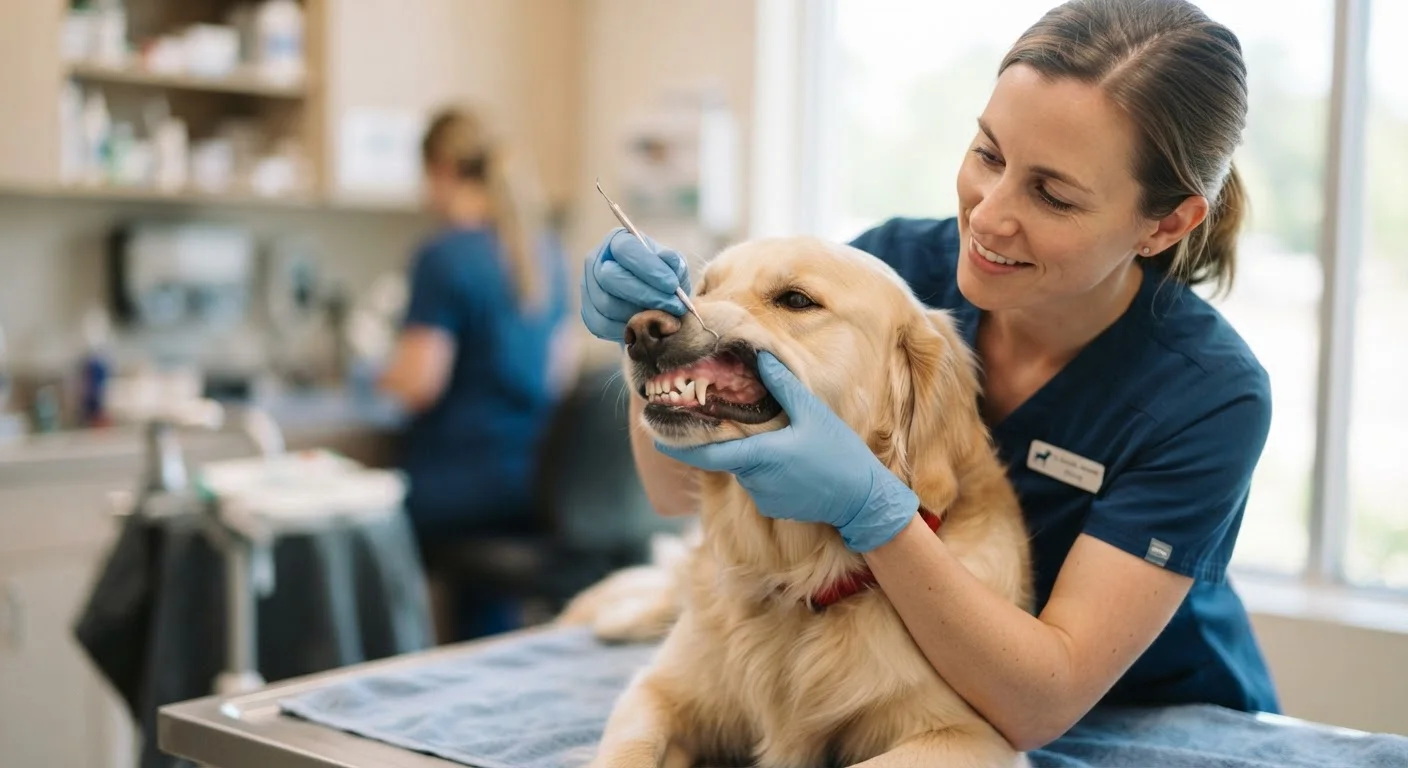
Photo: InsightsBlock.com | Access Information With Ease editorial
Key Takeaways
- By age three, most dogs show early signs of periodontal (gum) disease.
- Plaque hardens into tartar within 24-72 hours, making brushing frequency critical.
- Untreated dental disease can affect a dog's heart, kidneys, and liver over time.
- Daily tooth brushing is the single most effective at-home dental care method.
- Professional veterinary cleanings require anesthesia and are not comparable to cosmetic scaling.
- Products bearing the VOHC (Veterinary Oral Health Council) seal have proven efficacy data.
Why Dental Disease Is So Common in Dogs
Periodontal disease - infection and inflammation of the structures that support a dog's teeth - is one of the most frequently diagnosed conditions in veterinary practice. According to the American Veterinary Medical Association, an estimated 80% of dogs show some signs of dental disease by age three. Despite this, dental care remains one of the most overlooked aspects of routine dog ownership.
The root cause is simple biology. Dogs' mouths harbor bacteria that form a sticky film called plaque on the tooth surface. Without regular disruption - primarily through brushing - plaque mineralizes into calculus (commonly called tartar) within as little as 24 to 72 hours. Tartar cannot be removed by brushing alone; it bonds to enamel and creates a rough surface where more bacteria accumulate, accelerating the cycle.
Breed and mouth anatomy also play a role. Small and brachycephalic (flat-faced) breeds such as pugs, shih tzus, and bulldogs often have crowded teeth that trap food and debris more readily, making them disproportionately prone to early-onset disease. If you're just getting started with a new dog, establishing a dental routine early is one of the highest-value habits you can build.
80%
Dogs with dental disease signs by age 3
According to the American Veterinary Medical Association, the majority of dogs show evidence of periodontal disease well before middle age.
24-72 hrs
Time for plaque to harden into tartar
Veterinary dental guidelines note that plaque mineralizes rapidly without mechanical disruption, underscoring the need for frequent brushing.
#1
Most diagnosed condition in veterinary practice
Dental and periodontal disease consistently ranks among the top conditions seen by veterinarians across all dog ages and breeds.
What Plaque Buildup Actually Does to a Dog's Body
Most owners associate dental problems with bad breath, but the consequences extend well beyond the mouth. As periodontal disease progresses, bacteria below the gum line trigger inflammation that destroys the periodontal ligament and bone holding teeth in place. This causes pain, tooth loosening, and eventually tooth loss - often silently, because dogs instinctively mask discomfort.
More concerning is the systemic effect. Research published in veterinary literature has linked severe periodontal disease to changes in kidney, liver, and heart tissue in dogs, though the precise causal pathways are still being studied. The working hypothesis is that chronic oral bacteria enter the bloodstream through inflamed gum tissue, placing an ongoing inflammatory burden on major organs. While this research area continues to evolve, the association reinforces why dental care is considered part of overall preventive health - not a cosmetic concern.
To understand how dogs often hide this kind of discomfort, see our guide on signs your dog may be in pain.
Warning Signs Most Owners Overlook
Because dogs rarely stop eating even when their mouths hurt, owners can go months without realizing there's a problem. The following signs warrant a veterinary evaluation:
- Persistent bad breath - occasional odor is normal; consistently foul breath suggests bacterial overgrowth.
- Yellow or brown buildup on teeth, especially near the gum line.
- Red, swollen, or bleeding gums when touched or during chewing.
- Dropping food or chewing on one side of the mouth.
- Pawing at the face or reluctance to have the mouth touched.
- Loose teeth in an adult dog - this is never normal.
Many of these signs overlap with other conditions, so a veterinary examination is the appropriate next step rather than home diagnosis. This connects to a broader pattern of common dog care errors where subtle health signals go unrecognized until a condition is advanced.
At-Home Prevention: Building a Dental Routine
Daily tooth brushing is the gold standard recommended by veterinary dentists. It is the only home method proven to consistently disrupt plaque before it mineralizes. Use a toothbrush designed for dogs (or a finger brush for smaller mouths) and toothpaste formulated for pets - human toothpaste contains fluoride and xylitol, both of which are toxic to dogs.
Introducing brushing gradually matters enormously. Start by letting your dog taste the pet toothpaste, then progress to touching the teeth with your finger, then the brush. Most dogs adapt within two to three weeks if the experience is kept calm and positive. Even brushing three to four times per week provides meaningful benefit compared to no brushing at all.
Brush at the same time each day - right after a walk or before bed - so it becomes a predictable cue your dog anticipates rather than resists.
Lift the lip and focus the brush along the gum line at a 45-degree angle - that junction between tooth and gum is where periodontal disease begins.
Dental care pairs naturally with a broader grooming routine. Our guide on building a dog grooming routine covers how to sequence these habits so they fit into a realistic weekly schedule.
Professional Dental Cleanings: What to Expect
A professional veterinary dental cleaning is a medical procedure performed under general anesthesia - not a simple cosmetic scaling. Anesthesia is necessary because a thorough cleaning requires probing below the gum line, taking dental radiographs (X-rays), and addressing any diseased tissue - none of which a conscious dog can safely tolerate.
The procedure typically includes supragingival (above-gum) and subgingival (below-gum) scaling, polishing to smooth the enamel surface, dental X-rays to assess root and bone health, and extraction of non-viable teeth if necessary. Pre-anesthetic bloodwork is standard to ensure the dog can safely undergo sedation.
Anesthesia-Free Dental Scaling Is Not a Safe Substitute
Frequency of professional cleanings depends on the individual dog's breed, age, and rate of tartar accumulation. Your veterinarian is the right person to advise on scheduling - many dogs benefit from annual cleanings, while others may need them less or more frequently. Costs vary by region, clinic, and the complexity of care needed.
Dental Chews, Water Additives, and Other Supplements
A useful benchmark when evaluating dental products is the VOHC seal - the Veterinary Oral Health Council independently reviews clinical trial data and awards its seal to products that demonstrably reduce plaque or tartar. This seal applies to certain dental chews, water additives, dental diets, and oral rinses. It does not mean a product replaces brushing, but it provides a credible signal of efficacy in a crowded market.
Dental chews work primarily through mechanical abrasion as the dog chews; they are most effective when used daily and sized appropriately for the dog's weight. Water additives typically contain enzymes or antimicrobial compounds that reduce oral bacteria; compliance is easy since they require no dog cooperation, though results are more modest than brushing. Raw bones and certain toys are sometimes suggested, but they carry fracture risks - particularly hard bones - and should be discussed with your veterinarian before use.
No supplement fully compensates for irregular brushing or delayed professional care. Think of adjuncts as part of a layered strategy: brushing as the foundation, professional cleanings as the reset, and evidence-backed products as meaningful but secondary support.
This article is for general informational purposes only and does not constitute veterinary medical advice. Always consult a licensed veterinarian for guidance specific to your dog's health needs.
The content provided on our blog site traverses numerous categories, offering readers valuable and practical information. Readers can use the editorial team’s research and data to gain more insights into their topics of interest. However, they are requested not to treat the articles as conclusive. The website team cannot be held responsible for differences in data or inaccuracies found across other platforms. Please also note that the site might also miss out on various schemes and offers available that the readers may find more beneficial than the ones we cover.