
Carrying Cash vs. Using Cards Abroad

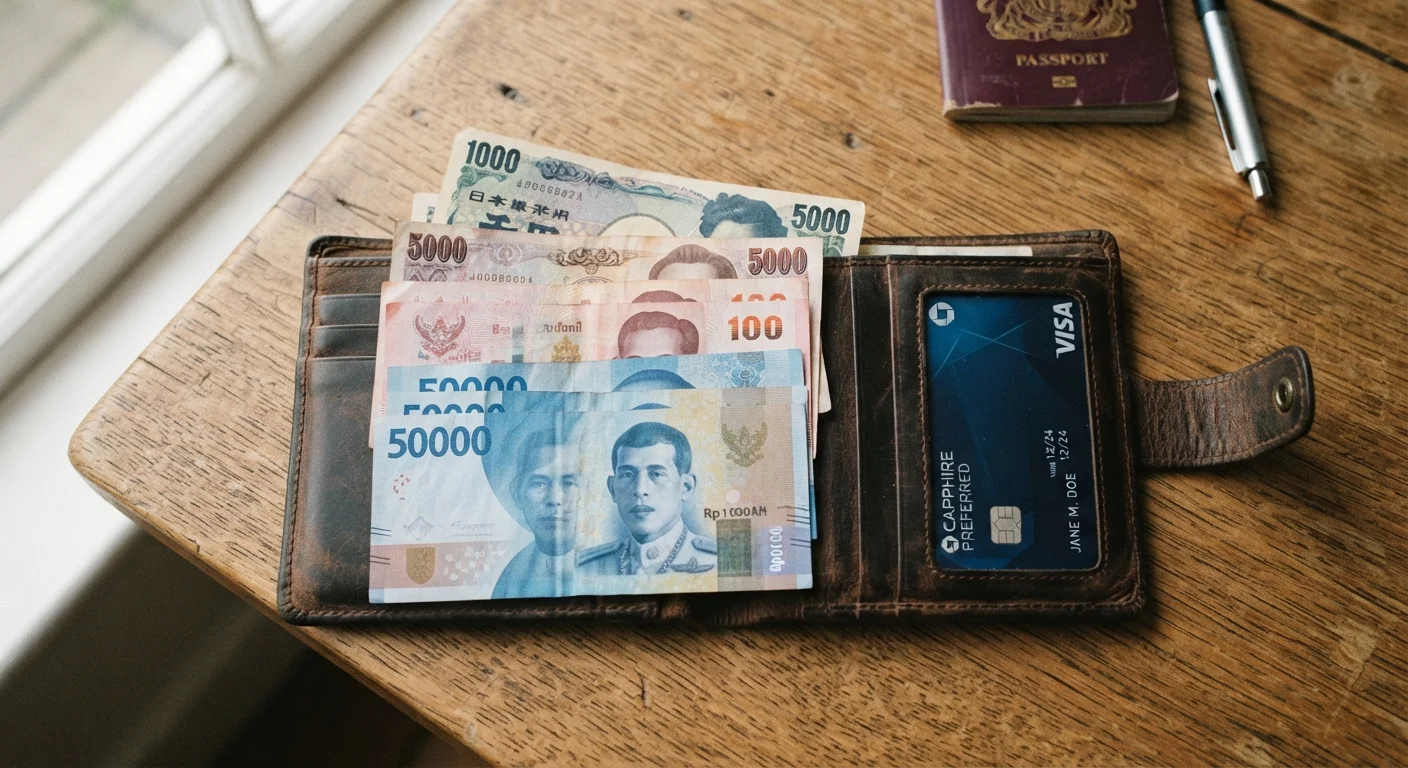
Photo: InsightsBlock.com | Access Information With Ease editorial
Key Takeaways
- Cash is often essential in markets, rural areas, and countries with low card acceptance.
- Card foreign transaction fees and ATM charges can quietly add up to meaningful costs.
- Dynamic currency conversion at payment terminals can cost you money - always pay in local currency.
- A mixed strategy - some cash, one low-fee card - tends to outperform either option alone.
- Safety considerations differ: lost cash is unrecoverable, while cards offer fraud protection.
Universally accepted, including cash-only vendors
Markets, street food stalls, rural transport, and small local businesses often do not have card readers. Cash ensures you're never turned away from a purchase.
Helps enforce a daily spending limit
Physically spending bills creates psychological awareness of outflows. Travelers who allocate cash by day often find it easier to stay within a budget.
No technology dependency or connectivity required
Cards can be declined due to network outages, fraud holds, or foreign transaction blocks. Cash works regardless of infrastructure.
Useful for tipping in cash-culture destinations
In many countries, tips are expected in cash and go directly to the service worker rather than being processed through a payment system.
Lost or stolen cash is gone permanently
Unlike cards, there is no fraud protection or recovery process for cash. Carrying large amounts increases the stakes of theft or misplacement.
Airport and hotel exchange rates are often poor
Currency exchange kiosks in airports frequently apply wide spreads above the interbank rate. This can be a meaningful cost on larger currency conversions.
Inconvenient for larger or planned expenses
Paying for accommodation, flights, or tours in cash requires carrying and managing larger sums, which creates both logistical and security challenges.
No transaction record for expense tracking
Cash spending leaves no automatic record, making it harder to review your budget after the trip or dispute a vendor dispute.
Why This Decision Actually Matters
The cash-vs.-cards question isn't just a matter of convenience - it has real financial consequences. Between foreign transaction fees, ATM withdrawal charges, unfavorable exchange rates, and the ever-sneaky dynamic currency conversion (DCC) trap, the wrong approach can cost travelers a noticeable percentage of their overall trip budget. At the same time, showing up in a small Italian hilltop town or a rural Southeast Asian village with only a card can leave you genuinely stuck.
For a deeper look at how overlooked fees add up, see hidden costs that quietly inflate travel budgets. The goal here is to walk through the honest tradeoffs so you can build a spending strategy that fits your actual trip.
Universally accepted, including cash-only vendors
Markets, street food stalls, rural transport, and small local businesses often do not have card readers. Cash ensures you're never turned away from a purchase.
Helps enforce a daily spending limit
Physically spending bills creates psychological awareness of outflows. Travelers who allocate cash by day often find it easier to stay within a budget.
No technology dependency or connectivity required
Cards can be declined due to network outages, fraud holds, or foreign transaction blocks. Cash works regardless of infrastructure.
Useful for tipping in cash-culture destinations
In many countries, tips are expected in cash and go directly to the service worker rather than being processed through a payment system.
The Case for Carrying Cash
Cash remains the universal fallback. In many destinations - rural areas, local markets, small restaurants, shared taxis, and tipping scenarios - cards are simply not accepted or are considered unusual. Countries across Southeast Asia, parts of Eastern Europe, Latin America, and sub-Saharan Africa still run heavily on physical currency for day-to-day transactions.
There's also a budgeting discipline argument. Research on consumer spending behavior consistently suggests that physically handing over bills makes spending feel more tangible, which can help travelers stick closer to daily limits. If you're working through a tight itinerary, the envelope method translates surprisingly well to travel spending - allocate cash by day or by category and you'll know exactly where you stand.
Where cash falls short: it can be lost or stolen with no recourse, carrying large amounts creates security risk, and airport or hotel exchange bureaus often offer significantly worse rates than local ATMs or bank branches.
Lost or stolen cash is gone permanently
Unlike cards, there is no fraud protection or recovery process for cash. Carrying large amounts increases the stakes of theft or misplacement.
Airport and hotel exchange rates are often poor
Currency exchange kiosks in airports frequently apply wide spreads above the interbank rate. This can be a meaningful cost on larger currency conversions.
Inconvenient for larger or planned expenses
Paying for accommodation, flights, or tours in cash requires carrying and managing larger sums, which creates both logistical and security challenges.
No transaction record for expense tracking
Cash spending leaves no automatic record, making it harder to review your budget after the trip or dispute a vendor dispute.
The Case for Using Cards
Travel-oriented debit and credit cards - particularly those with no foreign transaction fees - can be among the most cost-efficient ways to spend abroad when used at the right places. You get the interbank exchange rate (or close to it), you have fraud protection if the card is compromised, and there's no need to carry significant amounts of cash through airports or crowded transit hubs.
The critical rule: always choose to pay in the local currency when prompted at a point-of-sale terminal. Dynamic currency conversion, which lets a merchant convert your charge to US dollars on the spot, almost always uses an unfavorable rate padded with fees. Choosing local currency lets your card's network handle the conversion at a better rate.
Watch for Dynamic Currency Conversion
Cards also create a clear, searchable transaction record - useful for tracking expenses on a longer trip. Combined with strategies from stretching a week abroad on a tight budget, a well-chosen card can genuinely stretch your dollars further.
Building a Hybrid Strategy That Works
The most practical approach for most destinations is a deliberate mix. Arrive with a modest amount of local currency - enough for transport from the airport and the first day's incidentals - sourced from an ATM at or near your destination rather than an airport currency kiosk. Keep a low-fee travel card as your primary payment tool for hotels, restaurants that accept cards, and transportation bookings.
Budget a daily cash allowance for markets, street food, tipping, and any vendors you encounter who are cash-only. If you're navigating local transport options across your trip, ground transportation abroad offers a practical breakdown of when each mode makes financial and logistical sense - some, like rural bus networks, are strictly cash-based.
1-3%
Typical foreign transaction fee on standard cards
Many standard US credit and debit cards charge a foreign transaction fee of 1-3% on each purchase made abroad, according to general consumer finance guidance from US regulatory bodies.
~3-7%
Estimated DCC markup over interbank rate
Dynamic currency conversion markups vary by merchant and processor but are generally estimated at 3-7% above the base exchange rate, based on consumer finance research.
Before you travel, check whether your home bank reimburses international ATM fees, and research your destination's card acceptance norms. A few minutes of preparation here can eliminate some of the most common travel money mistakes.
This article provides general travel finance information for educational purposes only. It is not personalized financial advice. Fee structures, acceptance norms, and exchange rate policies vary by destination, provider, and account type. Verify details with your card issuer and check current travel advisories with official government sources before your trip.
The content provided on our blog site traverses numerous categories, offering readers valuable and practical information. Readers can use the editorial team’s research and data to gain more insights into their topics of interest. However, they are requested not to treat the articles as conclusive. The website team cannot be held responsible for differences in data or inaccuracies found across other platforms. Please also note that the site might also miss out on various schemes and offers available that the readers may find more beneficial than the ones we cover.