
Why Booking Flights Early Doesn't Always Save You Money

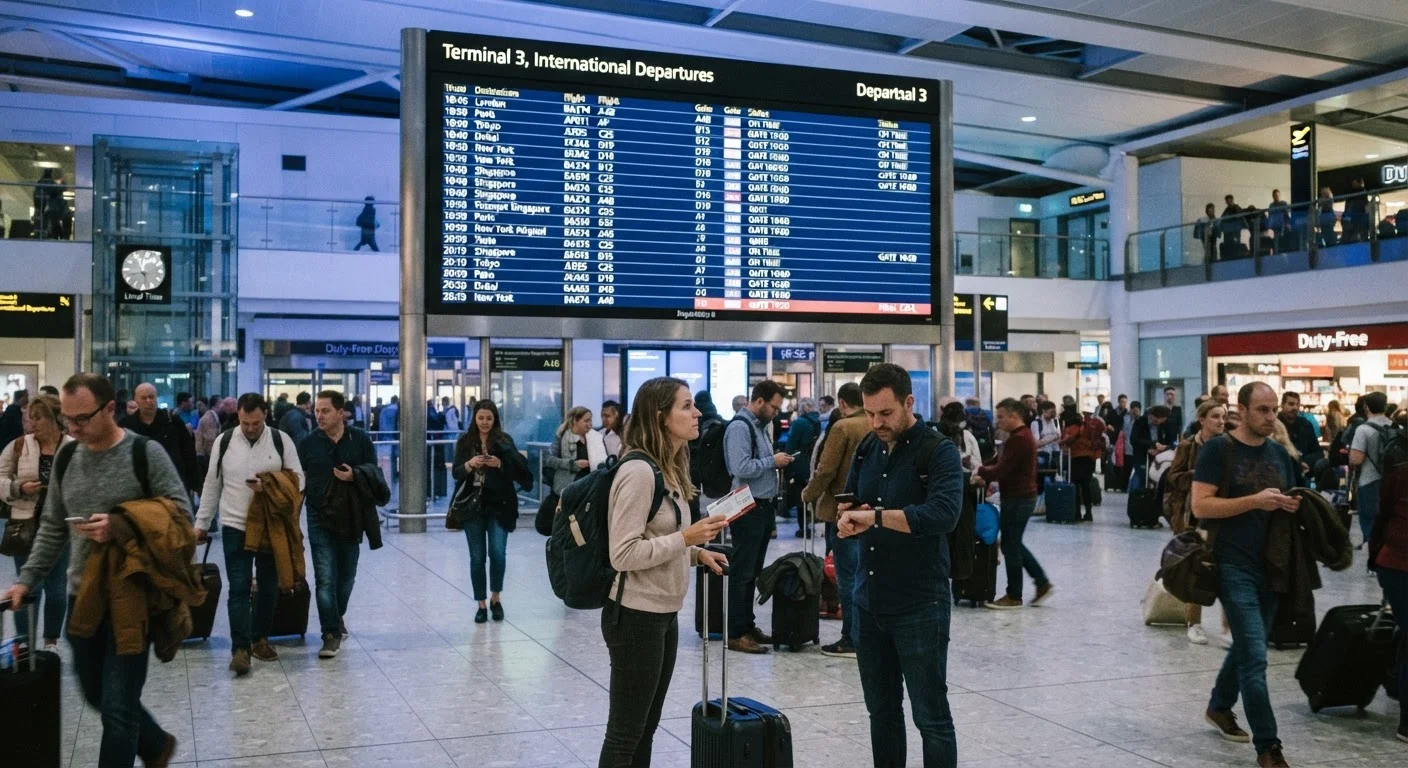
Photo: InsightsBlock.com | Access Information With Ease editorial
Key Takeaways
- Booking far in advance does not guarantee the lowest airfare - pricing is dynamic and route-dependent.
- A general "sweet spot" for domestic flights tends to fall roughly one to three months before departure.
- Last-minute fares are sometimes lower, but relying on them carries real availability and flexibility risks.
- Route type, season, and day of week all influence fare patterns more than booking date alone.
- Setting price alerts and monitoring fares over time is a more reliable strategy than fixed booking timelines.
The Myth That Earlier Always Means Cheaper
Ask most travelers when to book a flight and you'll hear the same answer: as early as possible. The logic feels airtight - beat the crowds, lock in low prices, sleep soundly. But airfare pricing doesn't work like a first-come, first-served sale. Airlines use sophisticated yield-management software that adjusts prices continuously based on demand, load factors, competitor moves, and historical booking patterns. Buying the moment flights open - typically 330 days out - often means paying a premium, not a discount.
The reality is that "earlier is cheaper" is a useful rule of thumb in some situations and actively misleading in others. Understanding the actual dynamics at play is what separates stressed guessers from confident, strategic bookers.
Myth
Booking a flight as early as possible - months or even a year out - always gets you the lowest price.
Fact
Early booking often means paying higher initial prices before competitive and algorithmic price adjustments bring fares down.
Airlines open most routes roughly 330 days before departure, but those early fares frequently reflect a high starting price rather than a bargain. Yield-management algorithms are designed to maximize revenue across all seat classes, and initial prices are often set conservatively high. Genuine price drops frequently occur weeks or months later as departure approaches and the airline adjusts to actual demand.
Myth
Last-minute flights are always expensive - you'll pay a penalty for waiting.
Fact
Last-minute fares can occasionally be lower, particularly on routes with unsold inventory, though this is inconsistent and risky to rely on.
While airlines do spike prices on popular routes in the final two weeks, some flights on less-traveled or off-peak routes see discounting when seats aren't selling. This is not a strategy most travelers can depend on - availability shrinks, nonstop options disappear, and the potential savings rarely justify the stress and inflexibility involved. Business travelers fill many last-minute seats at premium prices, which is what airlines are largely counting on.
Myth
The same booking-window rules apply to every destination and season.
Fact
Optimal booking windows vary significantly by route type, season, and demand pattern - there is no universal rule.
A domestic flight from Chicago to Denver behaves differently than a transatlantic flight to Rome during peak summer season. Popular holiday routes - Thanksgiving, spring break, major events - can see prices rise months earlier than typical, making earlier booking genuinely advantageous in those specific cases. Meanwhile, off-peak shoulder-season routes may offer low fares across a wide range of booking windows. Treating every itinerary with the same rule leads to poor decisions in both directions.
Myth
Tuesday is always the cheapest day to book flights.
Fact
The "book on Tuesday" rule is a persistent oversimplification with little consistent support in recent fare data.
This idea originated from observations that some airlines released weekly fare sales on Tuesday mornings, prompting competitors to match by Tuesday afternoon. While that pattern existed to some degree historically, modern algorithmic pricing adjusts fares in real time around the clock - sometimes many times per day. Waiting for a specific day of the week is less reliable than monitoring price alerts and responding to genuine dips as they appear.
Myth
Once you've found a low fare, prices will only go up - so you must book immediately.
Fact
Fares fluctuate in both directions; a low fare today may drop further, though it may also rise - there's genuine uncertainty either way.
Fare volatility means that a price you see today is not necessarily the floor. Many travelers book impulsively out of fear that prices will only climb, when a brief monitoring period might reveal a lower price window. That said, genuine low fares on popular routes can disappear quickly. The honest answer is that no one can perfectly predict fare movement - which is why alert-based monitoring, rather than panic-booking or indefinite waiting, is the most rational approach.
What Fare Research Actually Shows
Multiple analyses of airfare data - including work published by fare-tracking services - suggest that the price curve for a typical domestic US route isn't a straight line sloping upward from booking to departure. Instead, fares tend to start moderately high when a route first opens, dip during a mid-range window (commonly cited as roughly one to three months before departure for domestic travel), then spike sharply in the final two weeks as business travelers and last-minute bookers fill remaining seats.
1-3 months
Typical domestic fare sweet spot before departure
Fare-tracking analyses have generally identified this window as a period when domestic US airfares frequently (though not always) reach more competitive price points.
3-6 months
Suggested advance window for international routes
Industry observers note that international itineraries - especially to Europe during summer - tend to see stronger price advantages when booked further in advance than domestic flights.
International routes follow a different curve - that window generally shifts earlier, often to three to six months out - and peak-season travel to popular destinations behaves differently still. Summer flights to Europe or holiday domestic routes can see prices climb well before that mid-range window closes. Seasonality, not just timing, is doing much of the heavy lifting.
For travelers building a realistic budget, these nuances matter. Our guide on building a trip budget that actually holds walks through how to account for airfare volatility when estimating total trip costs.
Smarter Strategies Than Picking an Arbitrary Date
Rather than committing to a fixed "book X months out" rule, experienced travelers focus on monitoring. Setting price alerts through fare-tracking tools lets you watch a specific route over time and act when a genuine dip appears - rather than locking in at an arbitrary moment and hoping for the best. Flight alerts, fare calendars, and error fares are tools worth understanding before your next search.
Don't Rely on Last-Minute Deals for Must-Do Trips
Flexibility also shifts the equation dramatically. Travelers who can move their departure by a day or two - or consider nearby airports - often find lower fares that rigid searchers miss entirely. Similarly, off-season travel myths intersect directly with flight pricing: shoulder-season routes sometimes offer lower fares at almost any booking window, which matters more than when exactly you pull the trigger.
Booking sequence also plays a role. Whether you should lock in your flight or accommodation first - and how each choice affects your budget flexibility - is worth thinking through deliberately. See our take on booking flights vs. accommodation first for a practical breakdown.
The content provided on our blog site traverses numerous categories, offering readers valuable and practical information. Readers can use the editorial team’s research and data to gain more insights into their topics of interest. However, they are requested not to treat the articles as conclusive. The website team cannot be held responsible for differences in data or inaccuracies found across other platforms. Please also note that the site might also miss out on various schemes and offers available that the readers may find more beneficial than the ones we cover.