
Solo Travel vs. Guided Tours: Weighing the Real Differences

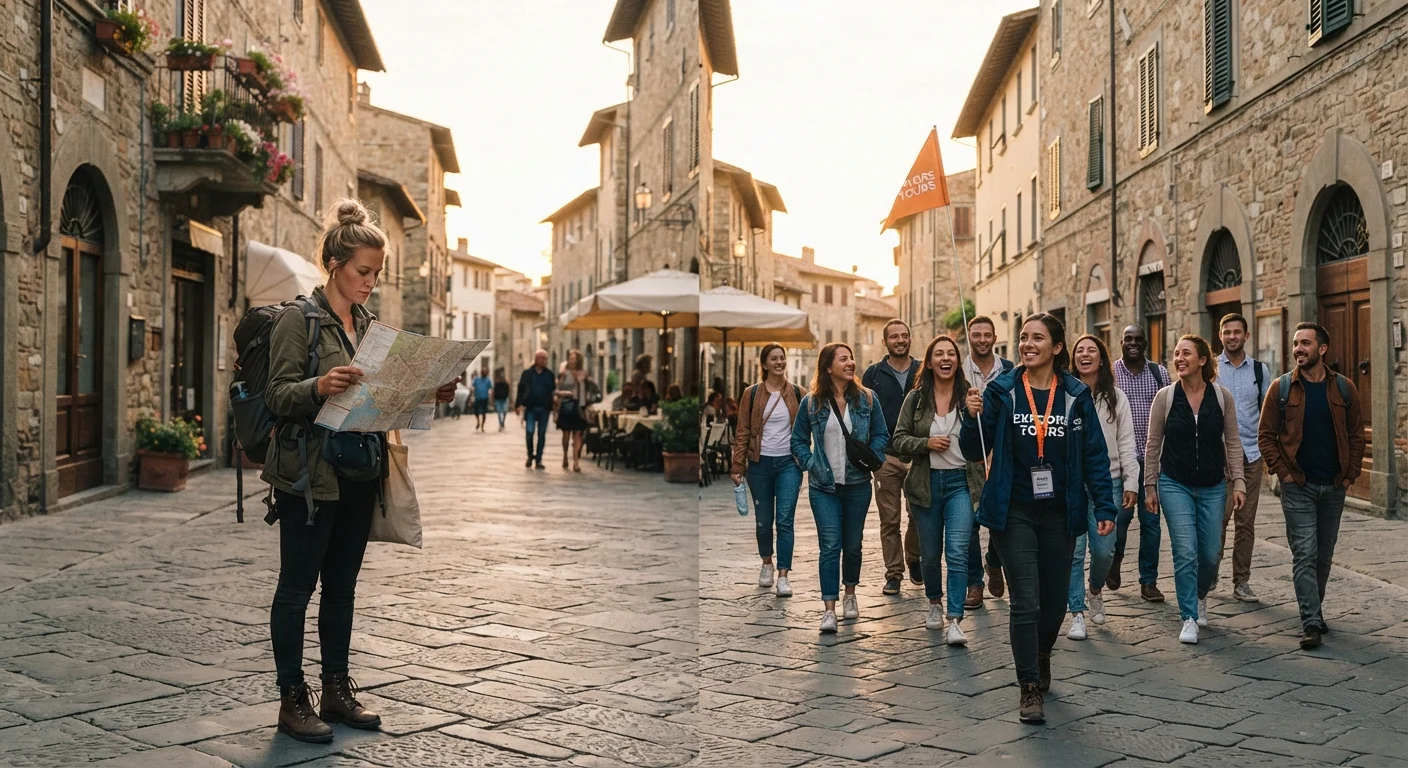
Photo: InsightsBlock.com | Access Information With Ease editorial
Key Takeaways
- Solo travel typically costs less upfront but requires more planning time and research.
- Guided tours bundle logistics, local expertise, and group camaraderie into a single price.
- Flexibility is solo travel's biggest advantage; safety and structure are guided tours' strongest selling points.
- Neither option is universally superior - your destination, budget, and experience level all matter.
- Many travelers find a hybrid approach - some independent days plus select guided excursions - works well.
The Core Trade-Off: Control vs. Convenience
At its heart, the solo-versus-guided debate is a trade-off between control and convenience. Solo travelers design every element of their trip - from flight timing to restaurant choices - while guided-tour participants hand that responsibility to a professional operator in exchange for a smoother, pre-engineered experience.
Neither approach is lazy or reckless. Solo travel demands genuine preparation: visa research, accommodation booking, ground-transport planning, and building a realistic daily budget. Our trip-planning framework breaks down exactly how those phases connect. Guided tours, meanwhile, require a different kind of homework - vetting operators, reading itineraries carefully, and understanding what the quoted price actually covers.
The honest starting question isn't «which is better?» but «what do I actually want to spend my energy on - before the trip or during it?»
| Solo Travel | Guided Tours | |
|---|---|---|
| Upfront Cost | Pay retail per component; can be lower overall | Bundled price; single supplements add cost for solo travelers |
| Flexibility | Full control; change plans anytime | Fixed itinerary; limited deviation |
| Planning Effort | High - research, bookings, logistics all on you | Low - operator handles most logistics |
| Local Expertise | Self-sourced; varies by preparation | Built-in via professional guides |
| Social Experience | Choose your own interactions | Shared experience with group members |
| Best For | Experienced, flexible, budget-focused travelers | First-timers, complex destinations, convenience seekers |
Cost: What You Pay and What You Get
Solo travel is often assumed to be cheaper, and it can be - but the math is rarely simple. When you travel independently, you pay retail for every component: accommodation, transfers, entry fees, and guides hired à la carte. Booking early and staying flexible with dates can lower costs significantly, and our complete budget travel planning guide walks through how to do that systematically.
Guided tours carry a premium for bundled convenience, but group purchasing power often offsets part of it - operators negotiate bulk rates on hotels, coaches, and admissions. Single travelers on guided tours, however, typically pay a «single supplement» surcharge, which can add 20-40% to the base price, making this option notably pricier for those traveling alone.
Solo travelers also face hidden costs: time spent researching, booking fees on individual reservations, and the occasional expensive mistake from unfamiliarity with a destination. Factor those in before assuming solo always wins on price. For accommodation decisions that affect your budget, see our hostel vs. budget hotel comparison.
Ask What's Actually Included
Flexibility, Safety, and Experience Quality
Solo travel's defining advantage is schedule freedom. You can linger in a village market, skip a museum that doesn't interest you, or pivot your entire itinerary based on a local recommendation. That spontaneity is genuinely difficult to replicate inside a group itinerary where the coach leaves at 8 a.m. regardless.
On the safety side, the picture is nuanced. Guided tours offer real advantages in destinations where language barriers, unfamiliar transport systems, or safety concerns make independent navigation genuinely challenging. Having a local expert manage logistics reduces exposure to scams, missed connections, and disorientation. Solo travelers, particularly in unfamiliar regions, should invest time in understanding local ground transportation options before they arrive.
Experience quality is subjective. Guided tours deliver curated depth - expert narration at historical sites, access to experiences that require advance arrangement or local contacts, and the social energy of a shared journey. Solo travel delivers something different: the unfiltered texture of a place, encountered at your own pace, with discoveries that feel personally earned.
For travelers whose group has mixed comfort levels or budgets, a hybrid approach often makes sense - book a structured tour for complex legs of a trip while leaving open days for independent exploration. The guide to coordinating different comfort levels covers exactly this kind of planning.
How to Decide What's Right for Your Trip
A few honest questions can cut through the noise quickly. How comfortable are you navigating a country whose language and transit system you don't know? Do you want built-in social interaction, or do you prefer choosing your own company? Is your travel window fixed, or can you move dates around for better prices?
Destination complexity matters enormously. A solo trip through Canada or Western Europe is manageable for most travelers with moderate planning. A first-time trip to a destination with a very different script, limited English signage, or complex permit requirements may genuinely benefit from at least partial guided support.
If you're leaning toward independent travel with a group of friends or family, the logistics shift considerably - our group trip planning guide covers coordination strategies that keep everyone on the same page. And if the pace of your itinerary is still undecided, the slow travel vs. packed itineraries comparison explores how that choice affects both cost and experience.
There's no shame in mixing approaches. Many seasoned travelers book a guided tour for a specific leg - a remote national park, a culturally dense city - and travel solo for the rest. That flexibility is entirely available, and often produces the most satisfying trips of all.
The content provided on our blog site traverses numerous categories, offering readers valuable and practical information. Readers can use the editorial team’s research and data to gain more insights into their topics of interest. However, they are requested not to treat the articles as conclusive. The website team cannot be held responsible for differences in data or inaccuracies found across other platforms. Please also note that the site might also miss out on various schemes and offers available that the readers may find more beneficial than the ones we cover.