
Hostels vs. Budget Hotels: What You Actually Get for the Price

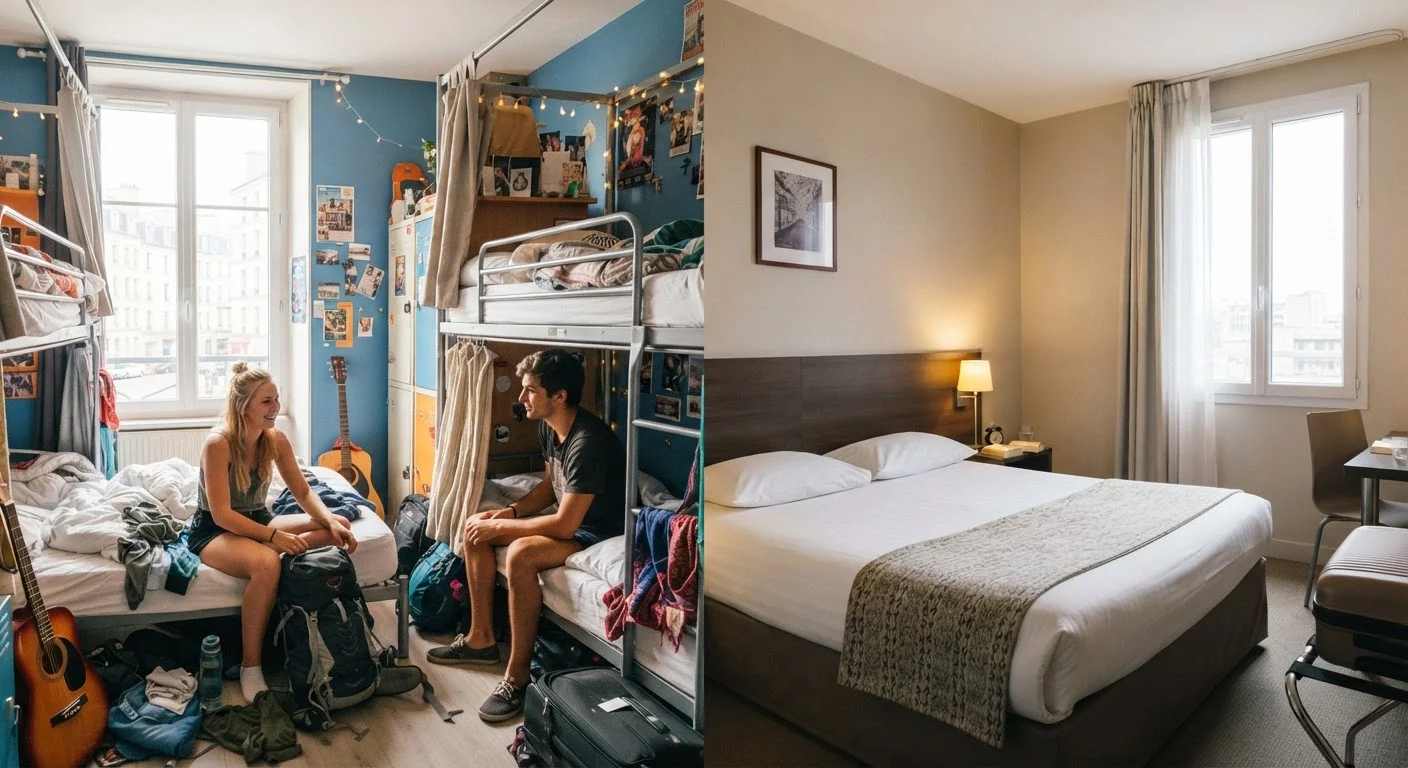
Photo: InsightsBlock.com | Access Information With Ease editorial
Key Takeaways
- Hostels typically cost $15-$40 per night for a dorm bed; budget hotels average $60-$120 for a private room.
- Hostels offer social atmosphere and shared amenities; budget hotels deliver consistent privacy and dedicated bathrooms.
- Your travel style - solo vs. couple, light sleeper vs. social butterfly - should drive the choice.
- Location and city matter: hostels dominate some markets, budget hotels others.
- Both options can fit a well-planned trip budget when booked strategically.
Breaking Down the Real Costs
Accommodation is usually the second-largest travel expense after flights, so understanding what you actually pay - and what you get - matters more than a surface-level price tag. As part of any solid trip budget, knowing the true per-night cost of each option helps you plan without surprises.
In most major US and international cities, hostel dorm beds run roughly $15-$40 per night, though prices climb in expensive destinations like New York, San Francisco, or Amsterdam. Budget hotels - think national chains, independent motels, or two-star properties - typically range from $60-$120 per night for a private room. That gap can look enormous for solo travelers but shrinks quickly when two people share a hotel room.
| Criterion | Hostels | Budget Hotels |
|---|---|---|
| Avg. nightly cost (solo) | $15-$40 (dorm bed) | $60-$120 (private room) |
| Privacy | Shared dorm, communal bathrooms | Private room, en-suite bathroom |
| Security | Personal lockers, varies by property | Lockable private room |
| Social atmosphere | High - common rooms, events | Low - mostly transactional |
| Kitchen access | Usually available | Rarely available |
| Best for couples (per-person cost) | $30-$80 (two dorm beds) | $30-$60 (room split two ways) |
| Noise level | Typically higher | Typically lower |
Factor in what's included: many hostels offer free breakfast, communal kitchens (cutting food costs), and free walking tours. Budget hotels may include parking or modest breakfast, but rarely kitchen access. Run the full math on a per-person, per-stay basis before assuming one is obviously cheaper.
Comfort, Privacy, and the Sleep Factor
Price tells part of the story; comfort tells the rest. In a hostel dorm, you're sharing a room with anywhere from 4 to 20 strangers. Bunk beds, shared bathrooms, and varying levels of noise are standard. Quality hostels invest in reading lights, individual power outlets, personal lockers, and well-maintained bathrooms - but you're still operating in a communal environment.
Budget hotels deliver a private room with a lockable door, a dedicated bathroom, and a bed that's yours alone. The trade-off is a room that can feel sparse or dated. Amenities vary widely: some include a mini-fridge or free Wi-Fi; others charge for parking or breakfast. Don't assume amenities without checking - read recent reviews carefully.
$15-$40
Typical nightly hostel dorm bed cost
Based on general market pricing across major travel destinations in North America and Europe; prices vary significantly by city and season.
4-20
Beds shared in a typical hostel dorm room
Dorm sizes vary widely - smaller 4-bed dorms offer more quiet, while larger dorms maximize savings but reduce privacy.
~50%
Potential savings for solo travelers choosing hostels
Rough estimate comparing a $35 dorm bed to a $70 budget hotel room; actual savings depend heavily on destination and availability.
If you're a light sleeper or traveling for work, the hostel noise factor is a genuine consideration. Conversely, if you're spending most of your time out exploring, a clean dorm bed for sleeping is perfectly functional. Match your lodging choice to how you actually spend your travel days.
Social Scene vs. Personal Space
One underrated dimension of this comparison is atmosphere. Hostels are intentionally social spaces: common rooms, communal kitchens, group events, and notice boards create an organic environment for meeting fellow travelers. For solo travelers especially, this can dramatically shape the overall experience - and save money on meals cooked together or rides split among new friends.
Budget hotels are the opposite: transactional and private by design. You check in, you check out, and interactions with other guests are minimal. That's not a flaw - for couples, families, or anyone who needs downtime between sightseeing, it's a genuine feature. See also: solo travel vs. guided tours for another lens on how your travel style should shape your planning choices.
The decision often comes down to how you recharge. If meeting people energizes you, hostels deliver that freely. If you need quiet and personal space to reset, a budget hotel room pays for itself in wellbeing - and that's part of the budget equation too. For broader planning context, the complete budget travel planning guide covers how accommodation fits into your overall itinerary strategy.
The content provided on our blog site traverses numerous categories, offering readers valuable and practical information. Readers can use the editorial team’s research and data to gain more insights into their topics of interest. However, they are requested not to treat the articles as conclusive. The website team cannot be held responsible for differences in data or inaccuracies found across other platforms. Please also note that the site might also miss out on various schemes and offers available that the readers may find more beneficial than the ones we cover.