
What U.S. Travelers Need to Know About Passports and Visas

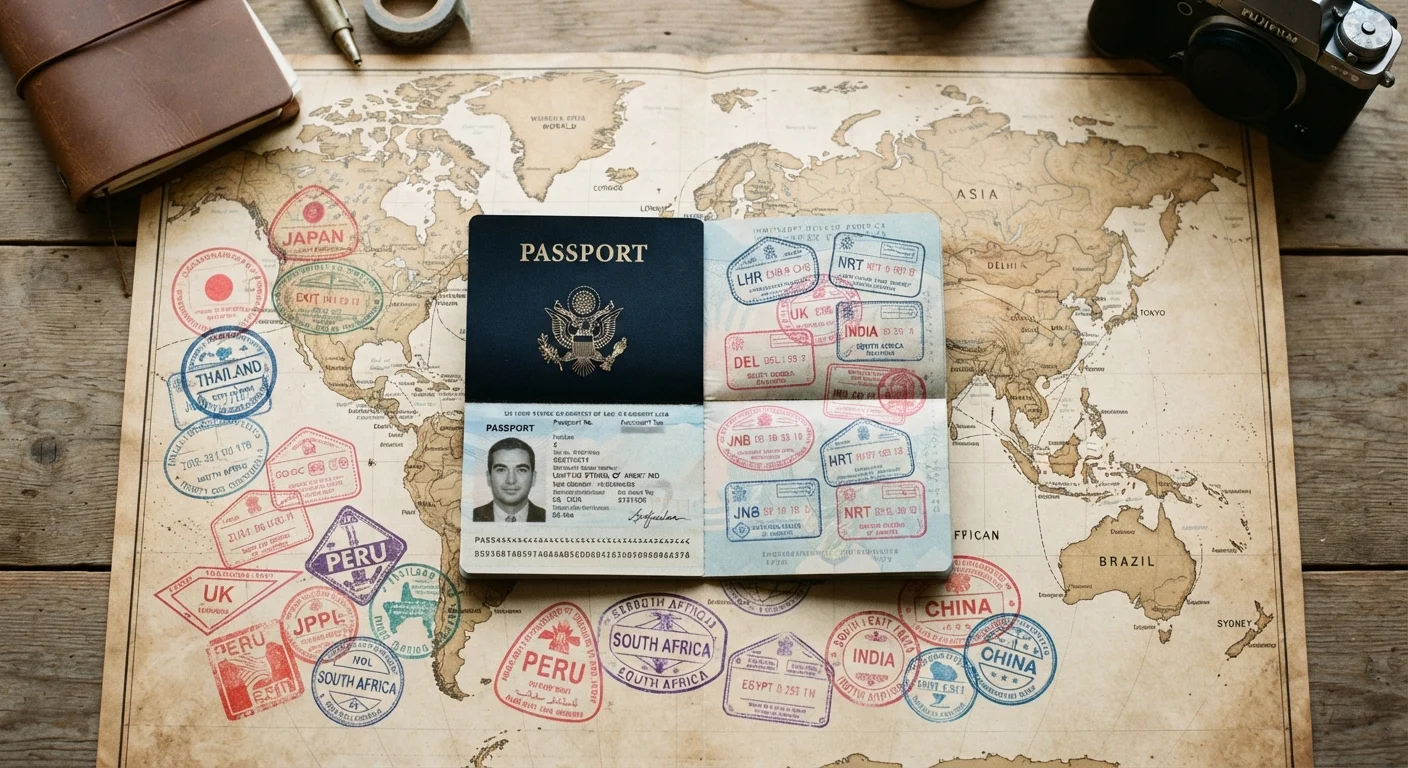
Photo: InsightsBlock.com | Access Information With Ease editorial
Passport Basics: Validity, Pages, and Renewal Timing
Your passport is the single most critical document for international travel - and its details matter more than most travelers realize. Here's what to check before you book anything:
- Validity rules: Many countries require your passport to remain valid for at least six months beyond your planned departure date. A passport that's technically unexpired may still get you turned away at the border or denied boarding at the gate.
- Blank pages: Most countries require at least one or two blank visa pages. Border agents use these for entry and exit stamps, and some nations won't admit you without a minimum number of blank pages available.
- Renewal lead time: Standard US passport processing takes roughly 6-8 weeks under normal demand. Expedited service (an additional fee) can reduce that to 2-3 weeks, but timelines fluctuate. During peak travel seasons, processing can take considerably longer.
If your trip is within 13 weeks, the US Department of State allows you to schedule an in-person appointment at a passport agency for urgent travel. Always verify current wait times at travel.state.gov before assuming a timeline. For a full pre-trip document review, see our complete pre-trip planning checklist.
Understanding Visa Types and Entry Requirements
A visa is official permission - issued by a foreign government - to enter its territory for a specific purpose and duration. Not every trip requires one, but knowing the types helps you plan accurately.
Visa
Official permission granted by a foreign government allowing a traveler to enter, transit, or stay in that country for a specified purpose and duration.
Visa Waiver Program (VWP)
A US program allowing citizens of designated countries to visit the US without a visa for up to 90 days - and reciprocally, US travelers to visit participating countries under similar terms.
ETIAS
The European Travel Information and Authorization System - an electronic pre-authorization required for US and other visa-exempt travelers visiting the Schengen Area.
Schengen Area
A zone of 27 European countries that have abolished internal border controls, effectively functioning as a single country for short-stay entry purposes.
Transit Visa
A visa required by some countries specifically for travelers who are passing through (not entering) their territory, including during a layover at an international airport.
Passport Validity Period
The timespan during which a passport is legally valid. Many destination countries require passports to remain valid for at least six months past the last day of your planned stay.
Common Visa Categories
- Tourist / B-2 Equivalent: Short-stay leisure travel. Often issued on arrival or via an online portal (e-visa).
- Business Visa: Covers meetings, conferences, and limited professional activities. Does not typically permit paid employment.
- Transit Visa: Required by some countries even if you're only changing flights at their airport. Check this if you have a layover in a non-Visa Waiver country.
- Long-Stay / Residency Visas: For stays exceeding 90 days - studying, working, or retiring abroad. These involve considerably more documentation.
The Visa Waiver Program (VWP)
US travelers can enter 40+ countries visa-free for short stays (typically up to 90 days) through bilateral agreements or the Visa Waiver Program. However, VWP travel to Europe now requires prior authorization through the ETIAS system, which launched for US passport holders. Always confirm current requirements - these agreements change. Verify entry rules at the official embassy or consulate website of your destination country, or use the US Department of State's country information pages.
Planning your budget around these fees? The pre-departure budget checklist includes a section on document-related costs.
Where to Verify Requirements - and What to Watch For
Entry requirements are set by foreign governments and can change with little notice. Use only official sources:
- US Department of State - travel.state.gov lists country-specific entry, visa, and safety information.
- Destination country's embassy or consulate in the US - the authoritative source for visa applications and current rules.
- Your airline - carriers use the TIMATIC database and can flag document issues before you board.
Requirements Can Change Without Much Notice
A few often-overlooked details that catch travelers off guard:
- Proof of onward travel: Many countries ask for evidence of a return or onward ticket at the border.
- Sufficient funds: Officers can request proof you can support yourself financially during your stay.
- Health documentation: Some destinations require vaccination records. Verify these requirements with official sources well ahead of departure.
- Dual nationals: If you hold two passports, confirm which one you're required or advised to use for specific destinations.
Once your documents are sorted, your attention shifts to packing. The first-time international traveler packing list walks through every category of what to bring - including a dedicated documents section. And if you're carrying prescriptions, don't skip guidance on traveling with medications before you fly.
This article provides general travel information only. Entry requirements, visa rules, and processing timelines change frequently. Always verify current requirements through official government sources - including the US Department of State and the embassy or consulate of your destination country - before making travel arrangements.
The content provided on our blog site traverses numerous categories, offering readers valuable and practical information. Readers can use the editorial team’s research and data to gain more insights into their topics of interest. However, they are requested not to treat the articles as conclusive. The website team cannot be held responsible for differences in data or inaccuracies found across other platforms. Please also note that the site might also miss out on various schemes and offers available that the readers may find more beneficial than the ones we cover.