
Traveling With Medications: Documentation, Storage, and Airport Rules

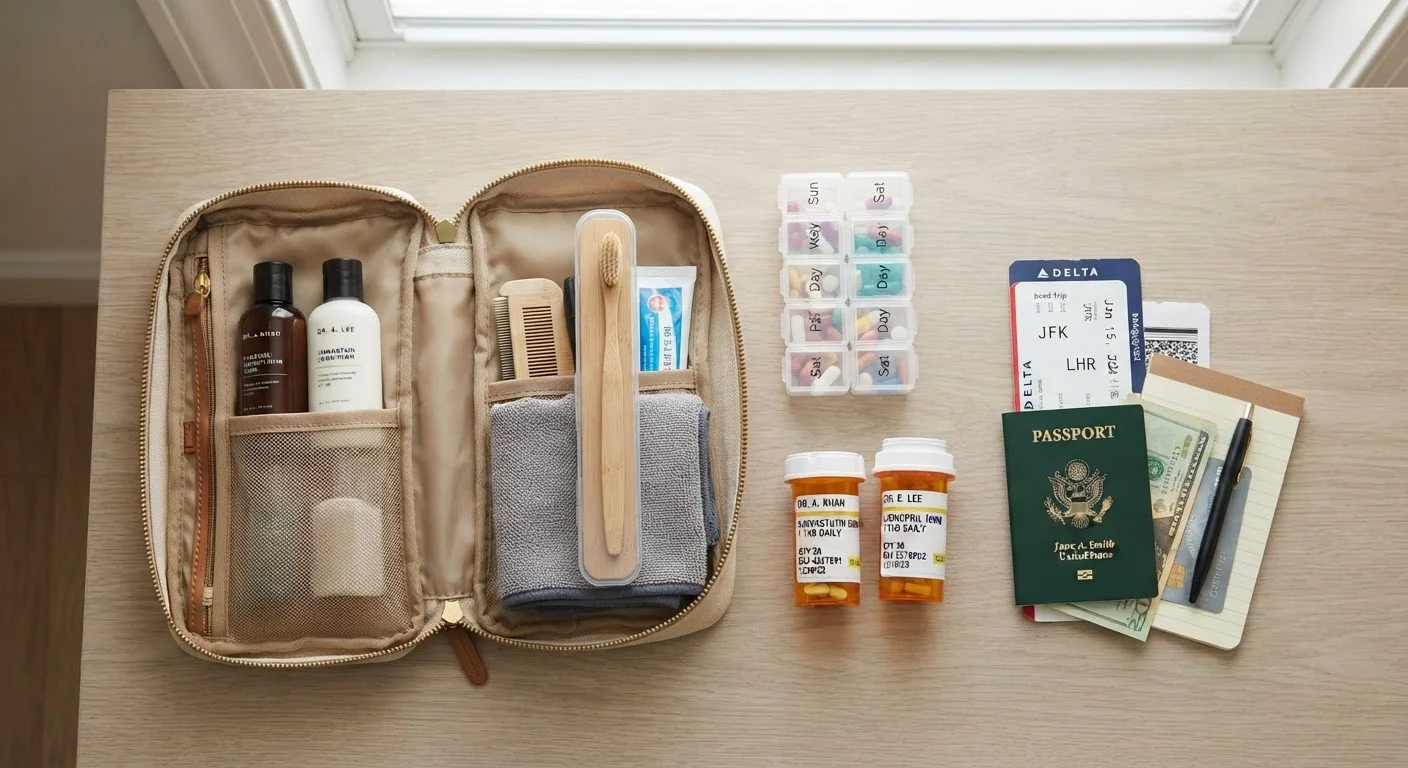
Photo: InsightsBlock.com | Access Information With Ease editorial
Documentation You Should Carry
Before your bag is even zipped, documentation is your first line of defense. For prescription medications, carry the original pharmacy-labeled container - the label should match your name, prescribing physician, and drug name exactly. A printed letter from your doctor explaining the medical necessity of each medication is strongly recommended, particularly for controlled substances, injectable medications, or anything in liquid form above standard TSA limits.
For international travel, requirements vary significantly by country. Some nations require advance authorization or import permits for medications that are freely available in the U.S. Always verify entry rules with the destination country's embassy or consulate before departure. The U.S. Department of State's country information pages and the destination country's official health authority are the authoritative sources - not travel forums. See our guide to passports and visas for related documentation prep.
Over-the-counter medications generally require less paperwork, but if you're carrying large quantities, having receipts or packaging that shows standard dosing can help clarify intent at customs.
TSA Rules and Airport Screening
The TSA permits prescription medications in carry-on bags and checked luggage. Carry-on is generally preferred so medications stay accessible and aren't exposed to the temperature extremes that can occur in cargo holds. Medications in liquid form are exempt from the standard 3.4 oz (100 mL) liquid rule, but you must declare them separately at the security checkpoint for screening.
Screening officers may inspect medication containers. Keeping medications in their original labeled packaging avoids delays. Pill organizers are permitted, though agents may ask questions if the contents aren't immediately identifiable. Medical devices such as syringes or auto-injectors require supporting documentation and should be declared proactively.
Controlled Substances Require Extra Care
For more on what to expect during screening, our article on TSA standards and security screening covers checkpoint logistics in detail.
Storage, Temperature, and Packing Logistics
Temperature sensitivity is one of the most overlooked aspects of medication travel. Insulin, certain biologics, and some liquid medications require refrigeration or must stay within a defined temperature range. Insulated travel cases with gel packs can maintain appropriate temperatures for several hours; verify the rated duration against your travel itinerary. Note that airline cabins are generally climate-controlled, but gate delays, layovers, and checked luggage are not guaranteed to be.
For longer trips, carry enough supply to cover the full trip plus a buffer of several days - flight delays, extended itineraries, or lost luggage can disrupt your timeline. Splitting medication between your carry-on and a travel companion's bag (where practical and legal) is a common contingency strategy.
Pack medications in an easily accessible pouch within your carry-on rather than buried at the bottom. This is particularly useful if you need medication mid-flight or at customs. Our pre-trip planning checklist includes a health prep section that integrates medication logistics alongside other departure essentials.
This article provides general travel information only and is not a substitute for medical or legal advice. Always consult your healthcare provider about managing your specific medications while traveling, and verify entry requirements with official government sources before departure.
The content provided on our blog site traverses numerous categories, offering readers valuable and practical information. Readers can use the editorial team’s research and data to gain more insights into their topics of interest. However, they are requested not to treat the articles as conclusive. The website team cannot be held responsible for differences in data or inaccuracies found across other platforms. Please also note that the site might also miss out on various schemes and offers available that the readers may find more beneficial than the ones we cover.