
Synthetic vs. Conventional Motor Oil: What Changes Under the Hood

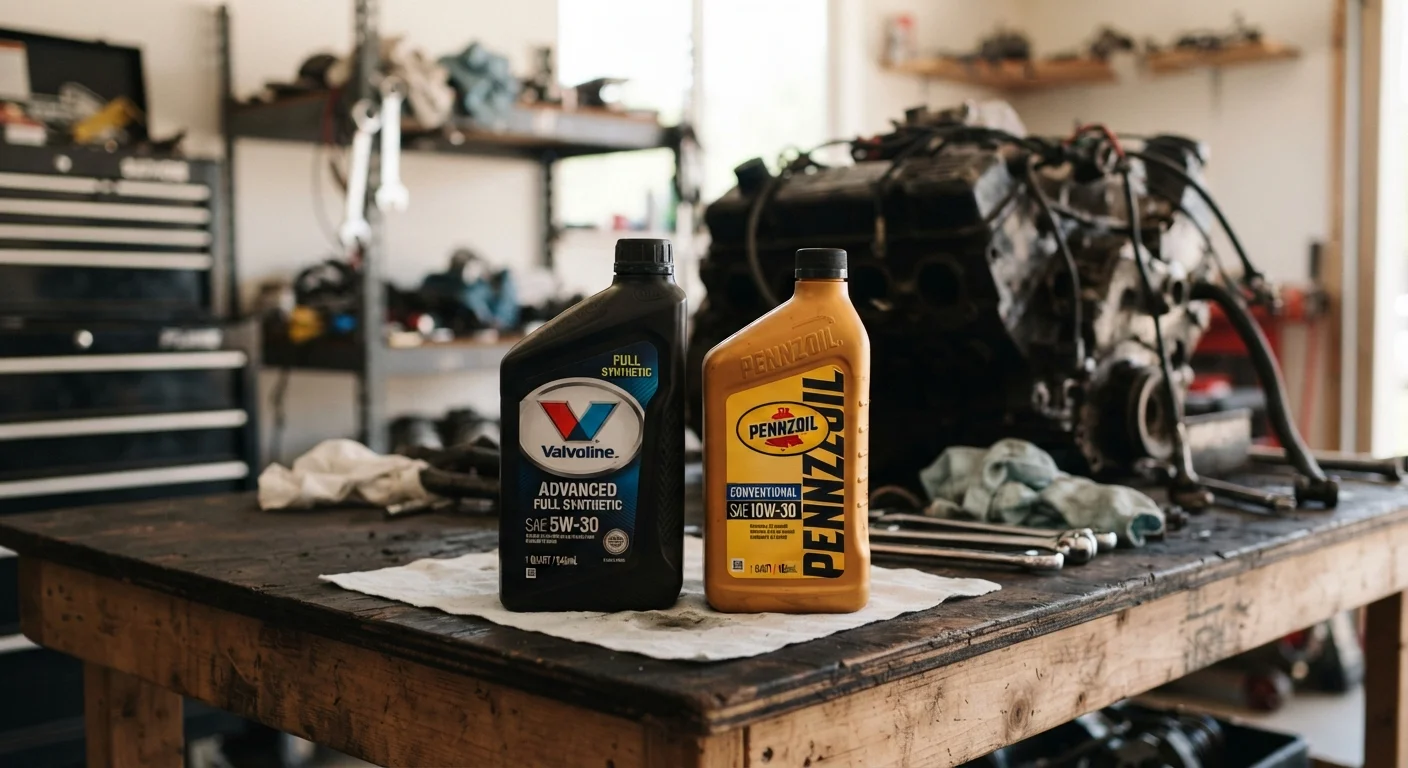
Photo: InsightsBlock.com | Access Information With Ease editorial
Key Takeaways
- Synthetic oil is chemically engineered for more uniform molecules, delivering superior temperature stability and engine protection.
- Conventional oil is refined from crude petroleum and generally costs less per quart, but requires more frequent changes.
- Most modern vehicles - especially those with turbochargers - are factory-specified for synthetic oil.
- Switching from conventional to synthetic in a well-maintained engine is generally safe and will not cause leaks.
- Always follow your vehicle manufacturer's oil specification, not just a general preference.
How Each Oil Is Made - and Why It Matters
Conventional motor oil starts as crude petroleum extracted from the ground. Refiners process it to remove most impurities, but the resulting molecules are still irregular in shape and size. That inconsistency is the core limitation: irregular molecules create more friction and break down faster under heat and mechanical stress.
Synthetic oil, by contrast, is chemically engineered - either built from scratch or so thoroughly restructured that the molecules are nearly uniform. That uniformity is not a marketing claim; it translates directly into measurable differences in how the oil behaves inside your engine. Uniform molecules slide past one another with less resistance, form more consistent lubricating films across metal surfaces, and resist thermal breakdown at temperatures that would degrade conventional oil.
A third category - synthetic blend - combines both types. Blends offer some of synthetic's protective benefits at a moderate price, and they appear widely in vehicles that don't require full synthetic but can benefit from improved heat resistance.
What 'Viscosity Grade' Actually Means
Performance Differences That Affect Your Engine Daily
The practical differences show up in four areas drivers care about most:
- Cold starts: At low temperatures, conventional oil thickens significantly, meaning your engine runs for several seconds without full lubrication after a cold start. Synthetic oil flows more quickly, reducing that vulnerable window.
- Heat resistance: High-RPM driving, towing, and stop-and-go traffic all generate sustained heat. Synthetic oil resists oxidation and viscosity breakdown under these conditions far longer than conventional oil does.
- Change intervals: Conventional oil typically needs changing every 5,000-7,500 miles under normal conditions. Most full synthetics are rated for 7,500-15,000 miles, depending on the manufacturer and driving pattern - though your owner's manual is the authoritative source.
- Deposit formation: As conventional oil degrades, it can leave varnish and sludge on engine components. Synthetic oil's chemical stability makes it significantly more resistant to forming these deposits.
To understand the long-term consequences of neglecting oil changes entirely, see what happens inside an engine when you ignore oil changes.
| Criterion | Synthetic Motor Oil | Conventional Motor Oil |
|---|---|---|
| Origin | Chemically engineered molecules | Refined from crude petroleum |
| Typical change interval | 7,500-15,000 miles | 5,000-7,500 miles |
| Cold-weather flow | Flows quickly at low temps | Thickens more at low temps |
| Heat resistance | High thermal stability | Degrades faster under sustained heat |
| Deposit formation | Low tendency for sludge | Higher sludge risk as oil ages |
| Cost per quart | Higher upfront cost | Lower upfront cost |
| Required by turbocharged engines | Generally yes | Generally no |
Common Misconceptions - and What the Evidence Actually Shows
Two persistent myths complicate this decision for many drivers. The first is that switching from conventional to synthetic will cause engine leaks. In a well-maintained engine, this is not supported by evidence. Synthetic oil does not shrink seals; it simply flows through gaps that were already present but previously masked by thicker conventional oil. If a seal is genuinely failing, that's a separate repair issue.
The second myth is the 3,000-mile oil change rule. This interval was relevant to engine technology and oil chemistry from decades ago. Modern engines and modern oils - conventional included - are engineered for longer service. Following a 3,000-mile interval with a synthetic-rated engine is unnecessary and wasteful. For a deeper look at this and other outdated maintenance beliefs, see car maintenance myths that keep costing drivers money.
The only reliable guide for your specific vehicle is the owner's manual. It lists the required oil viscosity grade, API certification, and recommended change interval based on the actual engineering of your engine.
Making the Right Call for Your Vehicle
The decision is not purely a matter of preference - your vehicle's design often makes it for you. Most automakers building turbocharged engines since roughly 2010 specify full synthetic in the owner's manual. Using conventional oil in a turbo engine that requires synthetic is not a neutral cost-saving measure; it exposes the turbocharger's bearings to inadequate lubrication at extreme operating temperatures.
For older vehicles with naturally aspirated engines and high mileage, conventional oil remains a reasonable choice - particularly if the engine has worn seals that respond better to a thicker lubricating film. Discuss your specific situation with a qualified mechanic if you're unsure, especially before changing oil types on a high-mileage engine.
If you're weighing whether to handle oil changes yourself or visit a shop, DIY car maintenance vs. taking it to a shop outlines exactly where the line falls between safe self-service and tasks better left to a professional.
~70%
New US vehicles specified for synthetic oil
Industry estimates suggest the majority of new vehicles sold in the US now require or recommend full synthetic motor oil per manufacturer specification.
5,000-15,000 mi
Typical synthetic oil change interval range
The American Automobile Association (AAA) has noted that modern full synthetic oils are commonly rated for significantly longer intervals than the traditional 3,000-mile standard.
The content provided on our blog site traverses numerous categories, offering readers valuable and practical information. Readers can use the editorial team’s research and data to gain more insights into their topics of interest. However, they are requested not to treat the articles as conclusive. The website team cannot be held responsible for differences in data or inaccuracies found across other platforms. Please also note that the site might also miss out on various schemes and offers available that the readers may find more beneficial than the ones we cover.