
What Happens Inside an Engine When You Ignore Oil Changes

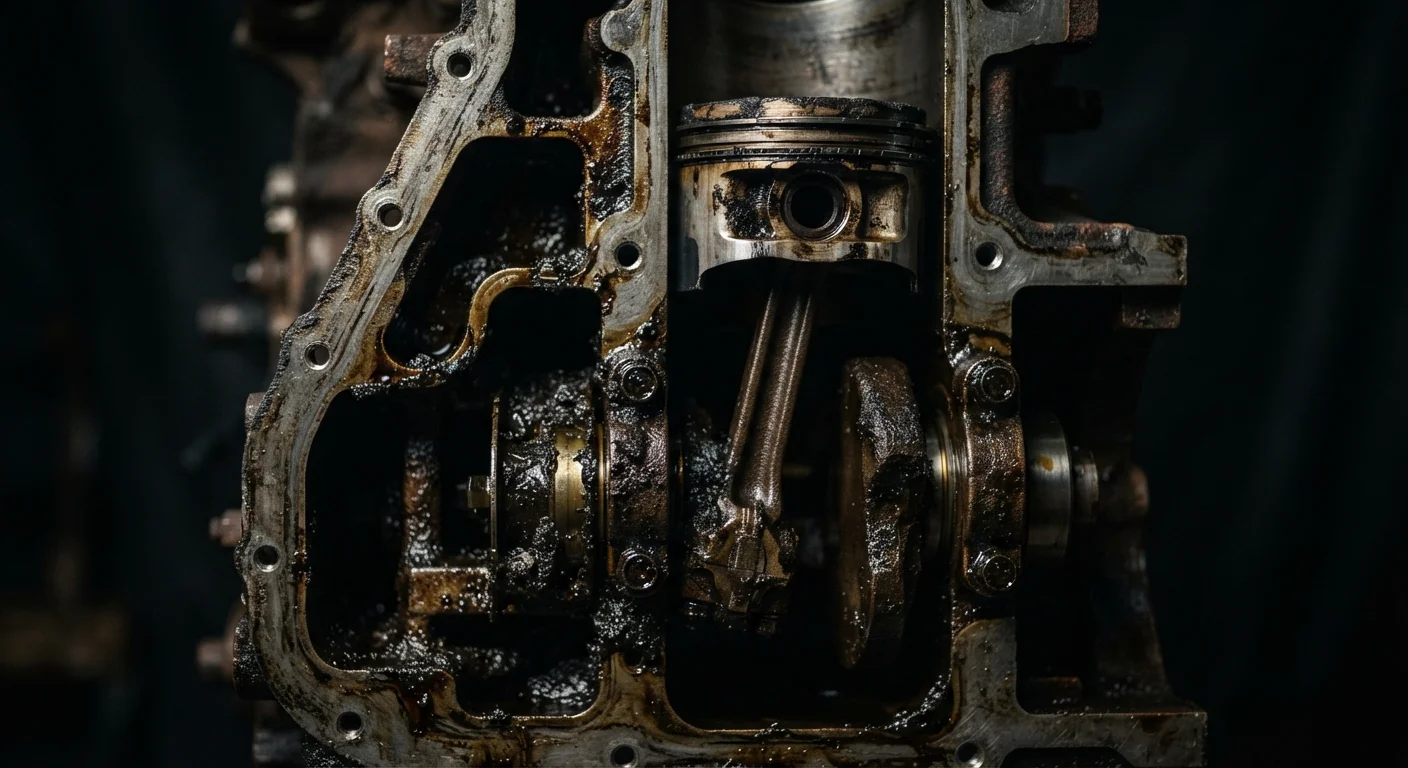
Photo: InsightsBlock.com | Access Information With Ease editorial
Key Takeaways
- Degraded oil loses its ability to separate metal surfaces, causing measurable wear with every engine revolution.
- Sludge buildup can block narrow oil passages, starving critical components like camshafts and crankshaft bearings.
- Overheating accelerates as dirty oil transfers heat less efficiently, compounding damage already underway.
- A neglected oil change costing roughly $50-$100 can eventually lead to engine repairs measured in thousands of dollars.
- Most modern vehicles signal oil change needs through a dashboard reminder, not simply by mileage alone.
The First Stage: Oil Loses Its Protective Edge
Fresh motor oil is a carefully engineered fluid containing base oil and an additive package designed to reduce friction, neutralize acids, and suspend contaminants. Within a few thousand miles, heat and mechanical stress begin breaking down those additives. The oil darkens as it absorbs combustion byproducts, and its viscosity gradually shifts away from the specification your engine was built to run on.
At this stage, damage is not yet catastrophic - but protection is measurably reduced. Metal surfaces that should be separated by a continuous oil film begin experiencing micro-contact, generating fine metallic particles that circulate through the system. Those particles act as an abrasive, accelerating wear on every surface they touch.
As the common myths about car maintenance article notes, the "it looks fine" test is unreliable - oil can appear moderately dark while already well past its effective service life.
Sludge Formation and Blocked Oil Passages
If degraded oil stays in service long enough, oxidized oil molecules begin bonding together into a thick, tar-like substance commonly called engine sludge. Sludge is particularly damaging because it tends to accumulate in the narrow oil galleries - the internal passages that deliver pressurized oil to bearings, camshafts, and timing chain components.
When those passages narrow or clog, oil pressure drops in the affected areas. Bearings that depend on a constant pressurized oil film begin running partially dry. Camshaft lobes - the components that open and close engine valves - experience direct metal-to-metal contact. Without lubrication, these surfaces wear rapidly, and in severe cases the damage is irreversible without replacing the parts.
~$70
Typical cost of a routine oil change
Industry service data consistently shows oil changes as one of the lowest-cost routine maintenance items, depending on oil type and vehicle.
$4,000+
Typical engine replacement starting cost
Automotive repair industry estimates place full engine replacements well above $4,000 for most passenger vehicles, with many exceeding $8,000.
7,500-10,000 mi
Recommended interval for many synthetic-oil vehicles
Many automakers specify extended intervals for vehicles using full synthetic oil under normal driving conditions, per owner's manual guidance.
Sludge also traps heat. Oil is a secondary cooling agent inside the engine; as it thickens and flows less freely, it carries away less thermal energy, causing localized hot spots that further accelerate breakdown. The cycle compounds itself with each additional mile driven on neglected oil.
The Long-Term Consequences: From Bearings to Full Engine Failure
Rod bearings and main bearings support the crankshaft - the rotating component that converts piston movement into the power that drives your wheels. These bearings are precision-machined to extremely tight tolerances and rely entirely on a continuous film of pressurized oil to prevent metal contact. Once oil starvation occurs, bearings score and eventually fail, producing the characteristic deep knocking sound that mechanics associate with severe internal damage.
At this point, options narrow considerably. A spun bearing typically requires an engine rebuild or replacement - expenses that dwarf the cost of years of routine oil changes. Deferred maintenance rarely saves money, and engine neglect is one of the clearest examples of a small omission cascading into a very large bill.
Check Your Oil Between Changes
Drivers committed to long vehicle life will find that diligent oil maintenance is foundational. Our guide to keeping a car running well past 150,000 miles reinforces this point across every maintenance category. For a practical look at intervals and typical costs, see routine maintenance schedules and what they cost.
Frequently Asked Questions
The content provided on our blog site traverses numerous categories, offering readers valuable and practical information. Readers can use the editorial team’s research and data to gain more insights into their topics of interest. However, they are requested not to treat the articles as conclusive. The website team cannot be held responsible for differences in data or inaccuracies found across other platforms. Please also note that the site might also miss out on various schemes and offers available that the readers may find more beneficial than the ones we cover.