
Why Brakes Wear Unevenly-and What That Signals About Your Car

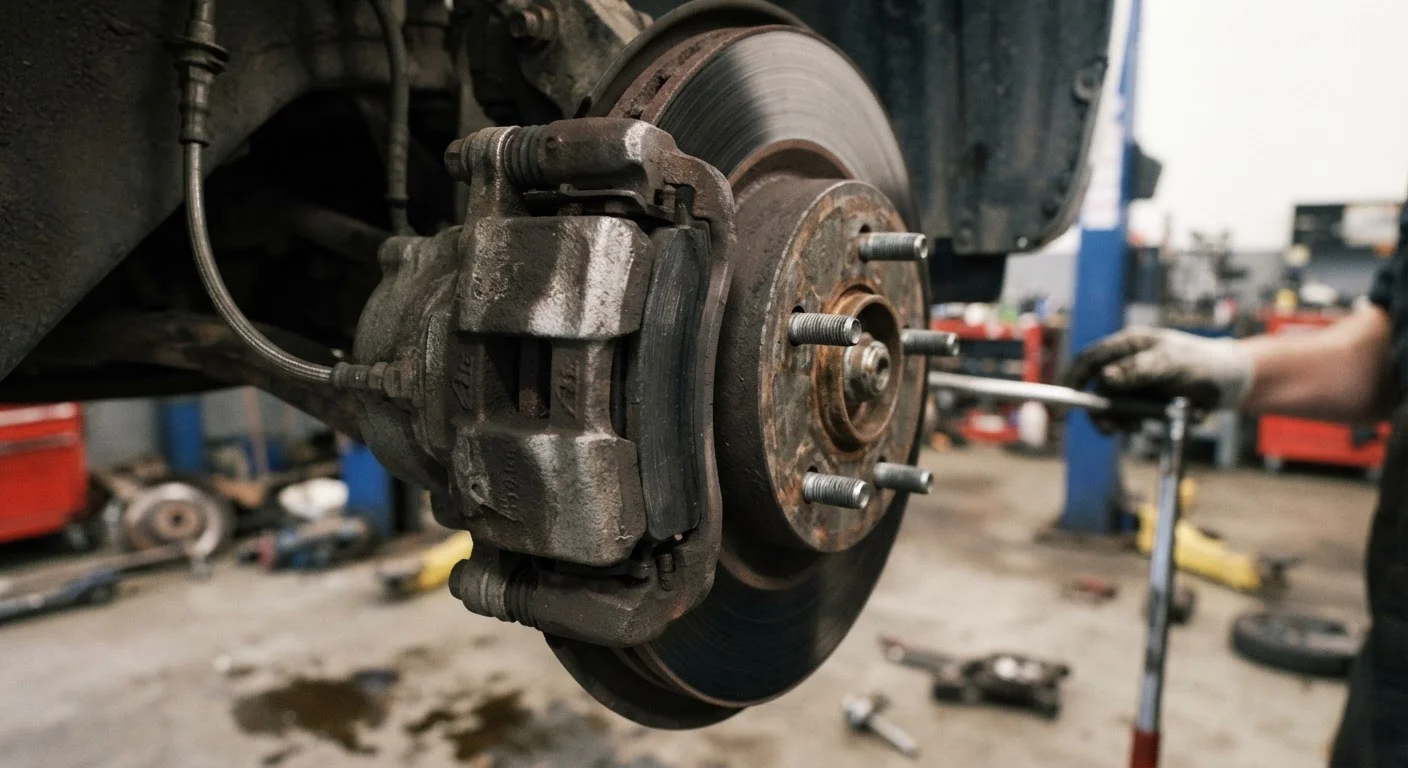
Photo: InsightsBlock.com | Access Information With Ease editorial
Key Takeaways
- Uneven brake wear is almost always caused by a mechanical fault, not random variation.
- Seized calipers are among the most common causes of one-sided brake pad wear.
- Side-to-side wear differences can pull the vehicle when braking, creating a safety risk.
- Driving habits like hard braking and highway vs. stop-and-go patterns affect wear rates between axles.
- A qualified mechanic should inspect the brake system whenever uneven wear is detected.
- Catching uneven wear early typically costs far less than replacing rotors damaged by worn-out pads.
The Mechanics Behind Brake Wear
Every time you press the brake pedal, hydraulic pressure forces the brake caliper to clamp its pads against the spinning rotor. Friction slows the wheel - and gradually erodes the pad material. In a healthy system, this erosion happens at a consistent, predictable rate across all four corners of the vehicle.
What disrupts that balance is usually something mechanical. The most frequently identified culprits are seized brake calipers and corroded caliper slide pins. A caliper that doesn't fully retract after you release the pedal keeps light pressure on the rotor, wearing the pad continuously - even while you're driving normally. Over weeks and months, that pad thins dramatically compared to its partner on the other side of the same axle.
A collapsed brake hose is a subtler version of the same problem. The rubber hose can deteriorate internally, acting as a one-way valve: pressure applies the brakes normally, but the trapped fluid prevents the caliper from fully releasing. The result looks identical to a seized caliper but requires replacing the hose rather than the caliper itself.
Same-Axle Wear vs. Axle-to-Axle Wear
Front vs. Rear: Why the Difference Exists
It is entirely normal - and expected - for front brake pads to wear faster than rear pads. When a vehicle decelerates, inertia shifts weight toward the front axle. Engineers account for this by sizing front brakes larger and calibrating the brake bias so front brakes absorb more stopping force. On many passenger vehicles, the front brakes handle roughly 60-70% of total braking load.
This means front pads may need replacement two or even three times for every one rear pad change, depending on the vehicle and driving patterns. This front-to-rear difference is a design feature, not a fault. The wear that demands attention is the side-to-side difference on the same axle - left vs. right - or an unusually dramatic mismatch that far exceeds design expectations.
60-70%
Braking force handled by front axle
Weight transfer during deceleration means front brakes absorb a disproportionate share of stopping load on most passenger vehicles.
2-3x
How often front pads outlast rear pads in replacement frequency
On many vehicles, front pads require replacement two to three times more often than rear pads due to the front-biased brake design.
How Driving Habits Contribute
Mechanical faults get most of the blame - rightly so - but driving style also plays a measurable role. Drivers who frequently brake hard from highway speeds generate far more heat per stop than those who drive in stop-and-go urban traffic. High heat accelerates pad wear and can cause uneven deposits on the rotor surface, creating a condition known as brake pad glazing or rotor hot spots that produce a pulsating pedal and accelerate uneven wear.
Left-foot braking or the habit of resting a foot lightly on the brake pedal applies constant low pressure to the pads - enough to generate heat and wear without actually slowing the vehicle. This is a common source of premature and uneven pad degradation.
Keeping up with your vehicle's service schedule is one of the most effective ways to catch these patterns early. The maintenance schedule in your owner's manual typically includes brake inspection intervals that account for your specific vehicle's design.
Check Pad Thickness During Tire Rotations
What to Do When You Spot Uneven Wear
If a visual inspection - or a technician's report - reveals uneven pad thickness, treat it as diagnostic information rather than a simple parts-replacement situation. Replacing pads without addressing the underlying cause means the new pads will wear unevenly just as quickly.
A proper inspection should evaluate the caliper, slide pins, brake hoses, and rotor condition before any parts are ordered. If a rotor has been scored by a worn-through pad, it will need to be resurfaced or replaced - a cost that could have been avoided with earlier detection.
For a broader picture of what brake service typically involves and what to budget, routine maintenance cost ranges can help you benchmark what a shop quotes against realistic figures.
Never attempt brake system repairs without appropriate training and tools. Brake work directly affects vehicle safety, and many brake components require torque specifications and hydraulic knowledge to service correctly. When in doubt, a licensed mechanic is the right call.
Frequently Asked Questions
The content provided on our blog site traverses numerous categories, offering readers valuable and practical information. Readers can use the editorial team’s research and data to gain more insights into their topics of interest. However, they are requested not to treat the articles as conclusive. The website team cannot be held responsible for differences in data or inaccuracies found across other platforms. Please also note that the site might also miss out on various schemes and offers available that the readers may find more beneficial than the ones we cover.