
Depreciation: The Biggest Car Cost Most Drivers Never See

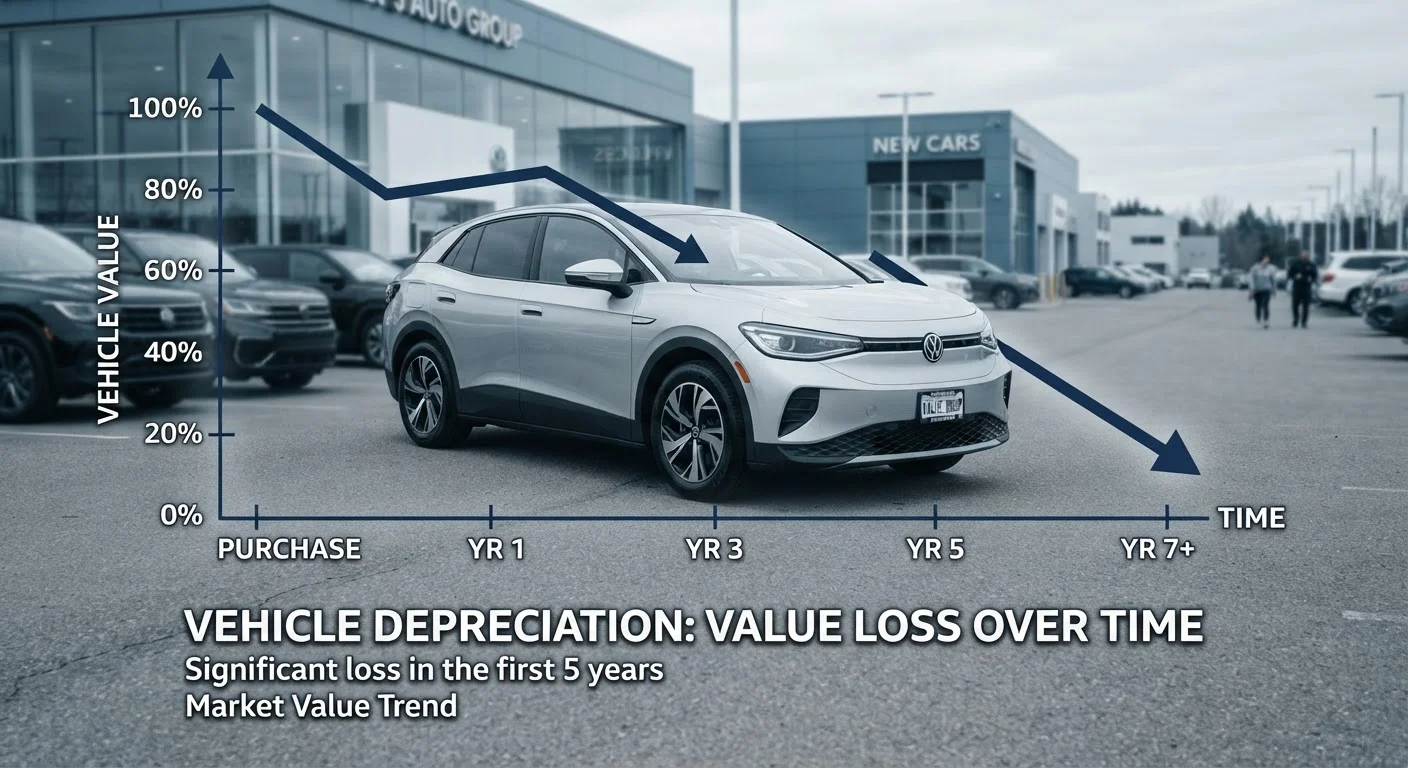
Photo: InsightsBlock.com | Access Information With Ease editorial
Key Takeaways
- New vehicles can lose 15-25% of their value in the first year of ownership alone.
- Depreciation is usually the single largest cost of owning a vehicle, often exceeding fuel and insurance.
- Factors like mileage, condition, brand reputation, and market demand all influence how quickly a vehicle depreciates.
- Understanding depreciation helps you make smarter decisions when buying, leasing, or selling a car.
- Keeping a vehicle longer is one of the most effective ways to reduce the per-year impact of depreciation.
Why Depreciation Is Your Car's Biggest Expense
Most drivers budget carefully for fuel, insurance, and the occasional repair - yet overlook the largest cost embedded in car ownership: depreciation. According to data from industry sources including AAA, depreciation routinely accounts for the single largest share of per-mile vehicle ownership costs, often outpacing fuel and insurance combined.
What makes depreciation unusual is its invisibility. You won't find it on a monthly statement or a repair invoice. It accumulates silently, only becoming apparent when you go to sell or trade in your vehicle and discover it's worth considerably less than you paid. For a complete view of what owning a vehicle actually costs, see our full financial picture of car ownership.
15-25%
Value lost in year one
Industry data consistently shows new vehicles lose between 15 and 25 percent of their purchase price within the first 12 months of ownership.
~50%
Value remaining after five years
Many vehicles retain roughly half their original purchase price after five years, though this varies significantly by make, model, and market conditions.
$0.08-$0.13
Depreciation cost per mile (average)
AAA has estimated depreciation as a significant per-mile ownership cost for average new vehicle owners in the United States, often the largest single cost category.
How Depreciation Works in Practice
A vehicle's value doesn't decline evenly over its lifetime. The drop is steepest in the earliest years. A car purchased new for $35,000 might be worth $27,000 after 12 months - a loss of roughly $8,000 without a single major repair. By year five, the same vehicle may be worth less than half its original price.
This curve matters for how you think about financing and ownership timelines. If you finance a vehicle and the loan balance exceeds the car's market value - a situation called being "underwater" or "upside down" on the loan - depreciation is the force driving that gap. Gap insurance exists specifically to cover the difference if a vehicle is totaled while in this position. For costs that often catch owners off guard in situations like these, our guide on hidden car ownership expenses is worth reviewing.
What Drives Depreciation Rates
Not all vehicles depreciate at the same pace. Several factors shape how quickly a model loses value:
- Mileage: Higher annual mileage accelerates depreciation. Staying near the market average helps preserve resale value.
- Condition: Visible wear, accident history, and deferred maintenance all reduce what a buyer will pay.
- Brand and model reputation: Vehicles associated with long-term reliability and lower ownership costs tend to hold value better than those with less favorable track records.
- Market demand: Supply and demand affect used-car prices just as they affect new ones. A model that falls out of favor - or faces strong new competition - will depreciate faster.
- Fuel type and technology shifts: As consumer preferences evolve, certain powertrain types may see accelerated depreciation as the market moves on.
Understanding these drivers helps you factor depreciation into your decision before you buy, not just when you sell. Our guide to total cost of ownership walks through how to evaluate this upfront.
Factor Depreciation Before You Sign
Accounting for Depreciation in Your Budget
Because depreciation doesn't generate a monthly bill, most drivers never include it in their budget. That's a mistake. If you pay $40,000 for a vehicle and sell it five years later for $22,000, the $18,000 difference is a real cost of ownership - roughly $3,600 per year, or $300 per month. That figure deserves a place in your financial planning alongside insurance premiums and fuel costs.
One practical approach: estimate your vehicle's likely resale value at the point you plan to sell or trade it in, then divide the difference by the number of months you plan to own it. This gives you a monthly depreciation figure to factor into your true cost of ownership. For a structured way to pull all recurring costs together, see our guide to building a realistic monthly car budget.
Keeping a vehicle longer is one of the most straightforward ways to soften depreciation's impact. Once a car is several years old, annual value loss slows considerably - meaning each additional year of ownership costs less in depreciation than the first few years did. Pair that with disciplined car maintenance habits, and you protect both the vehicle's condition and its residual value. For broader strategies on controlling costs over time, see keeping car costs in check over the long haul.
“The purchase price is just the entry fee. What you pay over time - in depreciation, fuel, and maintenance - is where the real financial story of car ownership unfolds.”
— Automotive Editorial Team, Consumer automotive analysts and editors
Frequently Asked Questions
The content provided on our blog site traverses numerous categories, offering readers valuable and practical information. Readers can use the editorial team’s research and data to gain more insights into their topics of interest. However, they are requested not to treat the articles as conclusive. The website team cannot be held responsible for differences in data or inaccuracies found across other platforms. Please also note that the site might also miss out on various schemes and offers available that the readers may find more beneficial than the ones we cover.