
Building a Realistic Monthly Car Budget

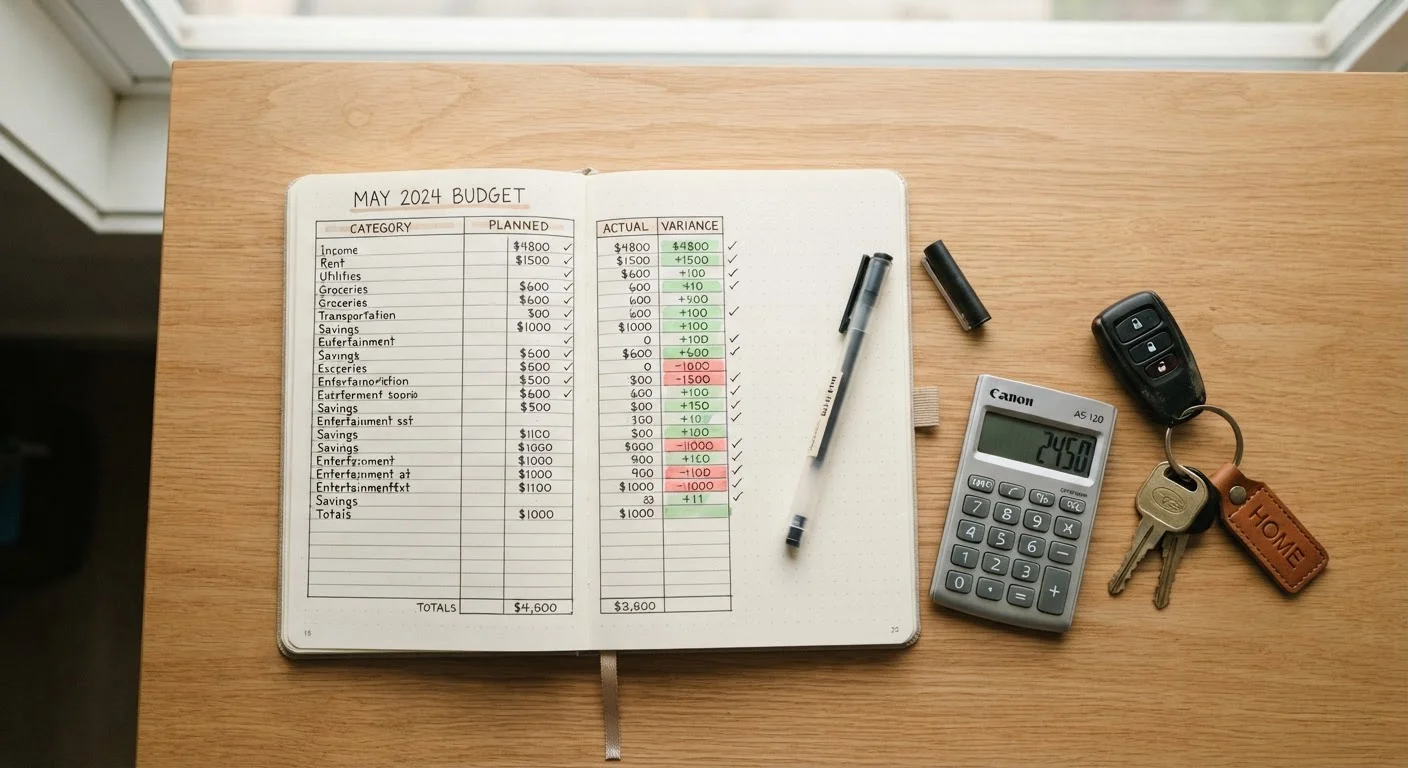
Photo: InsightsBlock.com | Access Information With Ease editorial
Key Takeaways
- A car payment is only one piece of ownership costs - fuel, insurance, maintenance, and fees add significantly more.
- Converting annual and semi-annual expenses to monthly figures prevents budget surprises throughout the year.
- Building a dedicated car savings buffer protects against irregular costs like tires, registration, and repairs.
- Tracking actual spending against your budget each month is what makes the budget work over time.
Why most car budgets fall short
When drivers think about what their car costs each month, the loan payment is usually the number that comes to mind. In reality, that figure represents only a fraction of true ownership cost. Fuel, insurance, maintenance, registration, and the occasional unplanned repair all add to the monthly total - often pushing the real number 40-60% higher than the payment alone.
Understanding the full financial picture of car ownership is the starting point for building a budget that doesn't break down the first time a real expense appears. There's also a subtler cost that rarely appears in any budget line: depreciation. Your vehicle loses value continuously, and that eroded equity affects the financial outcome when you eventually sell or trade. For more on how this works, see depreciation - the car cost most drivers never see.
The goal of the steps below is to replace guesswork with a number grounded in your actual vehicle, your actual driving, and your actual costs.
What you will need
What you'll need before you start
Gathering the right documents before you sit down to build the budget saves time and prevents you from plugging in estimates where real numbers are available. The tools below cover what's needed.
Spreadsheet or budgeting app
Organizes all cost categories into a single monthly view you can update and track over time.
Auto insurance declarations page
Confirms your exact premium and payment schedule so you can convert it to a monthly figure.
Vehicle registration renewal notice
Shows the annual registration fee so you can divide it into a monthly savings target.
Past fuel receipts or bank statements
Provides real spending data to calculate an accurate monthly fuel average.
Maintenance and repair records
Reveals your actual service history so you can estimate a realistic monthly maintenance reserve.
Anchor the budget with your fixed monthly payment
Start with the number you know exactly: your monthly loan or lease payment. Write it down as the foundation of your car budget. If you own your vehicle outright, this line is zero - but the remaining categories still apply and often matter more, since you bear the full cost of repairs and have no manufacturer coverage cushion on an older vehicle.
Calculate a true monthly fuel cost
Pull three to six months of fuel purchases from your bank or card statements and calculate the average monthly spend. A single month can be misleading due to travel, price spikes, or seasonal variation. Dividing a longer window gives a more reliable baseline. Note your average miles driven per month and your vehicle's real-world fuel economy - this lets you sanity-check the number and project how cost would change if your commute shifted.
For a deeper look at how fuel expenses accumulate over years, see how fuel costs compound over a vehicle's lifetime.
Convert your insurance premium to a monthly figure
Auto insurance is often billed every six or twelve months. Divide the total premium by the number of months it covers to find the true monthly cost. Many drivers who pay semi-annually underestimate this line because they only feel the payment twice a year. Add the monthly equivalent to your budget so the money is set aside before the bill arrives.
Estimate a monthly maintenance reserve
Routine maintenance - oil changes, tire rotations, filters, brake inspections - occurs on irregular schedules but is entirely predictable in aggregate. Review your past 12 months of service records and total what you spent. Divide by 12 to find a monthly reserve figure. If your records are incomplete, a commonly cited rule of thumb is to set aside 1-2% of the vehicle's current market value annually, though actual costs vary widely by vehicle age, mileage, and type.
Routine monthly inspections can catch small issues before they become expensive repairs - factor that habit into your cost planning.
Divide annual and irregular fees into monthly amounts
Registration renewal, emissions testing, and any annual inspections required in your state are real costs that belong in your monthly budget - even though you pay them once a year. Add up all such annual fees and divide by 12. Transfer that amount each month into a dedicated savings account or envelope so the cash is available when the bill arrives.
Add a repair and unexpected-cost buffer
Even with diligent maintenance, unexpected repairs happen: a tire blow-out, a failed sensor, a cracked windshield. Budget a modest monthly buffer - separate from your routine maintenance reserve - to absorb these events without disrupting the rest of your finances. The right amount depends on your vehicle's reliability history and age, but having any dedicated buffer is better than having none.
Total all categories and compare to your income
Sum every line: loan or lease payment, fuel, insurance (monthly equivalent), maintenance reserve, annual fees (monthly equivalent), and repair buffer. This total is your realistic monthly cost of car ownership. Compare it to your take-home income. A commonly referenced guideline suggests total vehicle-related expenses should generally stay below 15-20% of take-home pay, though individual circumstances vary. Use this total as a data point, not a rigid rule - your overall budget picture matters most.
If you haven't built a broader monthly budget yet, a ground-up budgeting walkthrough can help you put your car costs in full financial context.
Keeping the budget accurate over time
A car budget built once and never revisited drifts out of accuracy quickly. Insurance premiums change at renewal. Fuel prices shift. A vehicle moving from warranty coverage to out-of-pocket repairs changes the maintenance picture substantially. Plan to revisit your car budget figures whenever a major variable changes - and at minimum, review the full budget monthly.
A structured monthly budget review helps you compare what you planned to spend against what you actually spent, and make corrections before the gap grows. For drivers working toward lower long-term ownership costs, proven habits for keeping car costs in check over time offers practical strategies that compound in value over years. The budgeting basics hub and car maintenance guides are both useful resources as you refine your approach.
This article provides general financial information for educational purposes and does not constitute personalized financial advice. Individual costs vary significantly by vehicle, location, and personal circumstances. Consult a qualified financial professional for guidance specific to your situation.
The content provided on our blog site traverses numerous categories, offering readers valuable and practical information. Readers can use the editorial team’s research and data to gain more insights into their topics of interest. However, they are requested not to treat the articles as conclusive. The website team cannot be held responsible for differences in data or inaccuracies found across other platforms. Please also note that the site might also miss out on various schemes and offers available that the readers may find more beneficial than the ones we cover.