
Vehicle Safety Features That Changed How We Think About Crashes

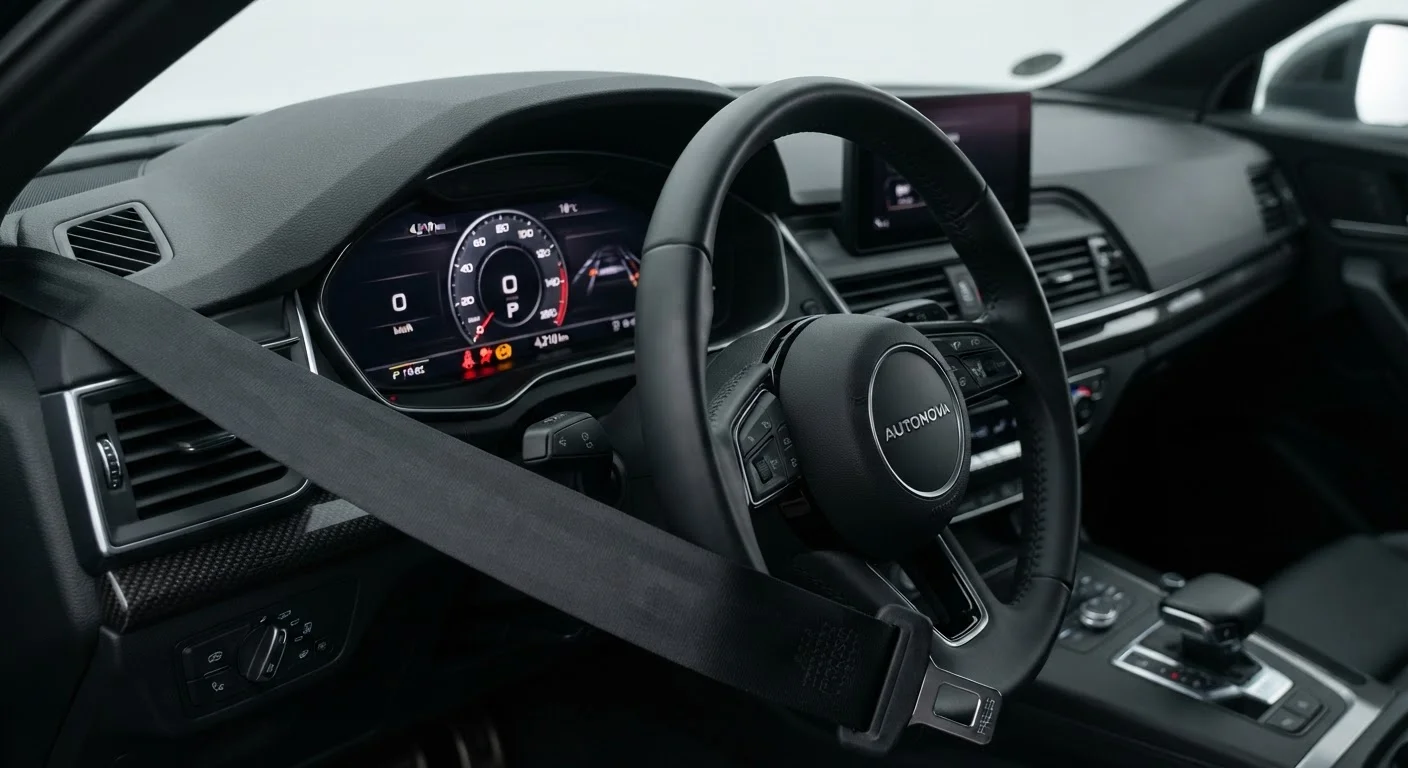
Photo: InsightsBlock.com | Access Information With Ease editorial
Key Takeaways
- Seatbelts remain the single most effective occupant protection device ever developed for road vehicles.
- Crumple zones redirect crash energy away from passengers by absorbing impact through controlled deformation.
- Electronic stability control significantly reduces single-vehicle crash risk, particularly on slippery roads.
- Airbags work as a supplemental system alongside seatbelts - not as a replacement for them.
- Modern driver-assistance systems are most effective when drivers understand their limitations.
Engineering That Saved Millions of Lives
Road safety has improved dramatically over the past several decades - and much of that progress can be traced directly to specific engineering breakthroughs rather than changes in driver behavior alone. According to the National Highway Traffic Safety Administration (NHTSA), vehicle safety technology has been a major factor in reducing crash fatalities even as vehicle miles traveled have increased. Understanding these systems helps drivers make better decisions about the vehicles they choose and how they use them. Whether you're researching a used vehicle or simply want to understand what the warning lights on your dashboard mean, knowing how these technologies work puts you in a stronger position.
For context on how human behavior intersects with vehicle design, see our guide on defensive driving principles - because technology and driver skill work best together.
Lap-and-Shoulder Seatbelts
The three-point seatbelt, introduced in production vehicles in 1959, is widely regarded as one of the most consequential safety inventions in automotive history. It distributes crash forces across the chest, pelvis, and shoulder - the body's strongest regions - rather than concentrating impact at the abdomen as earlier lap-only belts did.
NHTSA estimates that seatbelts save tens of thousands of lives in the United States each year. Despite this, a meaningful percentage of crash fatalities still involve unbelted occupants. The seatbelt's effectiveness depends entirely on proper use: the shoulder strap must cross the chest and collarbone, not the neck, and the lap belt should sit across the hip bones, not the soft abdomen.
The three-point seatbelt remains the single most effective occupant protection device in automotive history.
Crumple Zones
Crumple zones are engineered sections of a vehicle's front and rear structure designed to deform in a controlled, predictable way during a collision. Rather than transmitting the full force of an impact to the passenger compartment, these zones absorb and redirect energy through progressive collapse of the metal structure.
The concept, developed in the 1950s and refined through decades of crash testing, fundamentally shifted how engineers thought about vehicle rigidity. A stiffer car is not necessarily safer - what matters is keeping the passenger cell intact while the surrounding structure dissipates kinetic energy. Modern vehicles combine high-strength steel in the cabin with deliberately weaker zones at the extremities.
A stiffer car is not always safer - crumple zones protect by absorbing energy, not by resisting it.
Airbag Systems
Frontal airbags became federally mandated in the United States for all new passenger vehicles by 1998. Since then, the systems have expanded considerably - side curtain airbags, knee airbags, and even rear-seat airbags are now available in many models.
A critical point that remains widely misunderstood: airbags are supplemental restraint systems. They are engineered to work in conjunction with a properly worn seatbelt, not independently. An unbelted occupant can be seriously injured by an airbag deployment. The explosive inflation occurs in milliseconds - fast enough to cushion a forward-moving body, but dangerous to someone already moving toward the bag at deployment.
Airbags are supplemental restraints - they are designed to work with seatbelts, never instead of them.
Electronic Stability Control (ESC)
Electronic stability control detects when a vehicle begins to skid or lose directional stability and automatically applies targeted braking to individual wheels to help the driver maintain control. It became mandatory in all new US passenger vehicles and light trucks from model year 2012.
Research from NHTSA and the IIHS has found ESC to be particularly effective in preventing single-vehicle crashes - especially rollovers and run-off-road incidents on slippery or curved roads. For drivers who travel frequently on wet or icy highways, understanding that ESC intervenes silently in the background - without any driver input - underscores why keeping tires in good condition matters, since ESC relies on traction being available to act on. See our highway driving guide for more: highway safety strategies.
ESC silently intervenes during skids - but it depends on adequate tire traction to do its job.
Anti-Lock Braking Systems (ABS)
Anti-lock braking prevents wheel lockup during hard braking, allowing the driver to maintain steering control while stopping. Before ABS, a panicked full-brake application on a slippery surface could cause wheels to stop spinning entirely, making the vehicle slide in an uncontrolled direction with no ability to steer around an obstacle.
ABS operates by rapidly pulsing brake pressure at each wheel - far faster than any driver could manually pump the brakes. Drivers unfamiliar with ABS sometimes release pressure when they feel the characteristic pulsing vibration in the pedal, inadvertently reducing its effectiveness. The correct technique is to maintain firm, steady pressure and let the system manage wheel speed automatically.
When ABS activates, keep steady pressure on the pedal - the vibration is normal and signals the system is working.
Automatic Emergency Braking (AEB)
Automatic emergency braking uses forward-facing cameras, radar, or lidar to detect a potential collision and apply the brakes if the driver does not respond in time. Systems vary significantly in their speed ranges and detection capabilities - some are designed for low-speed city traffic, others for highway speeds, and some can detect pedestrians and cyclists in addition to vehicles.
AEB does not eliminate the need for attentive driving. Its performance can be affected by weather, visibility, sensor obstructions, and the type of object in its path. That said, IIHS data has consistently shown meaningful reductions in rear-end crashes in vehicles equipped with front AEB systems. Knowing whether your vehicle has AEB - and what its specific parameters are - is more useful than assuming it provides blanket protection.
AEB reduces rear-end crash rates, but its effectiveness depends heavily on driving conditions and system type.
What These Features Mean for You Today
Safety technology is only effective when drivers understand its scope and limitations. No system eliminates crash risk entirely, and features like automatic emergency braking or lane-keeping assist are designed to reduce severity - not to make attentive driving optional. When purchasing or evaluating a vehicle, checking its ratings from independent bodies such as the Insurance Institute for Highway Safety (IIHS) or NHTSA provides a structured way to compare occupant protection across models.
Check Independent Safety Ratings Before Buying
If you regularly drive with younger or less experienced passengers, it's worth reviewing how these systems interact with driver behavior at different skill levels. Our article on teen driver crash risk explains why this first year is particularly consequential - and how vehicle safety features factor into that picture.
The content provided on our blog site traverses numerous categories, offering readers valuable and practical information. Readers can use the editorial team’s research and data to gain more insights into their topics of interest. However, they are requested not to treat the articles as conclusive. The website team cannot be held responsible for differences in data or inaccuracies found across other platforms. Please also note that the site might also miss out on various schemes and offers available that the readers may find more beneficial than the ones we cover.