
Teen Drivers and the Risks That Peak in the First Year

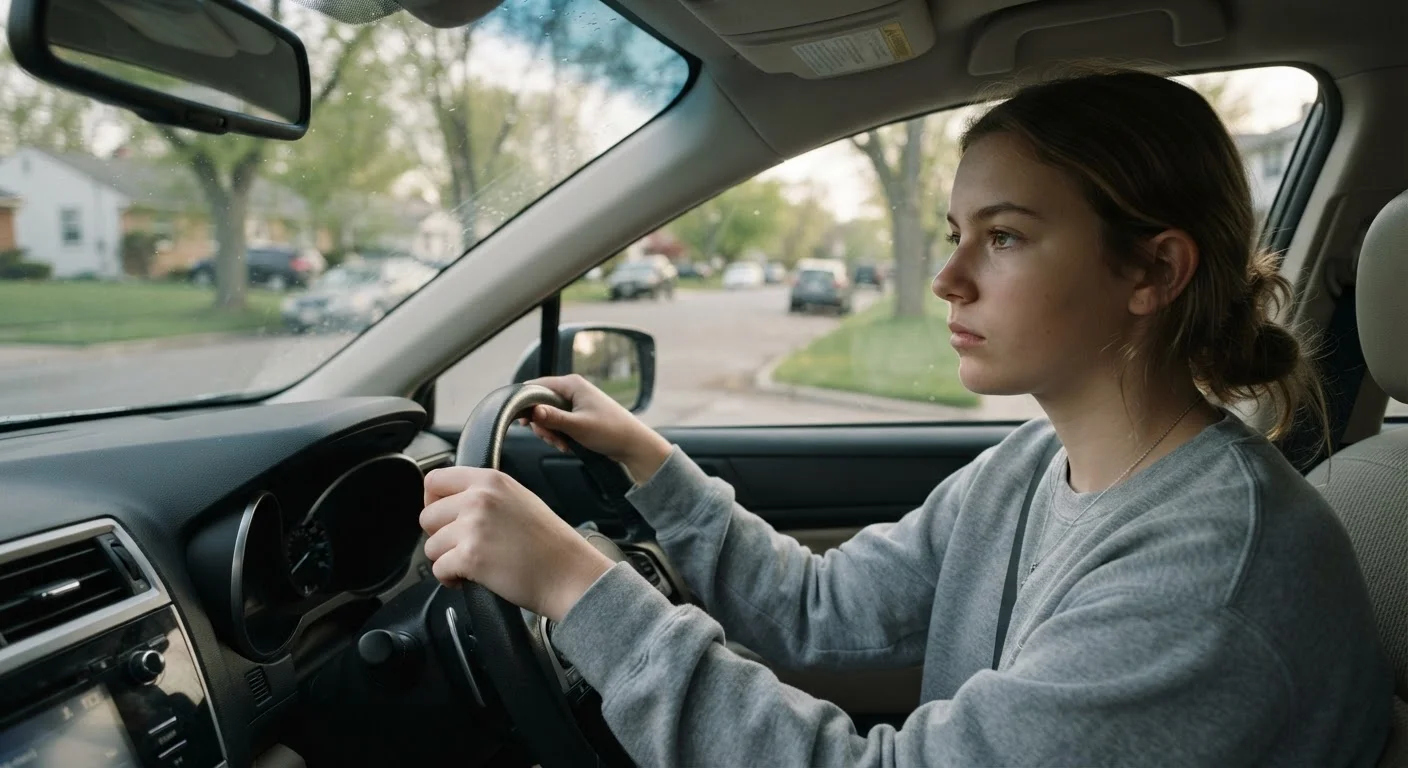
Photo: InsightsBlock.com | Access Information With Ease editorial
Key Takeaways
- Crash risk per mile driven is highest in the first six months after a teen receives a full license.
- Driver inexperience - not recklessness alone - is a primary contributor to teen crashes.
- Passenger presence, night driving, and phone distraction are the three most documented risk multipliers.
- Graduated Driver Licensing (GDL) programs are designed to limit exposure during the highest-risk period.
- Supervised practice hours should include challenging conditions, not just ideal daytime driving.
- Parents and guardians play a measurable role in shaping the habits teens carry into independent driving.
Why the First Year Is the Most Dangerous
Motor vehicle crashes are the leading cause of death among teenagers in the United States, according to the Centers for Disease Control and Prevention (CDC). The critical detail buried in that statistic: crash rates per mile driven peak sharply in the first months after a teen receives a full license, then gradually decline as experience accumulates.
This isn't primarily about attitude or rebellion. Driving is a complex, dynamic task that demands simultaneous attention to speed management, following distance, lane position, mirror checks, and hazard anticipation. Experienced drivers perform many of these tasks automatically. New drivers - regardless of age - must consciously process each element, which consumes mental bandwidth and slows reaction time. Teenagers face the additional challenge of doing this with a brain whose prefrontal cortex, responsible for risk assessment and impulse regulation, is still developing into the mid-twenties.
The combination of inexperience and developmental factors creates a specific vulnerability window. Understanding that window is the first step toward managing it effectively. See also how risk profiles evolve over a lifetime in our guide on driving at different life stages.
~3x
Higher crash rate per mile for 16-17 year olds vs. adults
According to the Insurance Institute for Highway Safety (IIHS), drivers aged 16-17 have crash rates roughly three times higher per mile driven than drivers aged 20 and older.
2x
Fatal crash risk increase with one teen passenger
IIHS data indicates that 16- to 17-year-old drivers carrying a single teen passenger face approximately double the fatal crash risk per mile compared to driving alone.
~56%
Teen crash deaths occurring between 9 p.m. and 6 a.m.
The CDC reports that a disproportionate share of teen driver fatalities occur during nighttime and late-evening hours, reinforcing the focus on nighttime restrictions in GDL programs.
The Three Risk Multipliers That Matter Most
Research from the IIHS and the National Highway Traffic Safety Administration (NHTSA) has consistently identified three conditions that significantly amplify teen crash risk beyond baseline:
- Teen passengers: A lone 16- or 17-year-old driver carrying one teenage passenger sees roughly double the fatal crash risk per mile. With two or more teen passengers, that risk increases further. Peer presence affects attention and encourages risk-taking - a well-documented behavioral effect, not a stereotype.
- Nighttime driving: Reduced visibility, driver fatigue, and increased likelihood of encountering impaired drivers make nighttime substantially more dangerous for any driver. For teens lacking hazard-recognition experience, the risk is compounded. Our article on night driving hazards covers the specific factors at play.
- Phone distraction: Teens are among the highest users of handheld devices while driving. Even brief manual or visual distraction removes a driver's eyes from a road where conditions can change in under a second at highway speeds.
These three factors are not independent - they frequently co-occur. A Friday night drive with friends, for example, stacks all three simultaneously.
Stack Your Practice Conditions Intentionally
What Supervised Practice Should Actually Cover
Most states require a minimum number of supervised driving hours before a teen can progress to an intermediate or full license. The intent is sound, but not all practice hours are equal. Logging 50 hours exclusively on familiar suburban streets in good weather conditions leaves significant gaps.
Effective supervised practice should deliberately include:
- Highway merging and lane changes - high-speed environments demand precise spatial judgment. Our highway driving safety guide explains the core techniques in detail.
- Night driving under supervision, so the new driver builds familiarity with reduced visibility before doing it alone.
- Adverse weather - wet roads, reduced visibility from rain or fog, and altered braking distances are conditions every driver will encounter.
- Urban environments with pedestrians, cyclists, and unpredictable intersections.
- Emergency response scenarios - discussing what to do if a tire blows or another vehicle cuts across lanes prepares teens mentally, even if physically simulating it isn't always practical.
Supervised sessions also provide an opportunity to reinforce vehicle basics. New drivers who understand what their car needs mechanically tend to notice warning signs earlier. For a practical foundation, see our introduction to car maintenance for new drivers.
Graduated Licensing and the Role of Parents
All 50 states have Graduated Driver Licensing (GDL) programs, though the specific restrictions vary considerably. Common GDL provisions include nighttime driving curfews, limits on teen passengers, and mandatory supervised hours. States with stronger, more comprehensive GDL laws have recorded lower teen crash fatality rates - an outcome supported by independent traffic safety research.
Parents and guardians function as an informal second tier of GDL enforcement. Studies from the Children's Hospital of Philadelphia Research Institute have found that teens whose parents set and enforce clear driving rules - covering phone use, passengers, and curfews - have measurably lower crash involvement. The mechanism is straightforward: consistent expectations shape habits during the window when habits are forming.
A structured parent-teen driving agreement, covering permitted hours, passenger limits, phone rules, and consequences, is a practical tool that traffic safety advocates widely support. It removes ambiguity and creates accountability without relying solely on a teenager's self-regulation - which, given what we know about adolescent brain development, is a reasonable approach rather than a punitive one.
Modern vehicles also offer some technological assistance. Features like automatic emergency braking, forward collision warning, and blind-spot monitoring can reduce crash severity in specific scenarios. However, as our article on vehicle safety features explains, technology assists an attentive driver - it does not substitute for the judgment that only genuine experience builds.
Frequently Asked Questions
The content provided on our blog site traverses numerous categories, offering readers valuable and practical information. Readers can use the editorial team’s research and data to gain more insights into their topics of interest. However, they are requested not to treat the articles as conclusive. The website team cannot be held responsible for differences in data or inaccuracies found across other platforms. Please also note that the site might also miss out on various schemes and offers available that the readers may find more beneficial than the ones we cover.