
The Hidden Costs of Disorganization at Home

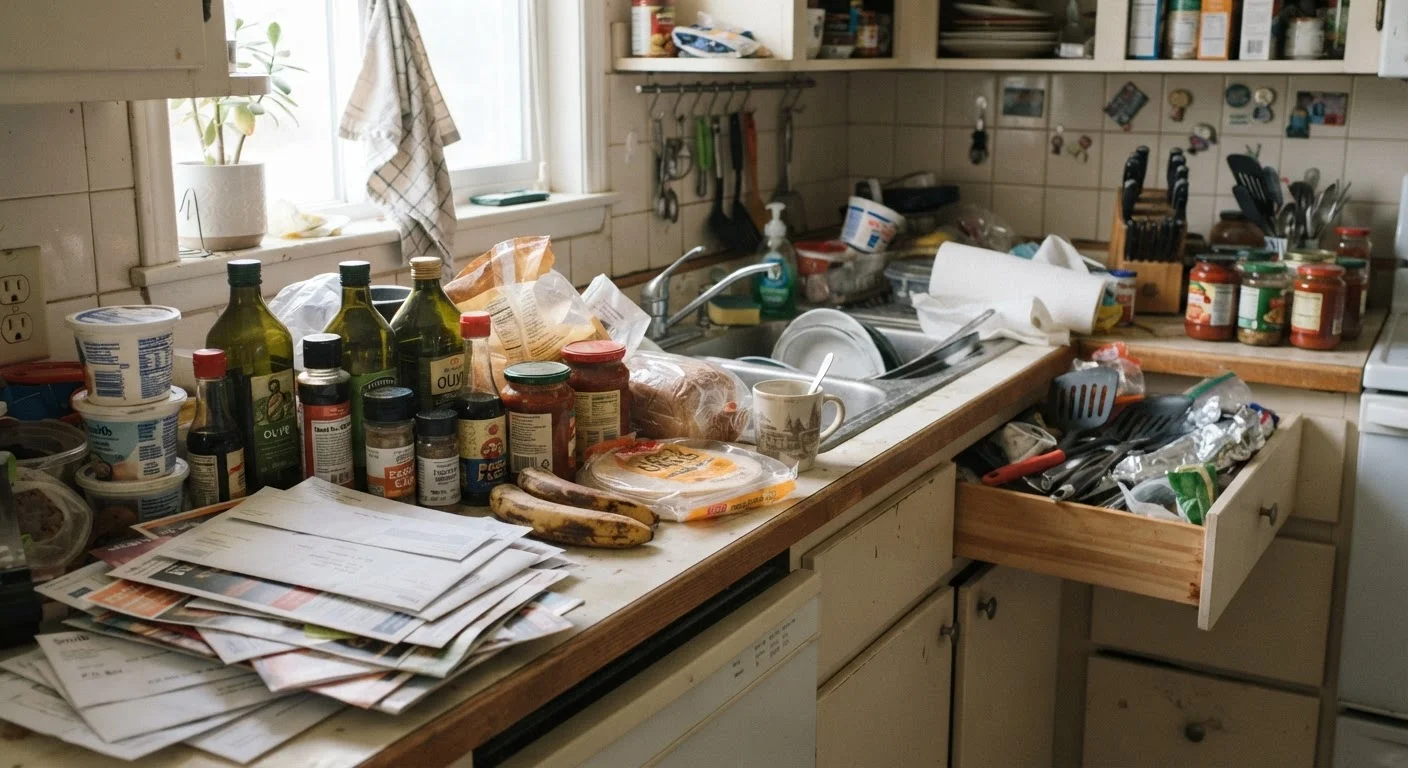
Photo: InsightsBlock.com | Access Information With Ease editorial
Key Takeaways
- Disorganization costs households real money through duplicate purchases and wasted food.
- Time lost searching for misplaced items adds up to significant hours each year.
- Cognitive load from clutter can affect focus, decision-making, and stress levels.
- Basic organizational systems often reduce these costs without requiring major spending.
- The root causes of clutter - not just the clutter itself - must be addressed for lasting change.
The Financial Drain You're Not Tracking
Most households don't budget for disorganization - but they pay for it anyway. The clearest financial hit comes from duplicate purchases: buying batteries, spices, or cleaning supplies that already exist somewhere in the house, buried under other items. In a disorganized pantry or storage closet, the instinct is to buy rather than search.
Food waste is another significant and measurable cost. When refrigerators and pantries lack clear organization, items get pushed to the back and forgotten. Produce spoils, condiments expire, and freezer items lose quality before anyone notices. According to the USDA, the average American household wastes a substantial portion of the food it buys - and poor kitchen organization is a contributing factor.
Late fees add a quieter toll. When bills, notices, or renewal documents are buried in paper piles, payments get missed. A single late fee is minor; a pattern of them is not.
~$1,500
Estimated annual household food waste cost
The USDA and related research suggest the average American family loses significant money annually to food that is purchased but never consumed.
2.5 days
Time spent searching for lost items per year
Various time-use studies estimate that the average person spends around 2-2.5 days per year looking for misplaced belongings at home and work.
Over 50%
Adults who report clutter-related stress
Surveys on home environment and well-being consistently find that a majority of adults identify household clutter as a source of stress or anxiety.
The Time Cost: More Significant Than It Feels
Time spent searching for misplaced items is one of the most universally felt costs of disorganization - and one of the most underestimated. Keys, phone chargers, tools, school permission slips: these small searches feel trivial in the moment but accumulate into meaningful hours across a year.
Disorganized spaces also slow down routine tasks. A cluttered kitchen takes longer to cook in. A chaotic home office makes focused work harder to sustain. These slowdowns aren't dramatic, but they compound - adding friction to activities that should feel automatic.
Start With One High-Friction Spot
Households that establish simple systems - a key hook by the door, a single drawer for charging cables, a dedicated spot for incoming mail - often report that daily routines feel noticeably smoother. The payoff isn't just time saved; it's reduced low-grade stress.
Cognitive Load: The Invisible Weight of Clutter
Clutter doesn't just affect your wallet and schedule - it affects how your brain functions in your own home. Research in environmental psychology suggests that visual clutter competes for attention, making it harder to concentrate and easier to feel overwhelmed. This isn't a character flaw; it's a cognitive response to sensory overload.
A cluttered environment can also make decisions harder. When a space is disordered, even simple choices - what to cook, where to sit, what to work on next - can feel heavier. This is sometimes called decision fatigue: the mental exhaustion that comes from navigating too many unresolved inputs.
Clutter Affects People Differently
For households with children, this effect can ripple into routines. Kids in cluttered spaces often have more difficulty winding down, locating school supplies, or completing tasks independently. Organization, in this sense, is a form of support infrastructure - not just tidiness.
Where Disorganization Tends to Be Most Costly
Not all clutter costs equally. Certain zones in a home tend to generate disproportionate losses:
- Kitchen and pantry: Food waste, duplicate grocery purchases, and inefficient meal prep time.
- Paper and mail areas: Missed bills, lost documents, duplicate subscriptions, and tax-filing headaches.
- Closets and storage: Duplicate clothing purchases, items that go unused because they can't be found, and difficulty managing seasonal transitions. See our guide to closet organization fundamentals for principles that work at any budget.
- Garages and utility spaces: Tools bought twice, chemicals stored unsafely, and difficulty completing routine maintenance tasks.
Identifying which zone is costing your household the most - financially or in time - is a useful first step before any larger organizing effort. A targeted approach tends to be more sustainable than trying to overhaul everything at once. If you're ready to start, our whole-home decluttering walkthrough offers a methodical, room-by-room framework.
Frequently Asked Questions
The content provided on our blog site traverses numerous categories, offering readers valuable and practical information. Readers can use the editorial team’s research and data to gain more insights into their topics of interest. However, they are requested not to treat the articles as conclusive. The website team cannot be held responsible for differences in data or inaccuracies found across other platforms. Please also note that the site might also miss out on various schemes and offers available that the readers may find more beneficial than the ones we cover.