
Closet Organization: What Every System Needs to Function Well

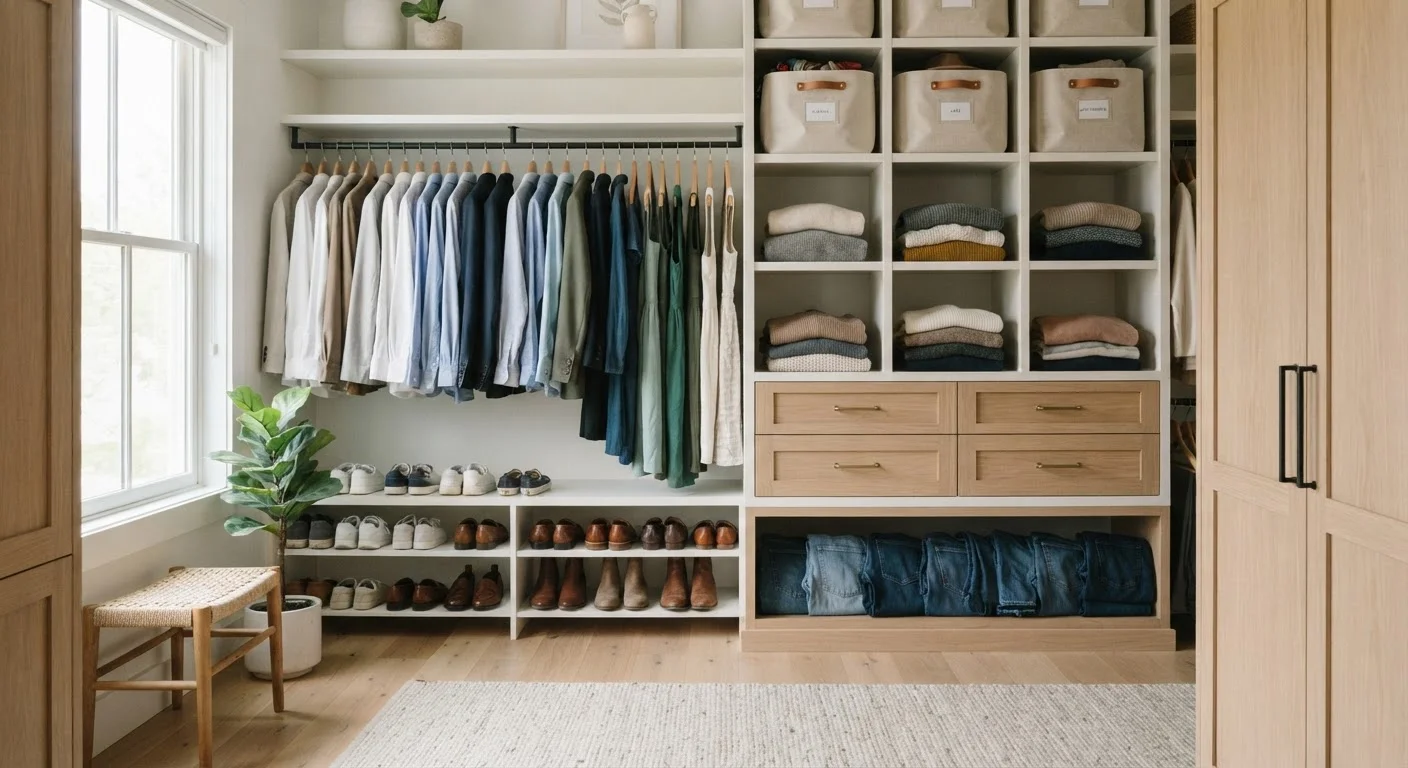
Photo: InsightsBlock.com | Access Information With Ease editorial
Key Takeaways
- Every closet needs an editing pass before any organizing system will hold.
- Zoning by use frequency is the single most impactful structural decision you can make.
- Vertical space is routinely wasted - most closets have far more usable height than shelving occupies.
- Containers only help when they match the actual items stored and are clearly labeled.
- A good system requires a simple maintenance habit, not a periodic overhaul.
Why Most Closets Stop Working
A closet doesn't fail because it's too small. It fails because it was organized for a snapshot in time - and life kept moving. Clothes accumulate, seasons change, and items drift in from other rooms. Without a structure that accommodates those shifts, even a freshly organized space reverts to chaos within weeks.
The underlying issue is almost always one of three things: too much stuff for the space, no clear logic about where categories live, or a system that requires too much effort to maintain. Any lasting solution has to address all three, and it has to do so in a way that fits how you actually use the space - not how an idealized version of you might use it.
If you're also dealing with clutter throughout the rest of your home, it helps to approach rooms systematically. Our room-by-room decluttering guide covers that process in detail.
The Foundation: Editing Before Organizing
The most common organizing mistake is reaching for bins and dividers before removing anything. Organizing clutter just relocates it. The first step is always a reduction pass.
Pull everything out of the closet and sort it into three honest groups: items you use regularly, items you haven't used in over a year, and items that belong somewhere else entirely. The middle group is where most people underestimate volume. A general rule of thumb: if you forgot you owned it, you probably don't need it taking up prime real estate.
Be Honest Before You Organize
This step doesn't require a commitment to minimalism. It simply requires honesty about what you actually use. For a grounded perspective on that distinction, see our article on minimalism myths that complicate organizing.
Zones: The Structural Core of Any System
Once you know what you're keeping, the next decision is where each category lives. Zoning - assigning specific areas to specific types of items - is what separates a system from a pile.
The guiding principle is use frequency. Items you reach for daily belong at eye level and within arm's reach. Items used weekly can go slightly higher or lower. Seasonal items, rarely worn pieces, and backup supplies belong at the top shelf, in bins on the floor, or in secondary storage.
- Prime zone (eye level, center rod): Everyday clothes, current-season items
- Secondary zone (upper shelves, lower rod): Weekly-use items, folded basics
- Deep storage zone (top shelf, floor bins): Off-season clothing, specialty gear, infrequently needed items
If the closet is shared, zoning by person - not just by category - removes the friction of competing habits. Our guide on organizing shared spaces when standards differ explores that dynamic more fully.
Hang items you wear most in the center of the rod, not at one end. Center placement reduces the mental effort of scanning and makes the most-used items immediately visible when you open the door.
Before investing in any storage product, outline the dimensions of your closet floor and shelves on paper first. Measure twice - containers that don't fit the physical space waste money and create new clutter.
Vertical Space and Density
Most closets use only a fraction of their available height. A single hanging rod at standard height leaves the top third of the space empty and the floor area underused. Reclaiming that vertical real estate is one of the highest-return moves in closet organization - and it rarely requires a contractor.
A double-hang rod setup (two rods stacked) can roughly double hanging capacity for shorter items like shirts, jackets, and folded pants. Upper shelving above both rods handles boxes, bins, and bulky items. The floor beneath the lower rod becomes a functional zone for shoe racks or rolling drawers.
For a deeper look at how vertical thinking applies throughout your home, see our guide to vertical storage in any room. And if you're working with limited resources, home organization on a tight budget covers low-cost approaches to adding shelves and hanging solutions.
Containers, Labels, and Visibility
Containers serve a specific purpose: they group like items, reduce visual noise, and create a defined home for categories that would otherwise scatter. But containers fail when they're mismatched to the contents, opaque without labels, or so numerous that retrieval becomes a dig-through exercise.
A few principles that hold up across closet types:
- Match container size to content volume. Overfilled bins defeat the purpose; undersized bins create overflow.
- Use clear or open containers for items you access frequently. Reserve opaque bins for deep storage where you already know the contents.
- Label everything in deep storage. Memory is unreliable. A label takes ten seconds and saves ten minutes of searching later.
- Standardize where possible. Uniform bin sizes and hangers reduce visual chaos and make it easier to add or rearrange without the whole system looking mismatched.
For clothing that rotates seasonally, labeling becomes even more critical. Our article on seasonal swapping without chaos walks through a practical labeling and rotation method.
Maintenance: Keeping the System Alive
The most well-designed closet system will degrade without a maintenance habit. That habit doesn't have to be elaborate - it just has to be consistent.
The most effective approach is a brief weekly reset: returning items to their zones, removing anything that doesn't belong, and flagging items that have drifted out of use. Five minutes weekly prevents the hour-long overhaul that accumulates when drift goes unchecked.
A seasonal review - roughly every three to four months - is a good time to reassess zones. What's used daily in summer may belong in deep storage come winter. Keeping the system aligned with how you're actually living is what makes it sustainable long-term.
If clutter tends to creep back even after a good reset, it's worth understanding why. Our article on why clutter comes back addresses the habits that drive the cycle. And if you're also weighing whether to invest in built-in shelving versus freestanding units to support your system, see our comparison of built-in shelving vs. freestanding units.
The content provided on our blog site traverses numerous categories, offering readers valuable and practical information. Readers can use the editorial team’s research and data to gain more insights into their topics of interest. However, they are requested not to treat the articles as conclusive. The website team cannot be held responsible for differences in data or inaccuracies found across other platforms. Please also note that the site might also miss out on various schemes and offers available that the readers may find more beneficial than the ones we cover.