
The One-In-One-Out Rule and Why It Actually Works

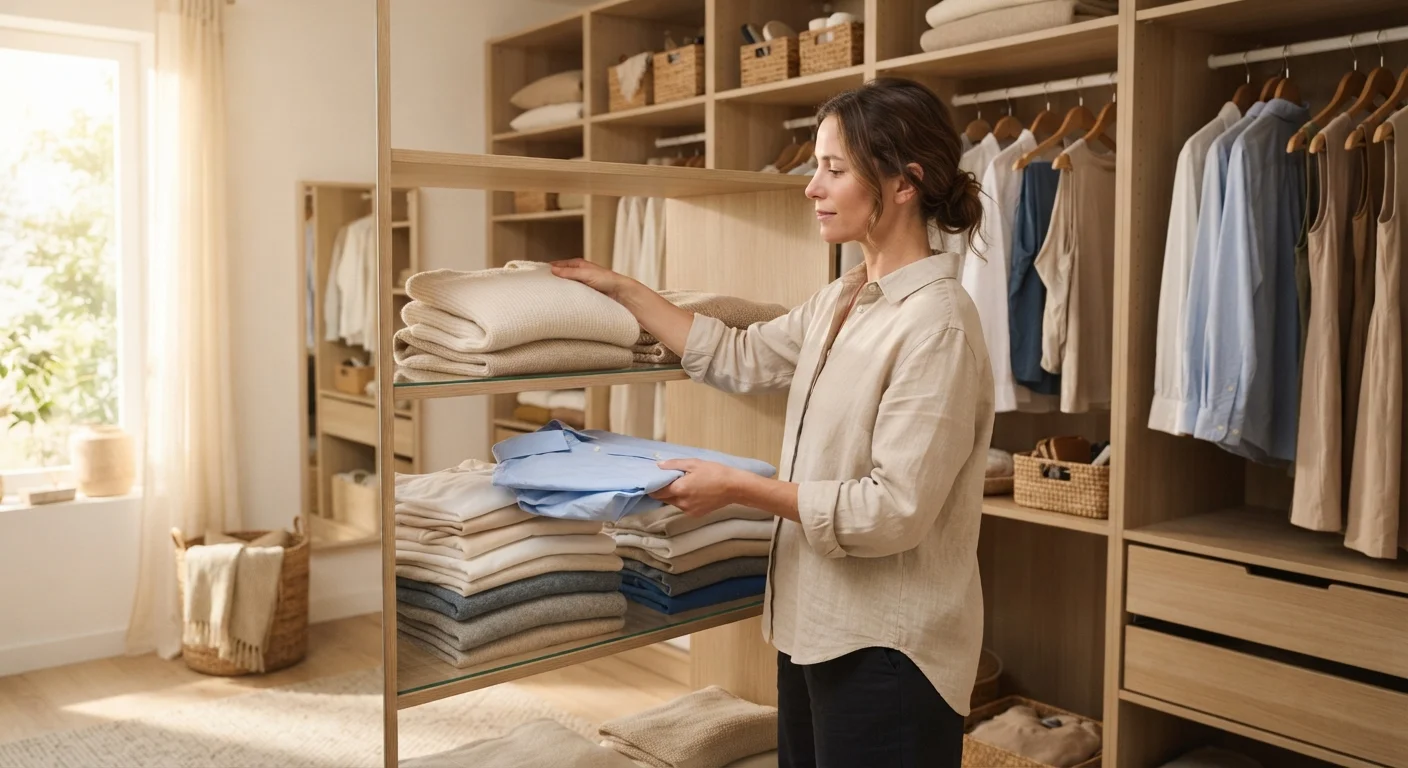
Photo: InsightsBlock.com | Access Information With Ease editorial
Key Takeaways
- The one-in-one-out rule prevents clutter from creeping back after a declutter session.
- It works as a maintenance habit, not a one-time organizing method.
- Applying it consistently removes the need to make large decluttering decisions repeatedly.
- The rule is flexible - categories and thresholds can be adjusted to fit your household.
- Getting everyone in a shared home on board significantly improves long-term results.
Why Clutter Returns After a Big Declutter
Most people who declutter their home experience the same frustrating cycle: they spend a weekend clearing out rooms, donate bags of items, and feel genuinely lighter - only to find their spaces gradually filling back up within a few months. This is not a willpower problem. It is a systems problem.
Without a mechanism to control the rate at which new items enter the home, any organizing work is temporary. The one-in-one-out rule addresses this directly. Instead of relying on periodic purges, it builds a steady equilibrium - for every item that enters, one exits. Over time, this prevents accumulation from ever reaching the level that requires another major declutter session.
If you are still in the middle of an initial clear-out, our room-by-room decluttering guide covers how to work through a full home methodically before putting a maintenance habit like this in place.
1 in 4
Households report garage too cluttered to park a car
According to the U.S. Department of Energy, roughly one in four American garages cannot fit a vehicle due to stored items taking up available space.
~$1,000
Average value of unused household items per home
Research cited by multiple consumer studies estimates the average American household holds approximately $1,000 worth of items it no longer uses but has not discarded.
How the Rule Actually Works in Practice
The mechanics are straightforward: before or immediately after a new item enters your home, identify an existing item in the same category to remove. Buy a new pair of shoes - choose a pair to donate or discard. Receive a kitchen appliance as a gift - find one that sees little use to pass along.
The critical detail is timing. Applying the rule at the moment of acquisition - before the item is put away - removes the temptation to defer the decision indefinitely. Once something is shelved, it becomes part of the visual baseline and feels harder to remove.
The rule also works on a category-by-category basis, which makes it flexible. Clothing, books, children's toys, and kitchen tools are the most common categories where it gets applied. You can even adjust the ratio for categories prone to fast accumulation - a two-out-for-one-in approach works well for households trying to actively reduce inventory in a specific area.
Set Up a Permanent Donation Station
Why It Works: The Psychology Behind the Rule
The one-in-one-out rule is effective for a few converging reasons. First, it converts a recurring, open-ended decision - do I have too much stuff? - into a simple, binary trigger: something new came in, so something goes out. This reduces the mental load of maintenance significantly.
Second, it creates a natural pause before acquiring new items. Knowing you will need to remove something often causes you to reconsider whether the new item is genuinely necessary. This gentle friction is not about deprivation; it is about making more intentional decisions.
Third, the rule does not require a belief in any particular organizing philosophy. Unlike frameworks that ask you to reimagine your entire relationship with possessions, this one simply asks: does something need to leave when something arrives? That is a question most people can answer honestly without discomfort.
For a look at how common misconceptions about minimalism can actually make organizing feel harder than it needs to be, see our piece on minimalism myths that complicate decluttering.
Making the Rule Stick Long-Term
Any habit is only as good as the systems that support it. A few structural choices make the one-in-one-out rule far easier to sustain:
- Keep a donation box accessible. A designated container near the front door, in a closet, or in a garage makes it effortless to place outgoing items immediately. When the box is full, it goes out.
- Apply it at point of purchase. For online shopping, take a moment before checking out to identify what item will leave the home when the new one arrives.
- Apply it to gifts and free items too. Items that cost nothing still take up space. The rule applies regardless of how something enters the home.
- Involve everyone in the household. A rule followed by one person and ignored by others will not hold. A shared agreement is far more durable than a solo effort.
The rule also pairs naturally with category-specific organizing work. If you are setting up a closet system, for example, applying one-in-one-out from the outset prevents the system from becoming overloaded. Our guide on closet organization principles explains the foundational habits that keep those spaces functional over time.
Shared households can present additional complexity. When different people have different thresholds for what counts as clutter, agreeing on a shared rule takes extra communication - our article on organizing shared spaces addresses exactly that situation.
Frequently Asked Questions
The content provided on our blog site traverses numerous categories, offering readers valuable and practical information. Readers can use the editorial team’s research and data to gain more insights into their topics of interest. However, they are requested not to treat the articles as conclusive. The website team cannot be held responsible for differences in data or inaccuracies found across other platforms. Please also note that the site might also miss out on various schemes and offers available that the readers may find more beneficial than the ones we cover.