
Soil pH and Your Garden: What the Numbers Actually Mean

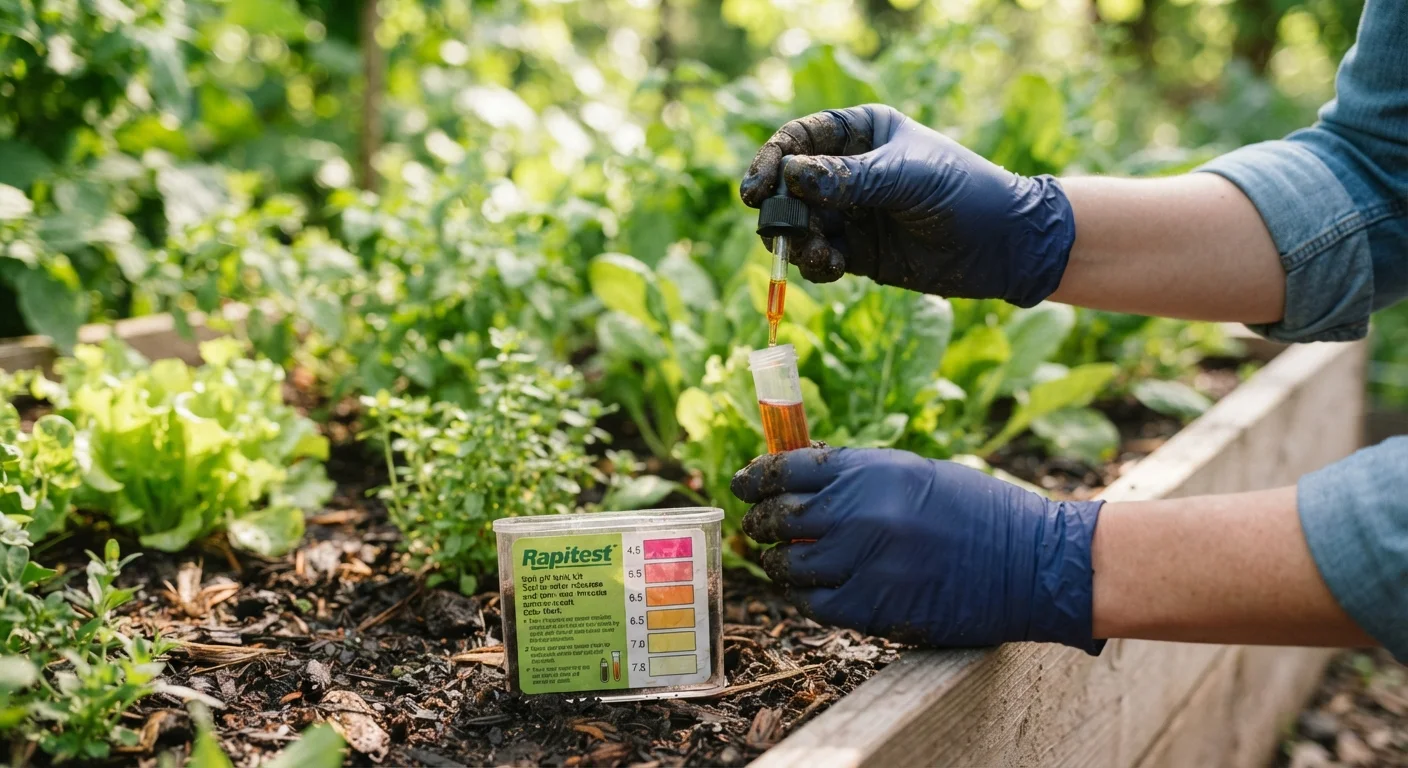
Photo: InsightsBlock.com | Access Information With Ease editorial
Key Takeaways
- Soil pH controls which nutrients plants can actually absorb, regardless of what fertilizers you apply.
- Most vegetables, grasses, and ornamentals prefer a slightly acidic pH between 6.0 and 7.0.
- Inexpensive home test kits and lab-based soil tests both give useful pH readings.
- Lime raises pH in acidic soil; sulfur or acidifying fertilizers lower pH in alkaline soil.
- Adjustments work slowly - plan for several months before expecting measurable change.
- Some plants, like blueberries and azaleas, require more acidic conditions than typical garden standards.
Why pH Determines What Your Plants Can Actually Use
You can add all the fertilizer you want, but if your soil pH is off, your plants may still show signs of starvation. That's because pH doesn't just measure acidity - it controls the chemistry that makes nutrients available to roots in the first place.
At a pH that's too low (overly acidic), elements like aluminum and manganese can reach toxic concentrations, while phosphorus becomes locked up and unavailable. At a pH that's too high (overly alkaline), iron, manganese, and zinc become chemically bound in forms plant roots can't absorb. The result in both cases: plants that look underfed even when the soil technically contains adequate nutrients.
This connection between pH and nutrient availability is why understanding your soil's pH reading is a foundational step before investing in fertilizer products and application schedules. Without the right pH, those nutrients simply won't reach the plant.
6.0-7.0
Optimal pH range for most garden plants
University extension services broadly agree this range supports the widest availability of essential plant nutrients in typical garden soils.
10x
Change in acidity per whole pH unit
Each step on the pH scale represents a tenfold difference in hydrogen ion concentration, meaning small numerical shifts represent significant chemical changes in soil.
4.5-5.5
Ideal pH for blueberries and azaleas
These acid-loving plants require notably lower pH than standard garden recommendations, often requiring deliberate soil acidification to thrive.
How to Test Your Soil pH
Testing soil pH is straightforward and relatively inexpensive. There are two main approaches:
- Home test kits: These use chemical reagents or color-indicator strips. They're widely available at garden centers and give quick, approximate results - useful for a general sense of your soil's condition.
- Lab-based soil tests: Your local cooperative extension service (typically affiliated with a state university) can perform detailed soil tests for a modest fee. These provide precise pH readings along with nutrient profiles and amendment recommendations specific to your region.
When collecting a sample, take small amounts of soil from several spots across your garden - about 6 inches deep - and mix them together. This composite sample gives a more accurate picture than a single scoop from one location.
Get the Most from Lab Soil Tests
Raising and Lowering pH: The Practical Options
Once you have a test result, you can decide whether adjustment is needed. Here's how the two common corrections work:
Raising pH (Making Soil Less Acidic)
Ground agricultural limestone - commonly called garden lime - is the standard amendment for raising soil pH. Calcitic lime adds calcium; dolomitic lime adds both calcium and magnesium, which can be beneficial if your soil is also magnesium-deficient. Work it into the top several inches of soil, and allow months for full effect. The amount needed depends on your current pH, target pH, and soil type - sandy soils need less; clay soils need more.
Lowering pH (Making Soil More Acidic)
Elemental sulfur is the most common amendment for lowering pH in alkaline soils. Soil bacteria convert it to sulfuric acid over time, gradually acidifying the soil. Acidifying nitrogen fertilizers - those containing ammonium sulfate, for example - can also help maintain acidity over time. Like lime, sulfur works slowly, so patience and follow-up testing are essential.
Improving soil structure through aeration practices can also support more even amendment distribution in compacted soils.
pH Preferences by Plant Type
Not all plants share the same preferences. Knowing the needs of what you're growing helps you set realistic targets:
Rather than aiming for a single universal pH across your entire yard, consider grouping plants with similar needs together. This lets you manage soil conditions more precisely in defined beds without trying to satisfy conflicting requirements in the same space.
Making pH Management a Routine Habit
Soil pH is not a set-it-and-forget-it measurement. Ongoing factors - rainfall, decomposing organic matter, fertilizer type, and plant uptake - all nudge pH over time. An annual soil test, ideally in fall or early spring before the growing season begins, gives you enough lead time to make adjustments before planting.
Keep a simple log of your test results and any amendments applied. This record helps you spot trends - whether your soil is slowly drifting more acidic or alkaline - and allows you to make smaller, more precise corrections rather than large overcorrections. A well-maintained pH is one of the most cost-effective investments a home gardener can make, unlocking the full value of every other input you add to your soil.
“Soil testing is the single most cost-effective practice a gardener or farmer can adopt. It removes the guesswork and ensures that lime and fertilizer applications are actually needed - and in the right amounts.”
— Extension Soil Fertility Specialists, Land-grant university cooperative extension services, widely cited in public soil management guidance
Frequently Asked Questions
The content provided on our blog site traverses numerous categories, offering readers valuable and practical information. Readers can use the editorial team’s research and data to gain more insights into their topics of interest. However, they are requested not to treat the articles as conclusive. The website team cannot be held responsible for differences in data or inaccuracies found across other platforms. Please also note that the site might also miss out on various schemes and offers available that the readers may find more beneficial than the ones we cover.