
What Your Cat's Body Language Is Actually Telling You

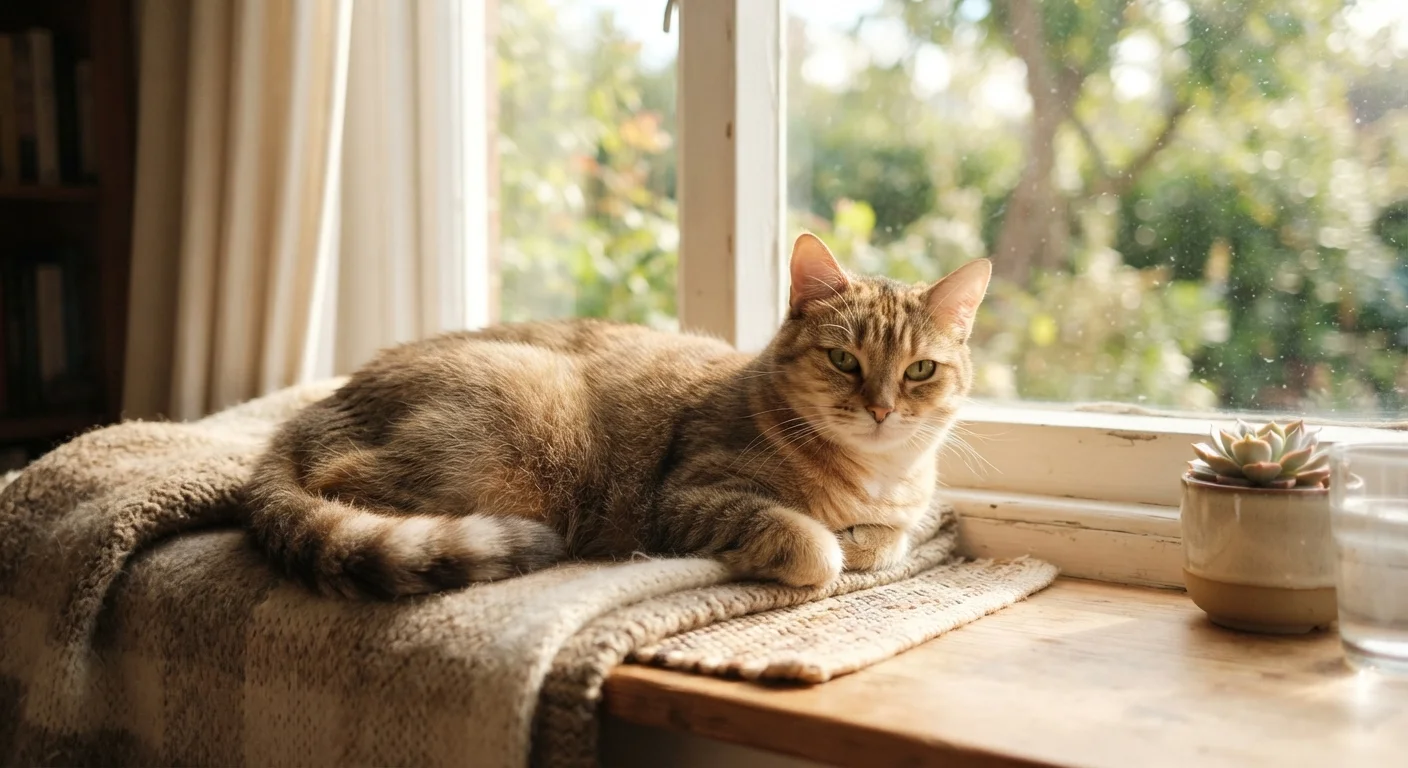
Photo: InsightsBlock.com | Access Information With Ease editorial
Key Takeaways
- Cats communicate primarily through body language, not vocalizations, making physical signals the most reliable indicator of their mood.
- Tail position is one of the clearest and fastest ways to gauge whether a cat is relaxed, curious, or on the defensive.
- Slow blinking from a cat is a well-documented affiliative signal - a sign of trust and calm toward you.
- Ear position and pupil size shift quickly and reflect moment-to-moment emotional changes.
- Context always matters - a single signal can mean different things depending on the situation and the cat's baseline personality.
- Persistent stress signals warrant a veterinary conversation, not just a behavioral adjustment.
The Tail: Your Cat's Emotional Barometer
Few parts of a cat's body are as expressive as its tail, and learning to read tail positions takes only a little practice. A tail held high - straight up or with a gentle hook at the tip - is one of the clearest positive signals a cat can offer. It indicates confidence and a willingness to engage, and it's often the first thing you'll see when a cat trots toward someone it trusts.
A tail that slowly swishes side to side (not to be confused with a dog's wag) communicates focus or mild irritation. When the swishing becomes rapid and forceful - a lashing motion - escalation is happening: the cat is agitated and is warning that it needs space. A tail tucked under the body signals fear or submission.
The classic 'bottle-brush' tail - fully puffed due to piloerection - means the cat feels threatened and is attempting to look larger. This is an involuntary fear response, not a choice, so responding with calm and giving the cat room to retreat is the most constructive approach.
Watch for Tail Signals Before You Approach
Ears, Eyes, and Whiskers: Reading the Face
A cat's ears are capable of rotating nearly 180 degrees independently of each other, and their position shifts rapidly with mood. Ears forward and slightly tilted outward suggest curiosity and engagement. Ears flattened sideways - sometimes called 'airplane ears' - signal anxiety or overstimulation. Ears pinned flat against the skull indicate fear or aggression; this is a cat preparing to defend itself.
Pupil size is another fast-moving indicator. In a calm, well-lit environment, a content cat's pupils are typically narrow slits. Sudden dilation (large, round pupils) in ordinary lighting can indicate excitement, fear, or arousal - context determines which. Chronic dilation in calm settings sometimes signals pain or a medical issue worth discussing with a veterinarian.
The slow blink is one of the most studied affiliative signals in cats. Research in animal behavior supports the idea that slow blinking toward a familiar person reflects a relaxed, trusting state - it's sometimes described informally as a 'cat kiss.' You can try responding in kind: make soft eye contact, then deliberately and slowly close your eyes and open them. Many cats will mirror the gesture.
Whiskers also carry information. Whiskers fanned forward indicate curiosity or positive engagement; whiskers pulled back flat against the face signal fear or discomfort. Taken together with ear and eye position, the face offers a remarkably detailed emotional readout - if you know what to look for.
Purring Doesn't Always Mean Contentment
Posture and Context: Putting the Signals Together
Individual signals are useful, but posture provides the frame. A cat exposing its belly while lying relaxed is displaying trust - but it's not necessarily an invitation to rub that area, which is a common misread. The belly is a vulnerable zone, and many cats that expose it will swipe if touched there. Observing whether the cat is loose-limbed and slow-blinking versus alert and ready to spring helps clarify intent.
A crouched, low-to-the-ground posture with a tucked head signals that a cat feels threatened or is trying to become invisible. This is a distance-increasing posture - the opposite of engagement. If your cat frequently holds this posture at home, it may be experiencing chronic stress that's worth exploring.
Context always modifies meaning. A puffed tail during play is not the same as a puffed tail when a stranger enters the room. A cat who meows at feeding time and a cat who meows at 3 a.m. with unusual urgency are communicating very differently. Building familiarity with your individual cat's baseline behavior - including its unique quirks and rhythms - is what turns general knowledge into real understanding.
If you're bringing a new cat home, expect body language that reads as guarded or fearful for days or even weeks. This is normal adjustment behavior, not a sign of a difficult personality. Offering space, predictable routines, and low-pressure interactions gives the cat the security it needs to begin showing more relaxed signals over time.
This article provides general educational information about feline behavior and is not a substitute for professional veterinary advice. If you have concerns about your cat's health or behavior, consult a licensed veterinarian.
Frequently Asked Questions
The content provided on our blog site traverses numerous categories, offering readers valuable and practical information. Readers can use the editorial team’s research and data to gain more insights into their topics of interest. However, they are requested not to treat the articles as conclusive. The website team cannot be held responsible for differences in data or inaccuracies found across other platforms. Please also note that the site might also miss out on various schemes and offers available that the readers may find more beneficial than the ones we cover.