
Canary vs. Budgerigar: Which Pet Bird Suits Your Household?

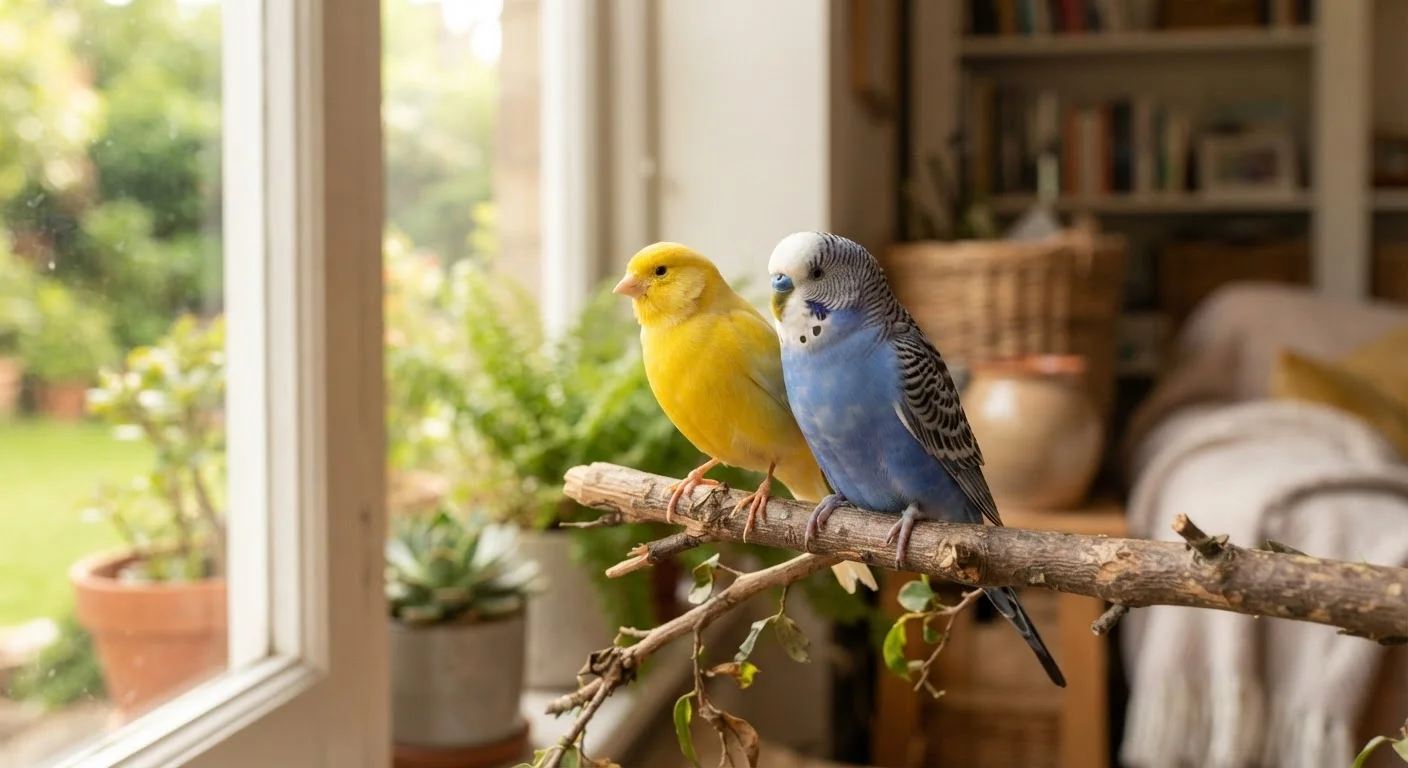
Photo: InsightsBlock.com | Access Information With Ease editorial
Key Takeaways
- Canaries thrive with minimal handling and are appreciated primarily for their song, not direct interaction.
- Budgies are highly social and typically require daily out-of-cage time and human or bird companionship.
- Both species need appropriately sized cages, fresh food, and routine veterinary care from an avian-experienced vet.
- Canaries are generally quieter in terms of social demands but males produce loud, sustained songs.
- Budgies can learn to mimic words and respond to training, making them more engaging for hands-on owners.
- Lifespan and long-term commitment differ - budgies often outlive canaries in captivity.
Temperament and Social Needs
Understanding how each species behaves socially is the single most important factor in choosing the right bird for your home.
Canaries are largely solitary by nature. They don't require handling and can actually become stressed by too much direct contact. Most owners enjoy them as aviary-style companions - birds you appreciate from a respectful distance. Males sing richly, particularly during longer daylight hours, which is the centerpiece of the canary-keeping experience. Females are far quieter and produce little song.
Housing two male canaries together is generally not recommended, as they can be territorial. A single canary is typically content provided its environment is enriching - see our guide on keeping pet birds mentally stimulated for practical ideas.
Budgies, by contrast, are flock birds in the wild and carry that social wiring into captivity. A budgie kept alone needs substantial daily interaction from its owner to stay emotionally healthy. Pairs of budgies can keep each other company, which reduces pressure on the owner but may make the birds slightly less inclined to bond closely with humans. Budgies are generally curious, playful, and resilient in temperament - traits that make them well-suited to active households.
| Criterion | Canary | Budgerigar (Budgie) |
|---|---|---|
| Handling / Interaction | Prefers minimal handling | Thrives on daily hands-on interaction |
| Noise Type | Melodic song (males); quiet (females) | Chattering and chirping throughout the day |
| Social Housing | Best kept alone or in same-sex pairs (carefully) | Does well solo (with owner interaction) or in pairs |
| Out-of-Cage Time | Not typically required | Daily free-roaming time strongly recommended |
| Speech / Mimicry | Not capable of speech | Can learn words and short phrases |
| Typical Lifespan | 8-12 years | 7-10+ years |
| Beginner Friendliness | Moderate (specific handling approach needed) | High (adaptable, widely recommended for beginners) |
| Diet Complexity | Seeds plus fresh greens | Pellets or seeds plus varied fresh vegetables |
Space, Housing, and Daily Care
Neither species is especially demanding in terms of physical space, but the type of space matters.
Canaries prefer horizontal space for flight within their cage over climbing. A cage that's wider than it is tall - with horizontal bars and no sharp perches - suits them well. They don't need free-roaming time outside the cage in the way budgies do, though a larger flight cage is always preferable to the minimum. Daily care involves fresh water, fresh food (seed mixes supplemented with leafy greens and the occasional piece of fruit), and spot-cleaning the cage floor.
Budgies need daily out-of-cage time in a safe, supervised space - this is not optional for their wellbeing. They are active climbers and benefit from vertical cage space, varied perch textures, and rotating toys. Their diet should include a quality seed or pellet base alongside fresh vegetables; a seed-only diet is considered nutritionally inadequate by most avian veterinarians.
Both species require an avian-experienced veterinarian for health checks, as general-practice vets vary widely in bird expertise. For a broader view of small pet care demands, our complete small pet owner's reference covers housing, diet, and health across multiple species.
8-12 yrs
Typical canary lifespan in captivity
Well-managed canaries commonly live this range, according to avian care references - a commitment many owners underestimate at purchase.
~800 spp.
Wild budgerigar flock size (historical estimates)
Budgerigars in Australia have historically formed some of the largest bird flocks observed, underscoring their deeply social nature.
150+
Recognized canary color and type varieties
Selective breeding over centuries has produced a vast range of canary forms, from song-type to color-type and shape-type breeds.
Lifespan, Noise, and Long-Term Commitment
Both species represent genuine multi-year commitments. Canaries typically live 8-12 years in well-managed captivity, while budgies commonly reach 7-10 years, with some individuals living considerably longer. Our small pet lifespans guide provides a quick reference for how birds compare to other popular small pets.
On noise: canary males can sing loudly and persistently during breeding season and long-day months. The sound is melodic rather than shrill, but it is present. Budgies chatter, chirp, and vocalize throughout the day in a more variable, conversational way - some individuals are remarkably quiet while others are persistently noisy. Neither species is truly silent, and prospective owners in thin-walled apartments should factor this in.
Neither bird is low-cost over time. Cage setup, ongoing food, enrichment items, and avian vet visits - including annual wellness exams - add up across a decade or more. Approach either species as a long-term household member, not a low-maintenance starter pet.
This article provides general information for educational purposes only and is not a substitute for advice from a qualified avian veterinarian. Always consult a professional for guidance specific to your bird's health and needs.
The content provided on our blog site traverses numerous categories, offering readers valuable and practical information. Readers can use the editorial team’s research and data to gain more insights into their topics of interest. However, they are requested not to treat the articles as conclusive. The website team cannot be held responsible for differences in data or inaccuracies found across other platforms. Please also note that the site might also miss out on various schemes and offers available that the readers may find more beneficial than the ones we cover.