
Keeping Pet Birds Mentally Stimulated

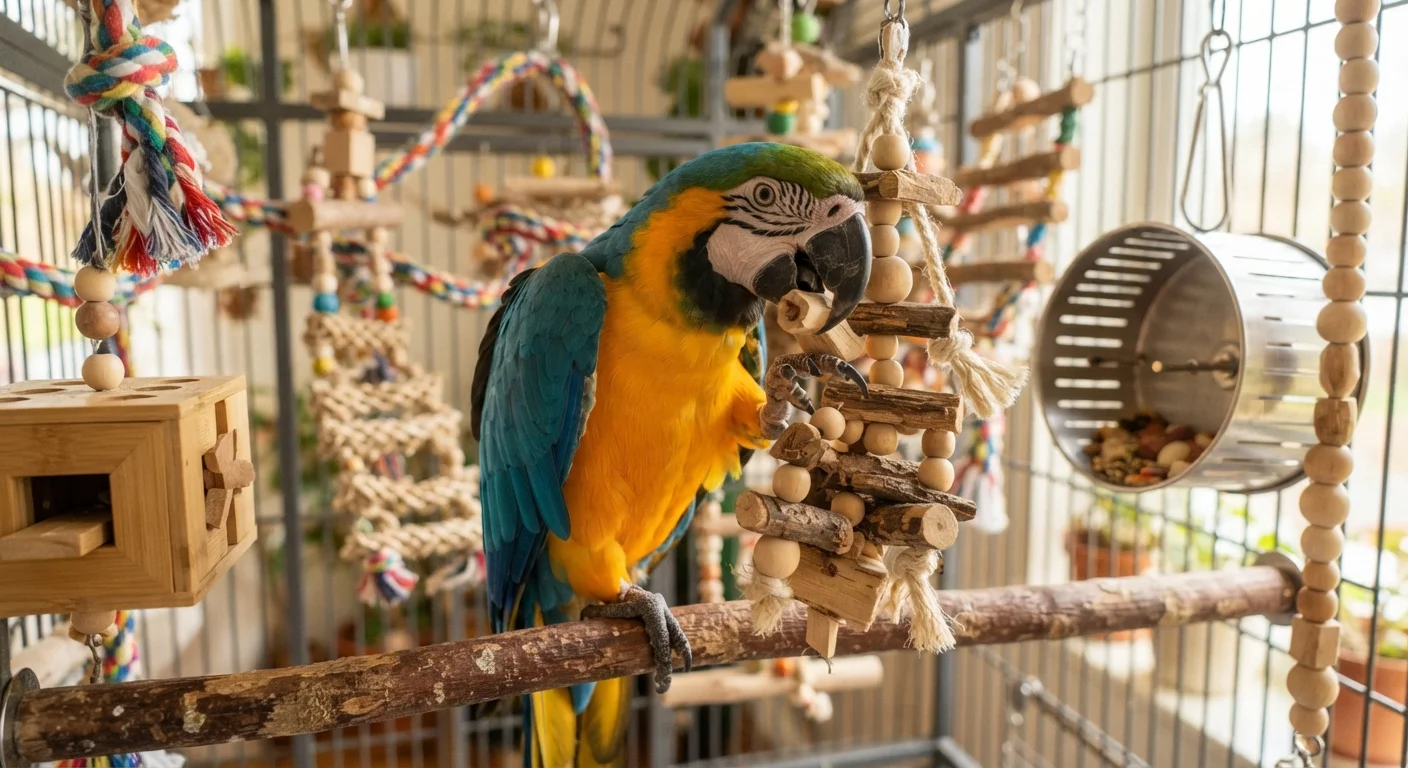
Photo: InsightsBlock.com | Access Information With Ease editorial
Key Takeaways
- Foraging activities engage a bird's natural instincts and reduce boredom-related behaviors.
- Rotating toys and rearranging the cage environment prevents habituation and keeps birds curious.
- Social interaction and training sessions provide meaningful cognitive challenges for pet birds.
- Environmental variety - including safe sounds, light changes, and perch textures - supports wellbeing.
- Signs of understimulation, like feather-plucking or repetitive movements, warrant prompt attention.
Why Mental Stimulation Matters for Pet Birds
Pet birds are among the most cognitively complex animals kept in home environments. Species like parrots, cockatiels, and even budgerigars have demonstrated problem-solving abilities, tool-use behaviors, and strong social intelligence in research settings. In the wild, birds spend the majority of their waking hours searching for food, navigating social hierarchies, and responding to a constantly changing environment. In captivity, that stimulation largely disappears - unless owners actively provide it.
Without adequate mental engagement, birds can develop behaviors commonly associated with chronic stress: feather-destructive behavior (pulling or chewing their own feathers), repetitive pacing, excessive vocalizing, or withdrawal. These are not simply bad habits - they're signals that a bird's cognitive and behavioral needs aren't being met. If you're noticing any of these signs, see our guide on when to consult a vet about small pet behavior for more context.
The good news: most effective enrichment strategies require minimal expense and just a little daily intention. Below are seven practical, evidence-aligned approaches you can start using right away.
Introduce foraging activities
In the wild, most birds spend four to six hours a day searching for food. Replicating that foraging behavior in captivity is one of the most effective enrichment strategies available. Hide pieces of food inside paper cups, wrap treats in paper towel rolls, or use commercially available foraging toys that require your bird to manipulate levers or doors to access a reward.
Start simple - if your bird has never foraged before, make the food easy to find at first, then gradually increase the challenge. The goal is a successful solve that builds confidence, not frustration.
Foraging mimics a bird's natural daily routine and is one of the most impactful enrichment tools available.
Rotate toys on a regular schedule
Birds habituate quickly - a toy that fascinated your cockatiel this week may be completely ignored in two weeks. Rather than buying new toys constantly, rotate a collection of six to eight items, cycling three or four into the cage at a time and swapping them out every one to two weeks.
Texture, color, and sound all matter. Include a mix of wooden chewables, bells, ropes, and puzzle feeders to engage different senses and behaviors. Always inspect toys for loose parts, fraying fibers, or materials that could be ingested unsafely.
Rotating toys on a schedule prevents habituation and keeps your bird's environment feeling fresh and interesting.
Teach new behaviors through positive reinforcement training
Training sessions are among the richest forms of cognitive enrichment for pet birds. Teaching your bird to step up, wave, retrieve objects, or identify colors by name engages memory, attention, and problem-solving - all in short, rewarding bursts.
Keep sessions to five to ten minutes at a time. Use small food rewards paired with consistent verbal cues. Positive reinforcement training also deepens the trust between you and your bird, which itself has documented benefits for reducing stress-related behaviors in companion parrots.
Short daily training sessions offer structured cognitive challenge while strengthening your bond with your bird.
Vary perch types, heights, and textures
A cage fitted only with uniform dowel perches is the equivalent of wearing the same shoes every day - it doesn't damage health immediately, but it limits natural foot movement and sensory experience over time. Offering perches of varying diameters, textures (rope, natural wood, cork), and heights gives your bird postural variety and encourages different gripping behaviors that support foot health and mental engagement.
Natural wood branches from bird-safe trees (such as untreated apple, willow, or manzanita) are particularly valued because their irregular shapes mimic wild perching conditions.
Varied perch textures and heights engage your bird's body and brain in ways uniform dowels simply cannot.
Provide safe social and audio stimulation
Birds are highly social animals that respond to sound, movement, and companionship. If your bird is housed alone, soft background audio - nature sounds, calm music, or even a radio at low volume - can reduce isolation-related stress during periods when you're not home.
When you are home, position the cage where your bird can observe household activity without being overwhelmed. Many birds also benefit from time outside the cage in a supervised, bird-proofed space where they can interact with family members and explore novel surfaces. Even brief, consistent social contact each day can meaningfully support a bird's emotional wellbeing.
Consistent daily social contact and safe background stimulation are low-effort ways to reduce a bird's sense of isolation.
Offer food variety to stimulate curiosity
Introducing new foods - within the range considered safe for your species - engages exploratory behavior and encourages your bird to interact with its environment differently. Novel textures, colors, and flavors prompt investigative pecking, manipulation, and taste-testing that mirrors natural dietary diversity.
Chop-style meals (finely mixed vegetables, leafy greens, and safe grains) presented in different containers or locations each day add a layer of unpredictability that keeps mealtime engaging rather than routine. Always verify which foods are appropriate for your specific species with an avian veterinarian before introducing new items.
Varied, species-appropriate foods served in different ways transform mealtime into a genuine cognitive event.
Adjust the environment with natural light and seasonal cues
Many bird species are sensitive to light cycles, which in the wild regulate mood, reproductive behavior, and daily activity patterns. Ensuring your bird receives access to natural daylight - or full-spectrum lighting designed for birds - supports healthy hormonal rhythms and keeps daily activity levels consistent.
Avoid placing cages in permanently dim locations or exposing birds to erratic artificial light schedules. A predictable light-dark cycle (approximately 10-12 hours of light per day for most companion species) provides a stable environmental rhythm that underpins mental and physical health. Consult an avian vet if you have questions about optimal lighting for your specific bird.
Consistent, natural light cycles provide the environmental rhythm that supports a bird's mental and hormonal health.
Building a Consistently Stimulating Environment
Mental stimulation isn't a single activity - it's an ongoing commitment woven into your bird's daily routine. The most successful owners think about enrichment across multiple dimensions: what their bird eats and how it accesses food, who and what it interacts with, and what its immediate environment looks and sounds like.
Start Small and Observe Your Bird's Response
For species-specific context that can inform how you approach enrichment, the complete small pet care reference covers behavioral and housing needs across a range of popular birds and small mammals. And if you're still deciding which bird is right for your household, our canary vs. budgerigar comparison can help you match enrichment needs to the right species from the start.
Start with two or three strategies from the list above, observe your bird's response, and adjust. Every bird has individual preferences - what engages one cockatiel might bore another. That variation is itself part of what makes bird ownership so rewarding.
This article provides general educational information about pet bird care and is not a substitute for advice from a qualified avian veterinarian.
The content provided on our blog site traverses numerous categories, offering readers valuable and practical information. Readers can use the editorial team’s research and data to gain more insights into their topics of interest. However, they are requested not to treat the articles as conclusive. The website team cannot be held responsible for differences in data or inaccuracies found across other platforms. Please also note that the site might also miss out on various schemes and offers available that the readers may find more beneficial than the ones we cover.