
Building a Reliable Packing System You Can Reuse for Any Trip

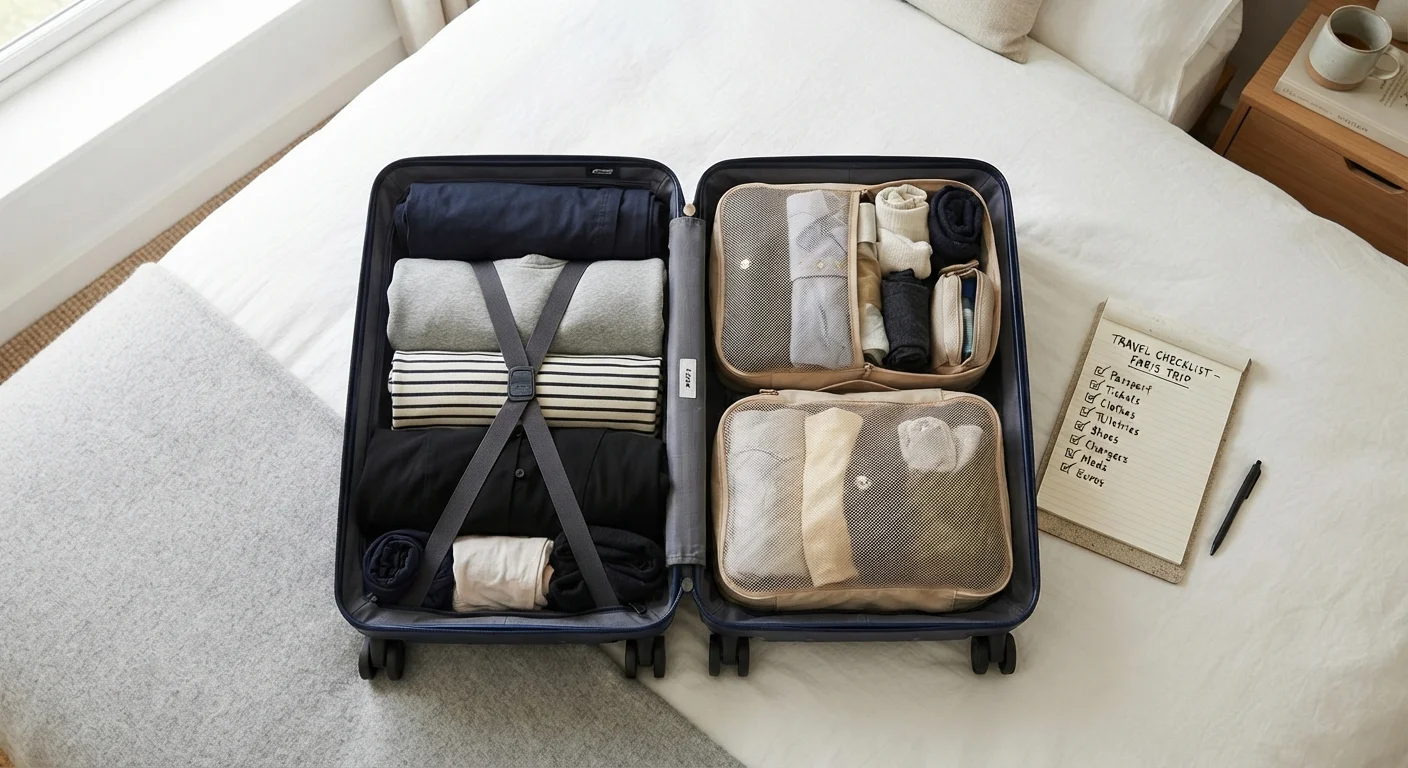
Photo: InsightsBlock.com | Access Information With Ease editorial
Key Takeaways
- A master packing list, customized by trip type, eliminates the guesswork before every departure.
- Organizing clothes by outfit rather than category reduces overpacking and decision fatigue on the road.
- Reviewing what you didn't use after each trip is the fastest way to refine your system over time.
- Packing cubes and a consistent bag layout make repacking mid-trip faster and less stressful.
- Building a reusable system upfront saves hours of re-planning across dozens of future trips.
Why Most Packing Approaches Fail to Scale
Most travelers pack reactively - opening an empty bag a day before departure and tossing in whatever seems right. It works, barely, but it doesn't scale. Every new trip restarts the mental effort from zero, which is why forgotten chargers, overstuffed bags, and last-minute Target runs keep happening.
A reusable packing system is different. It's a documented, tested framework you refine across trips so that packing eventually takes 20 minutes instead of two hours. Think of it the way a pilot thinks of a pre-flight checklist - not a constraint, but a tool that frees up mental energy for more interesting decisions.
For a broader look at how packing fits into the full planning arc, see The Anatomy of a Well-Planned Trip, which walks through every phase from initial research to wheels-up readiness.
Build Your Master List First
The foundation of any reliable packing system is a single, living master list - not a one-time scribble, but a document you update after every trip. Start broad: toiletries, clothing, tech, documents, medications, and trip-specific gear. Then break each category down to item level.
Create a master packing list and store it somewhere you can access and edit from any device.
Plan every outfit before opening your bag, then pack only what those outfits require.
Assign every item a permanent location in your bag and maintain that layout across all trips.
Conduct a quick debrief after every trip and update your master list based on what you actually used.
Use a "maybe" staging area to evaluate borderline items before committing them to your bag.
Once your master list exists, create trip-type variants - a 3-day domestic weekend version, a 10-day international version, a beach trip version. Each variant is just the master list with irrelevant items removed and destination-specific additions flagged. You're not starting over; you're filtering.
Keep this list somewhere accessible - a notes app, a shared doc, a spreadsheet. The format doesn't matter as long as you can open it fast and check items off as you pack.
Pack by Outfit, Not by Category
The single most effective way to reduce clothing volume is to plan outfits before you pack a single item. Instead of asking "how many shirts should I bring?", ask "what will I wear on each day?" Map it out: Day 1, dinner out - dark jeans, linen shirt. Day 2, hiking - trail pants, moisture-wicking tee. Once every day is accounted for, pack only what's on that list.
This approach exposes redundancy immediately. Most travelers discover they were planning to pack three pairs of pants when two overlap on multiple days. It also forces you to think about layering and versatility - a light merino crewneck that works for a chilly morning and a casual dinner is worth three single-purpose pieces.
Curious how far this thinking can go? Packing for a Week-Long Trip in a Personal Item Bag shows how a full week's wardrobe can fit into the smallest bag allowed on most flights.
Lock In a Consistent Bag Layout
Where things live in your bag matters as much as what you bring. A consistent internal layout means you always know where your passport is, your headphones aren't buried under a sweater, and security lines move faster because you're not repacking in the tray.
A practical starting framework: heaviest items closest to your back (shoes, tech), clothing in the middle (rolled or in cubes), and daily-access items on top or in exterior pockets (snacks, earbuds, travel wallet). Packing cubes help enforce this layout - each cube holds one category and compresses clothing to roughly half its loose volume.
The hidden benefit of a locked layout is that mid-trip repacking - after laundry, after checking out of a hotel - takes two minutes instead of fifteen because everything has a home.
To understand which packing habits silently add bulk without adding value, Overpacking Patterns That Most Travelers Don't Notice Until the Return Flight breaks down the most common culprits.
Debrief After Every Trip to Improve the System
The debrief is where most travelers leave value on the table. Right after returning home - before unpacking fully - take five minutes to note what you never touched, what you wish you'd brought, and what caused friction on the road. Then update your master list accordingly.
Over three or four trips, this process produces a highly personalized system that reflects your actual travel style, not an idealized version of it. It also makes gear decisions easier: if you consistently note that a particular item was dead weight, you have evidence - not just a hunch - that it doesn't belong in your bag.
This continuous improvement mindset applies to the full trip planning process too. The Trip Planning Essentials hub covers the broader skills - booking logistics, budgeting, and itinerary structure - that pair naturally with a dialed-in packing routine.
This article is for general informational purposes. Prices, airline policies, and product availability vary and may change; always verify details with relevant providers before your trip.
The content provided on our blog site traverses numerous categories, offering readers valuable and practical information. Readers can use the editorial team’s research and data to gain more insights into their topics of interest. However, they are requested not to treat the articles as conclusive. The website team cannot be held responsible for differences in data or inaccuracies found across other platforms. Please also note that the site might also miss out on various schemes and offers available that the readers may find more beneficial than the ones we cover.