
Packing for a Week-Long Trip in a Personal Item Bag

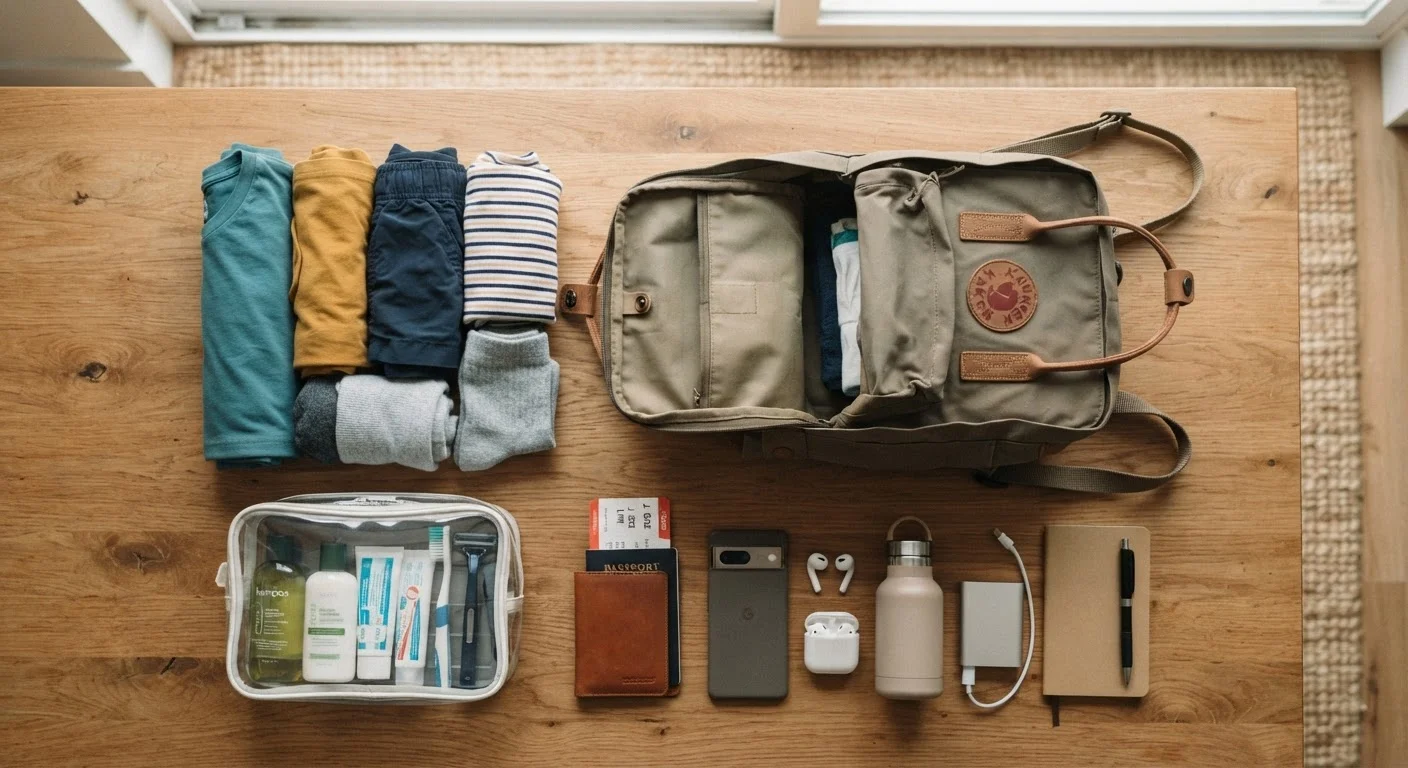
Photo: InsightsBlock.com | Access Information With Ease editorial
Key Takeaways
- A personal item bag (typically under 18×14×8 inches) can realistically hold 7 days of clothing with deliberate planning.
- Choosing versatile, quick-dry fabrics and a neutral color palette dramatically reduces how many items you need.
- Rolling clothes and using packing cubes maximizes space and keeps contents organized throughout the trip.
- Toiletries and electronics are your biggest space traps - strict limits here free up room for clothing.
- Re-wearing outfits strategically and doing a mid-trip sink wash are the two habits that make personal-item travel sustainable.
Why the Personal Item Constraint Is Actually an Advantage
A personal item bag - that smaller bag that fits under the seat in front of you - typically maxes out around 18×14×8 inches, depending on the airline. That sounds impossible for seven days. But the constraint itself is the point. When space is finite, you make better decisions about what actually earns a spot in the bag.
Travelers who've made this switch consistently report that they spend less time at baggage claim, move more freely through airports and cities, and don't feel weighed down by gear they never ended up using. For context on how this compares to going carry-on only, our article on carry-on-only travel covers what that step up in bag size actually involves - and whether it's necessary for your trip type.
The core skill here isn't extreme minimalism. It's intentionality: choosing items that earn their place by doing more than one job.
Check Your Airline's Size Rules First
What You Need Before You Start Packing
Getting a week into a personal item isn't just about folding technique - it starts with the right inputs. Before you pull a single item from your closet, confirm your airline's exact personal item dimensions, understand your destination's climate, and know whether you'll have access to laundry. These three factors shape every decision that follows.
What you will need
Once you've got those basics locked in, the actual packing process is surprisingly systematic. Our guide to building a reusable packing system is a great companion resource if you want to make this process repeatable across future trips.
Packing cubes (small set)
Compress and organize clothing into distinct categories so every cubic inch of the bag is used efficiently.
Quart-sized clear zip bag
Required by TSA to carry compliant liquids through airport security.
Microfiber travel towel
Doubles as a beach towel, gym towel, or quick-dry option without the bulk of a standard towel.
Solid toiletries (shampoo bar, solid conditioner)
Eliminate liquid volume concerns entirely while still covering core hygiene needs.
Lightweight packable tote bag
Folds flat inside the personal item and serves as a day bag or grocery bag at your destination.
Step-by-Step: Packing the Bag
Follow these steps in order - the sequence matters because later decisions depend on earlier ones. Skipping to packing technique before finalizing your clothing list almost always results in overpacking.
Confirm your bag's dimensions against your airline
Before anything else, look up your carrier's personal item policy. Write the maximum dimensions somewhere visible - this is your hard constraint for every decision that follows. Bags that look small can still fail the under-seat test if they're overpacked and rigid. Soft-sided bags with some give are generally more forgiving at the gate.
Build a capsule clothing list - not a daily outfit list
Stop thinking in days and start thinking in pieces. For a 7-day trip, a workable capsule might look like this:
- 3 bottoms (2 pants or shorts + 1 versatile alternative)
- 4 tops (mix of short and long sleeve depending on climate)
- 1 outer layer (a packable jacket or light cardigan)
- 4-5 pairs of underwear (quick-dry fabrics allow mid-trip washing)
- 2-3 pairs of socks
- 1 pair of shoes on your feet, 1 compact pair in the bag
Stick to two or three neutral colors so every piece coordinates. This capsule approach is covered in depth in our complete introduction to packing light.
Ruthlessly audit your toiletry kit
Toiletries are one of the biggest space and weight traps in any bag. Audit every item against one question: Can I get this at a pharmacy near my destination if needed? If yes, consider leaving it home or buying a small quantity there. For what stays:
- Transfer liquids into containers under 3.4 oz
- Replace liquid shampoo and conditioner with bar versions where possible
- Use a single multi-use product where practical (e.g., a moisturizer with SPF)
- Bring only the medications and specialty items that genuinely can't be sourced at your destination
Pack electronics intentionally
Phones, chargers, cables, and laptops are dense and heavy. Only bring electronics you'll actively use on this specific trip. A single multi-port USB-C charger can replace several individual adapters and chargers. If you're traveling internationally, one universal adapter covers all outlets. Keep cables bundled and store your tech in one designated pouch so you're not excavating the bag at security.
Use the roll-and-cube method to pack the bag
Roll every clothing item tightly - this reduces wrinkles and allows items to stand upright in packing cubes. Sort cubes by category (one for tops, one for bottoms, one for underwear and socks). Place heavier items like shoes near your back or at the bottom of the bag for better weight distribution. Electronics and your quart bag go in an outer pocket for quick retrieval.
For a deeper look at rolling versus other methods, see our guide on packing strategies frequent travelers actually use.
Plan for a mid-trip sink wash
A week in a personal item bag almost always benefits from one round of hand-washing around day 3 or 4. Pack a small bar of travel laundry soap or a few laundry soap sheets - these take up almost no space. Wash underwear, socks, and a top in the sink before bed, hang to dry overnight, and they'll be ready by morning in most climates. This one habit makes the whole system sustainable without needing a laundromat.
Do a Test Pack Before You Travel
Don't Pack Liquids Over 3.4 oz in Your Personal Item
What Doesn't Fit - and What to Do About It
Some items genuinely don't belong in a personal item bag, and recognizing that upfront saves frustration. Formal attire for multiple occasions, bulky hiking boots, and more than one week's worth of specialty gear are the most common culprits. If your trip genuinely requires those items, a personal item alone may not be the right call - the tradeoffs of one-bag travel article offers a balanced view of when the constraints stop making sense.
For most leisure and business trips, though, the limiting factor isn't the bag - it's the habit of packing for every possible scenario rather than the trip you're actually taking. Wear your bulkiest shoes and your heaviest layer on travel days. Ship items ahead if a specific occasion truly demands formal gear. And remember: most destinations have stores. You can buy what you forgot.
The budget travel tips hub has additional strategies for spending less overall - including how avoiding checked bag fees over time adds up to real savings.
The content provided on our blog site traverses numerous categories, offering readers valuable and practical information. Readers can use the editorial team’s research and data to gain more insights into their topics of interest. However, they are requested not to treat the articles as conclusive. The website team cannot be held responsible for differences in data or inaccuracies found across other platforms. Please also note that the site might also miss out on various schemes and offers available that the readers may find more beneficial than the ones we cover.