
Overpacking Patterns That Most Travelers Don't Notice Until the Return Flight

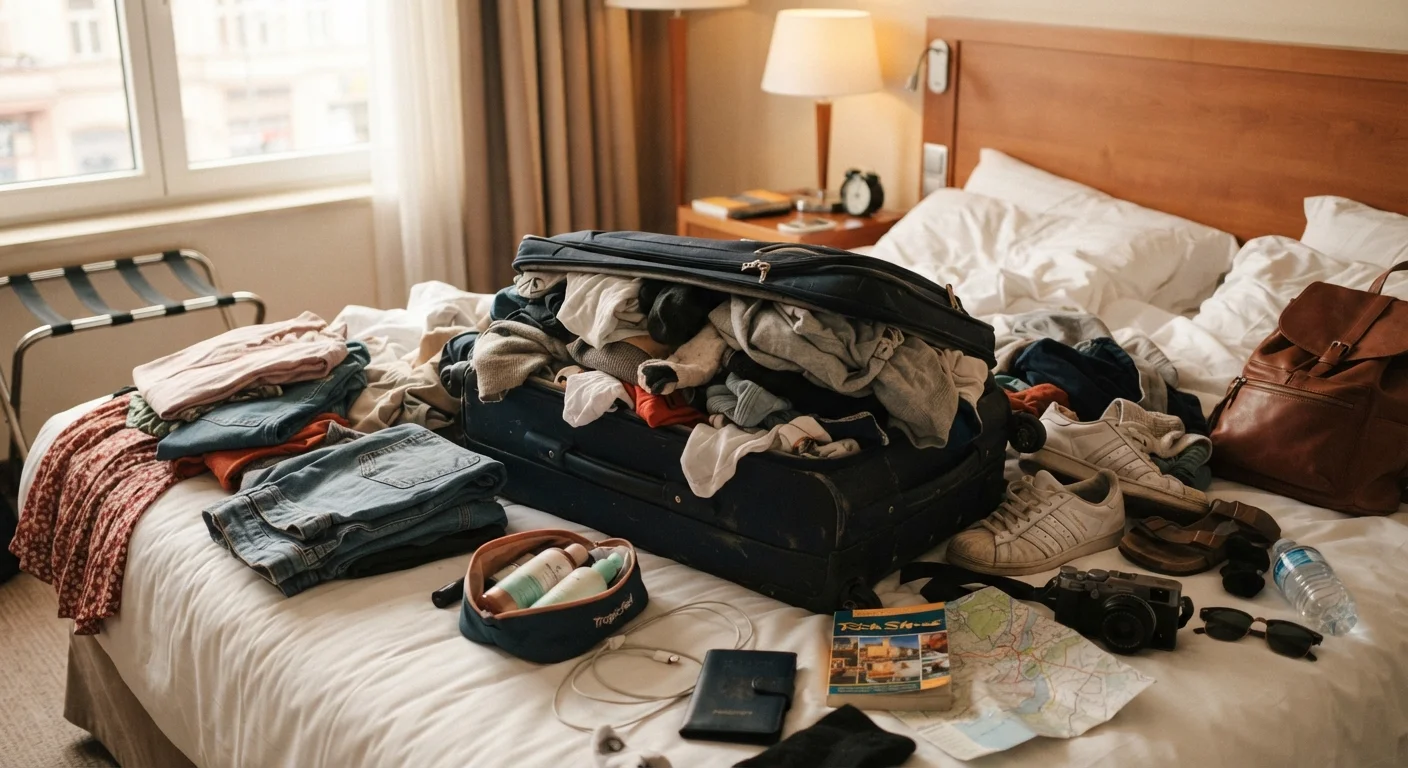
Photo: InsightsBlock.com | Access Information With Ease editorial
Key Takeaways
- Overpacking usually follows predictable patterns that are easy to fix once you recognize them.
- Packing for worst-case scenarios adds weight you'll carry every day but almost never use.
- Duplicate items, redundant shoes, and unused 'just in case' gear are the biggest hidden culprits.
- Re-wearing clothes and doing laundry on the road is often more practical than packing for every scenario.
- The return flight is when overpacking's real costs - fees, fatigue, frustration - finally hit home.
Why Overpacking Feels Invisible Until It's Too Late
The strange thing about overpacking is how reasonable it feels at home. Standing next to your open suitcase, every item seems justified. The extra jacket is for cold museums. The third pair of shoes covers dressy dinners. The full-size toiletry kit is just common sense. Then you drag that bag up a cobblestone street in 85-degree heat, and the logic evaporates fast.
Most travelers don't clock the real cost of overpacking until the return trip - when bags feel heavier from souvenirs, muscles ache, and checked-bag fees sting harder on the way home. The good news: overpacking rarely comes from random impulse. It follows repeating patterns, and once you spot them, they're surprisingly easy to break. For a deeper look at the mental shift involved, our beginner's guide to packing light walks through the core principles.
Packing for every possible weather scenario instead of the most likely one.
Bringing more shoes than days of activities actually require.
Filling empty bag space as a psychological reflex - 'there's room, so I should use it.'
Duplicating items already available at the destination or in your accommodation.
Treating a carry-on allowance as a target rather than a maximum.
Packing a 'just in case' medical and toiletry kit that doubles in size every trip.
The Patterns Worth Breaking Before Your Next Trip
Awareness alone doesn't fix overpacking - you need a concrete pre-trip habit. Before zipping your bag, pull everything out and ask: When specifically will I use this? If the answer is vague - "just in case" or "maybe if we go somewhere fancy" - that item is a candidate to leave behind.
~$30-$60
Average US domestic checked bag fee (each way)
Major US carriers typically charge per checked bag per direction, meaning a round trip with one checked bag can add $60-$120 to your base fare.
23 kg / 50 lbs
Standard checked bag weight limit on most US carriers
Exceeding this threshold commonly triggers overweight fees of $100 or more per bag - a cost that catches many returning travelers off guard.
Doing laundry mid-trip is one of the most underused strategies in travel. Most accommodations offer laundry facilities or access to nearby laundromats, and even a single wash cycle can halve the clothes you need to carry. It's worth factoring into your trip planning process from the start.
It also helps to think about the weight your bag adds to the entire journey - not just the flight. Every extra kilogram rides on your back through airports, transit connections, and city streets. Overpacking isn't just a packing problem; as this look at underrated trip enjoyment factors points out, physical comfort directly shapes how much you enjoy a destination. And if you're curious whether going all the way to one bag makes sense for your style, the tradeoffs of one-bag travel are worth weighing honestly before committing.
Souvenirs Need Space on the Way Home
The content provided on our blog site traverses numerous categories, offering readers valuable and practical information. Readers can use the editorial team’s research and data to gain more insights into their topics of interest. However, they are requested not to treat the articles as conclusive. The website team cannot be held responsible for differences in data or inaccuracies found across other platforms. Please also note that the site might also miss out on various schemes and offers available that the readers may find more beneficial than the ones we cover.