
Luggage Locks, TSA Standards, and What Security Screening Actually Involves

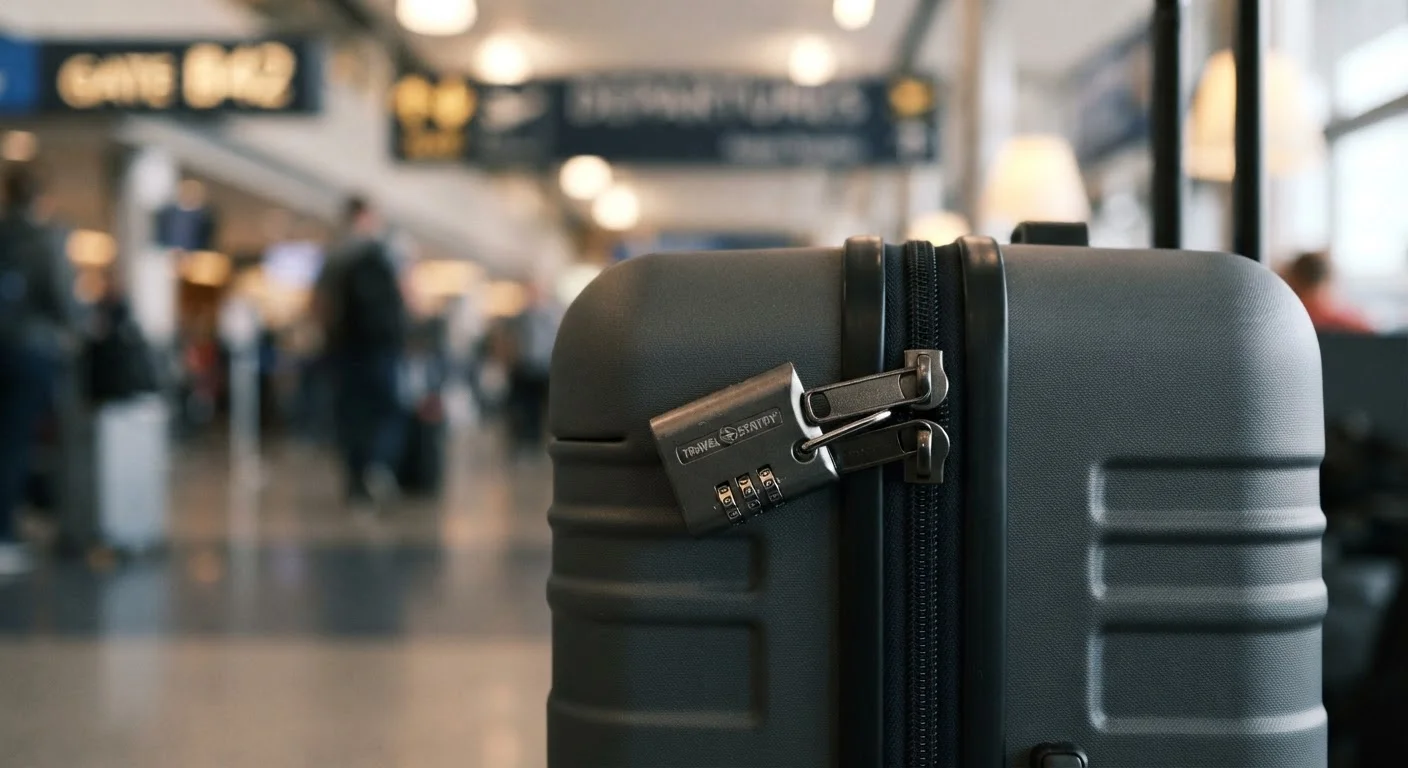
Photo: InsightsBlock.com | Access Information With Ease editorial
TSA-Approved Locks: What That Label Actually Means
A lock labeled TSA-approved (also called a Travel Sentry or Safe Skies recognized lock) contains a secondary keyway that Transportation Security Administration officers can open using a master key set. This allows agents to inspect a bag manually without cutting or destroying the lock itself.
| U.S. screening authority | Transportation Security Administration (TSA) (U.S. Department of Homeland Security) |
| Lock standard recognized by TSA | Travel Sentry or Safe Skies master-key system |
| What happens to non-TSA locks | May be cut off if manual inspection is required; no compensation provided (TSA.gov baggage policy) |
| Most checked bags physically opened? | No - automated EDS handles the majority; manual inspection is exception |
| TSA key system valid internationally? | Not universally - foreign agencies follow their own protocols |
| Inspection notification method | Paper 'Notice of Baggage Inspection' placed inside the bag (TSA standard procedure) |
Locks without this feature aren't forbidden, but if TSA needs to inspect a non-approved lock, agents are permitted to cut it off. You won't be compensated for a destroyed lock, and the agency is not required to replace it. If you're checking luggage and want a physical deterrent that survives screening, a TSA-recognized lock is the standard choice.
The lock does not guarantee your bag won't be opened - it only guarantees the lock won't be destroyed in the process. A paper notice placed inside your bag confirms when a manual inspection occurred.
How Airport Baggage Screening Actually Works
Checked luggage in the U.S. passes through automated EDS equipment - large CT-style scanners that produce three-dimensional images of bag contents. An algorithm flags anything that matches threat profiles; a human officer reviews flagged images and decides whether to open the bag.
Most bags are never physically touched. When manual inspection does happen, officers reseal the bag and leave a notice of inspection inside. Carry-on bags go through X-ray or CT scanners at the checkpoint, with the passenger present. Officers may ask you to remove items or swab for trace explosives.
Carry-On Locks Behave Differently
If you're traveling carry-on only and want to understand how your packing choices interact with the screening process, see our guide on carry-on only travel for practical context.
International Checkpoints: Different Rules Apply
TSA-recognized locks are a U.S. domestic standard. Outside the United States, security agencies have their own protocols and no obligation to honor Travel Sentry keys. At many international airports, checked bags are screened before check-in, after check-in, or both - and agents in those countries may cut any lock that impedes inspection.
For international trips, consider using a cable zip tie or a luggage strap as a tamper-evident seal rather than relying solely on a lock. Some travelers use a TSA-approved lock for the U.S. leg and a secondary solution abroad. Always verify entry and security requirements for your specific destination - rules change, and official government and airline sources are the authoritative reference. See our article on passports and visas for guidance on checking country-specific entry rules.
Medications and medical devices can add complexity at any checkpoint. Our guide on traveling with medications covers what documentation and packing practices generally help.
Practical Lock and Packing Guidance
A lock secures a zipper pull, not the bag itself - a determined thief can bypass most soft-shell zippers without touching the lock. This means your lock's primary job at the airport is tamper evidence and accidental opening prevention, not physical security. For luggage construction comparisons, our piece on hard-shell vs. soft-shell luggage walks through how each type holds up in transit.
When packing, organize contents so that a TSA officer can inspect and repack your bag without scrambling everything. Compression cubes and packing cells help; loose piles of clothing make manual inspections messier. For deeper packing strategy, see packing strategies frequent travelers actually use.
TSA-Approved Lock
A lock containing a secondary keyway recognizable by Transportation Security Administration master keys. Officers can open and relock the bag without damaging the lock. Also marketed under the Travel Sentry or Safe Skies trademarks.
EDS (Explosives Detection System)
Automated screening equipment used on checked baggage that uses CT-style imaging and algorithms to flag potential threats for human review.
Notice of Baggage Inspection
A paper form TSA places inside a bag after a manual inspection, informing the traveler that their luggage was opened and examined by a security officer.
Tamper-Evident Seal
A device - such as a cable tie or numbered plastic seal - that doesn't prevent opening but shows clearly if a bag has been accessed without the owner's knowledge.
Travel Sentry
A third-party organization that licenses a standardized master-key system to lock manufacturers and cooperates with TSA and some international security agencies to enable bag inspections without lock damage.
The content provided on our blog site traverses numerous categories, offering readers valuable and practical information. Readers can use the editorial team’s research and data to gain more insights into their topics of interest. However, they are requested not to treat the articles as conclusive. The website team cannot be held responsible for differences in data or inaccuracies found across other platforms. Please also note that the site might also miss out on various schemes and offers available that the readers may find more beneficial than the ones we cover.