
Whole Foods vs. Processed Foods: What the Difference Really Means for Your Diet

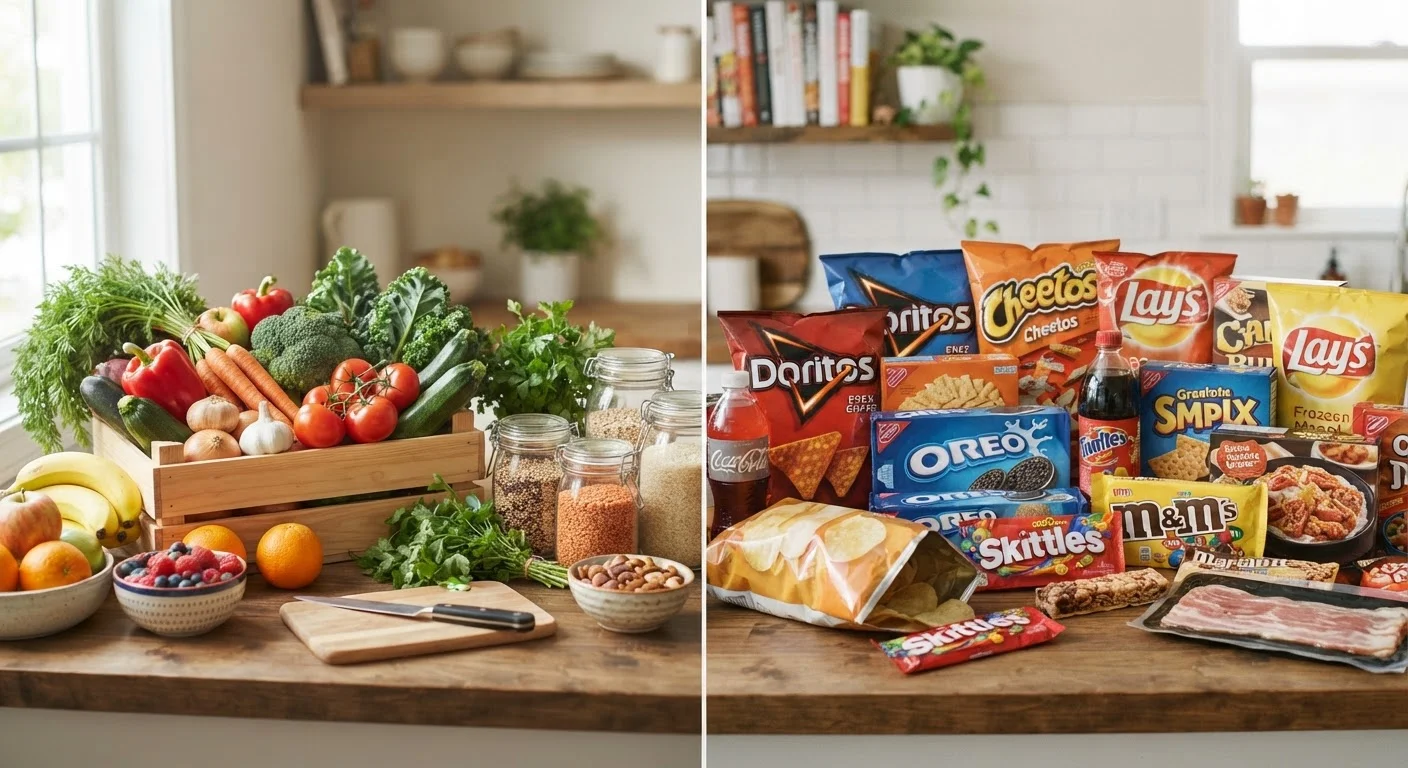
Photo: InsightsBlock.com | Access Information With Ease editorial
Key Takeaways
- Processing exists on a spectrum - not all processed foods are nutritionally equivalent or harmful.
- Whole foods generally retain more fiber, vitamins, and minerals than heavily processed alternatives.
- Ultra-processed foods are linked in research to poorer diet quality, though individual context matters.
- Reading ingredient lists alongside Nutrition Facts panels gives you the clearest picture of a food's quality.
- A practical diet can include both whole and minimally processed foods without eliminating either category entirely.
Defining the Terms: What Actually Counts as 'Processed'?
The term whole food refers to any food eaten in its natural or near-natural state - an apple, a handful of lentils, a piece of fresh fish, or a raw walnut. These foods have undergone little to no industrial alteration before reaching you. Their cellular structures, naturally occurring nutrients, and fiber are largely intact.
Processed food, by contrast, describes virtually any food that has been changed from its raw state through washing, cutting, cooking, fermenting, freezing, canning, or adding ingredients. Under this definition, nearly everything humans eat has been processed to some degree - including plain oats, pasteurized milk, and canned tomatoes.
Because this definition is so broad, nutrition researchers commonly use a more precise framework called NOVA, which classifies foods into four groups based on the extent and purpose of processing. The most critical distinction in this system is between minimally processed foods (frozen spinach, dried legumes) and ultra-processed foods - industrially formulated products that combine extracted substances like refined starches, added sugars, hydrogenated oils, synthetic flavors, and stabilizers in ways that no home cook could replicate.
A Note on the Word 'Processed'
Side-by-Side: How Whole and Processed Foods Compare
When you place whole and ultra-processed foods next to each other across nutritional criteria, consistent patterns emerge - though the comparison becomes more nuanced for minimally processed products in the middle of the spectrum.
| Criterion | Whole Foods | Processed Foods |
|---|---|---|
| Fiber content | Naturally intact; high in most plant foods | Often reduced or absent in ultra-processed products |
| Micronutrient density | High; vitamins and minerals in full matrix | Variable; may rely on fortification |
| Added sugars | None | Common in many packaged products |
| Sodium | Naturally low | Often elevated for preservation or flavor |
| Ingredient list length | Single ingredient | Ranges from a few to dozens of additives |
| Shelf life | Short; requires refrigeration or timely use | Extended; often months to years |
| Cost & convenience | Variable; can require more prep time | Often lower cost and ready-to-eat |
The most meaningful divergences involve fiber, micronutrient density, and added ingredients. Whole grains, for instance, retain their bran and germ - the parts richest in B vitamins, iron, and fiber. Refined flour used in most packaged products has had these layers stripped away, and while some nutrients are added back through fortification, the complete nutritional matrix is not restored. For a deeper look at how fiber types differ, see our guide on soluble and insoluble fiber.
Similarly, a whole orange delivers vitamin C, potassium, flavonoids, and fiber together - nutrients that interact in ways that isolated supplements or juice products don't fully replicate. This concept, sometimes called the food matrix effect, suggests the whole is more than the sum of its parts.
What the Research Says About Ultra-Processed Diets
Over the past decade, a substantial body of epidemiological research has examined associations between ultra-processed food consumption and markers of health. Large observational studies - including analyses from cohorts in Europe, the US, and Brazil - have found that higher ultra-processed food intake is consistently associated with lower overall diet quality, and in some studies, with higher rates of cardiovascular disease, type 2 diabetes, and obesity.
57%
Share of US calories from ultra-processed foods
Research published in BMJ Open estimated that ultra-processed foods account for roughly 57% of daily caloric intake among US adults.
4x
Higher added sugar from ultra-processed sources
Studies using NHANES data have found that ultra-processed foods contribute approximately four times more added sugar to the diet than other food categories combined.
It is important to interpret these findings carefully. Most of this research is observational - it identifies associations, not proven causal relationships. People who consume more ultra-processed foods may also differ in other lifestyle factors. That said, the breadth and consistency of findings across diverse populations has prompted major dietary guidelines organizations to recommend limiting ultra-processed intake.
Understanding what those products contain is often the clearest entry point. Reading a Nutrition Facts label carefully - particularly the ingredient list - reveals the added sugars, sodium levels, and additive counts that distinguish a lightly processed food from an ultra-processed one. The difference between added and natural sugars on labels is one of the most useful things a shopper can learn to spot.
Practical Takeaways: Building a Diet That Works
Most nutrition experts do not advocate for a zero-processed-food approach - partly because it is impractical, and partly because many processed foods (plain canned beans, pasteurized dairy, frozen vegetables without added sauces) offer genuine nutritional value at lower cost and greater convenience than their fresh counterparts.
A workable framework many dietitians suggest: prioritize whole and minimally processed foods as the foundation of meals, and treat highly processed items as occasional additions rather than dietary staples. This doesn't require perfection or expensive specialty groceries - it simply means that the majority of what's on your plate most days has a short, recognizable ingredient list.
Protein choices are one area where this distinction frequently comes up. Whole food protein sources - eggs, legumes, fish, poultry - behave quite differently in the diet from heavily processed meat products. Our comparison of animal and plant protein sources explores those differences in detail.
This article is for general informational and educational purposes only and is not a substitute for professional medical or dietary advice. Consult a registered dietitian or qualified healthcare provider before making significant changes to your diet, especially if you have a chronic health condition or specific nutritional needs.
The content provided on our blog site traverses numerous categories, offering readers valuable and practical information. Readers can use the editorial team’s research and data to gain more insights into their topics of interest. However, they are requested not to treat the articles as conclusive. The website team cannot be held responsible for differences in data or inaccuracies found across other platforms. Please also note that the site might also miss out on various schemes and offers available that the readers may find more beneficial than the ones we cover.