
Vertical Space: The Most Overlooked Storage Resource in Any Room

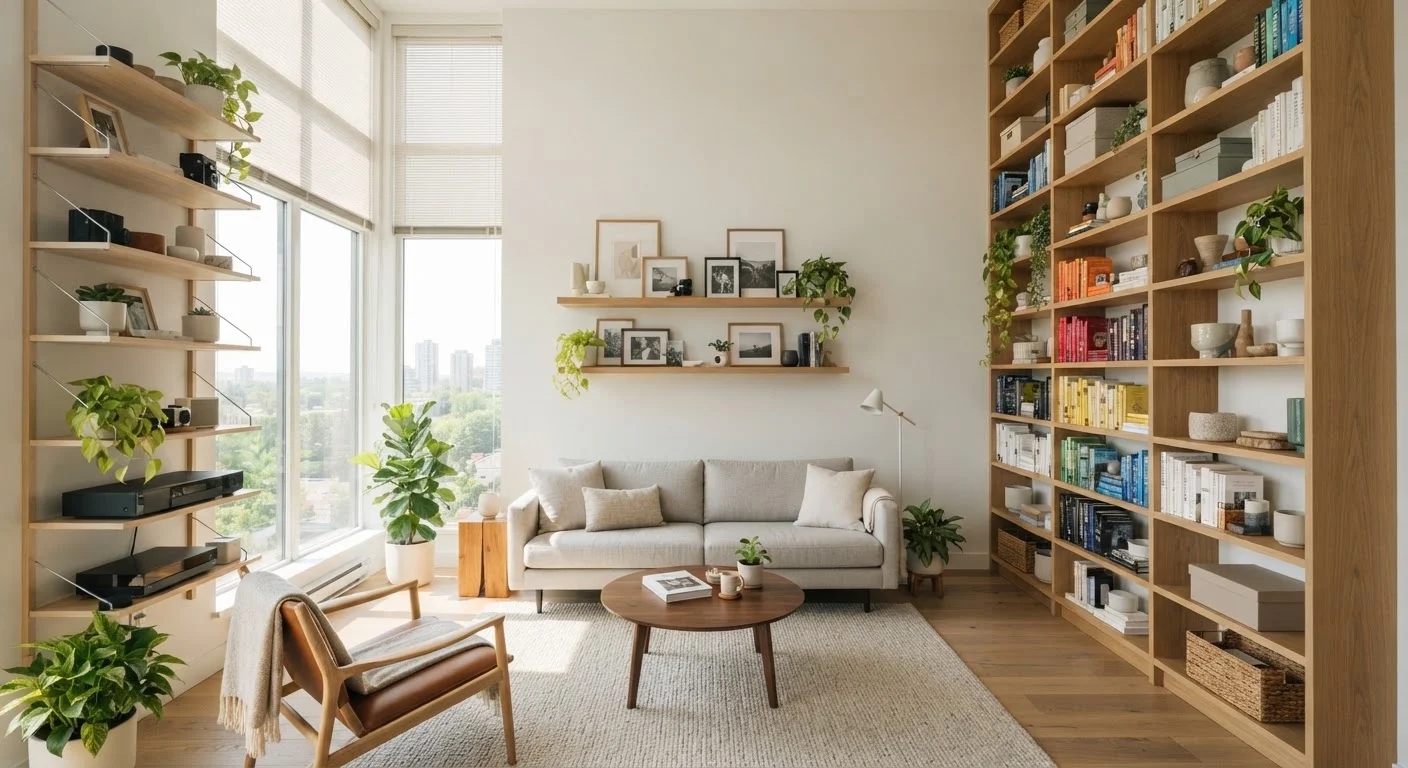
Photo: InsightsBlock.com | Access Information With Ease editorial
Key Takeaways
- Most rooms have several feet of unused wall space above eye level that can hold shelving or hooks.
- Vertical storage solutions range from renter-friendly adhesive options to more permanent wall-mounted systems.
- Door backs, stair walls, and corners are frequently overlooked zones worth evaluating first.
- Stacking storage upward frees floor space, which makes rooms feel larger and easier to clean.
- Low-cost vertical storage changes can often be made without professional help or major renovation.
Why Vertical Space Goes Unused
Walk into almost any room in a typical home and you'll notice the same pattern: furniture and clutter spread across the floor while the upper two-thirds of the walls sit completely empty. This isn't laziness - it's a gap in how most people mentally map their space. We naturally think in terms of surfaces we can reach, and everything above roughly five feet tends to disappear from our planning.
The result is that the average room has significantly more usable storage capacity than its occupants realize. Reclaiming vertical space doesn't require gutting a room or hiring a contractor. For many households, it's a matter of shifting perspective and making a handful of targeted changes. Whether you rent or own, work with a large home or a small apartment, the wall above your furniture is almost certainly an untapped resource.
For readers also working with a limited budget, our guide to home organization on a tight budget covers complementary strategies that pair well with the approaches below.
Mount shelves well above furniture height
Standard shelving is often installed at or just above furniture level, which wastes the space between the top of the shelf and the ceiling. Mounting shelves higher - even near the ceiling - creates room for items you access less frequently: seasonal décor, backup supplies, reference books, or archive boxes.
In rooms with 8-foot or higher ceilings, it's common to fit two or three additional shelf rows above a standard bookcase. Floating shelves work well here because they don't add visual bulk. Keep frequently used items lower; use upper shelves for things you rotate seasonally or need only occasionally.
Every foot of wall above your furniture line is a shelf waiting to be claimed.
Use the backs of doors
Interior door backs are one of the most overlooked surfaces in any home. A standard interior door offers roughly 18 by 80 inches of usable space - enough for an over-door organizer, hooks, small shelving, or pocket storage for everything from cleaning supplies to shoes to pantry overflow.
Over-door solutions are particularly useful in rentals because most require no drilling. In bathrooms, door backs can hold towels, toiletries, and hair tools. In kitchens, they're a natural home for foil, bags, and wraps. In bedrooms, they can manage accessories, belts, or bags that would otherwise pile up on chairs or floors.
A door back holds as much as a small cabinet - and costs a fraction of the price.
Stack storage vertically in closets
Most closets ship with a single rod and one shelf above it - a layout that fails to use the full height of the space. Adding a second hanging rod below shorter items (like folded shirts or jackets), stacking drawers, or installing additional shelving above the existing rod can roughly double a closet's effective capacity without changing its footprint.
Closet organization is a well-developed discipline in its own right. For a deeper look at the structural principles that keep closets functional long-term, see our guide to closet organization fundamentals.
Doubling up hanging rods in a standard closet can effectively halve your crowding problem.
Hang pegboards and wall rails in work areas
In garages, workshops, laundry rooms, and kitchens, pegboards and wall-mounted rail systems move tools, supplies, and equipment off counters and workbenches and onto wall surfaces where they're visible and accessible. This approach is especially effective because it keeps frequently used items within arm's reach while freeing horizontal surfaces for actual work.
Pegboards can be cut to fit almost any wall space and are easy to reconfigure as your needs change. Wall-mounted rail systems with interchangeable hooks and bins are similarly adaptable. Both options are generally far less expensive than adding cabinetry and can be installed without professional help in most cases.
Clearing a workbench by moving tools to the wall above it doubles your usable workspace.
Install tall, narrow shelving in dead corners
Room corners - especially those flanking windows, fireplaces, or doorways - are frequently left empty because standard furniture doesn't fit them well. Tall, narrow shelving units or custom corner shelves can turn these awkward zones into meaningful storage without encroaching on circulation paths or making a room feel crowded.
Corner shelving works particularly well in living rooms, home offices, and bathrooms, where floor space is often at a premium. A five- or six-shelf unit that reaches close to ceiling height can store a substantial amount while occupying only a small footprint. In shared spaces, this kind of targeted addition can reduce surface clutter that tends to cause friction between housemates - a subject explored more fully in our guide to organizing shared spaces.
Corners are structurally ideal for tall, narrow shelving that goes largely unnoticed until you need it.
Use wall-mounted hooks and hanging systems strategically
Hooks are the simplest and lowest-cost vertical storage tool available. Mounted on walls, inside cabinet doors, or on the sides of furniture, they can handle everything from bags and coats to kitchen utensils to garden tools. The key is placement: hooks positioned at or just above eye level near points of use - entryways, beside the stove, next to a workbench - become natural habits rather than afterthoughts.
Grouped hooks on a board or rail create a more intentional, organized look than scattered individual hooks. For renters, adhesive-backed hooks rated for the appropriate weight can avoid wall damage while still providing meaningful capacity. Verify weight ratings carefully and follow manufacturer instructions for surface preparation to get reliable hold.
Hooks placed at the point of use create habits - items get hung up because it's simply the easiest option.
Putting It Into Practice
The most effective approach is to audit one room at a time. Stand in the doorway and look at each wall as a grid - note where usable space starts and where the ceiling ends. Most people are surprised to find two to four feet of empty wall above their tallest furniture in nearly every room.
Start with the room that frustrates you most
If you're weighing whether to commit to permanent built-ins or prefer flexible freestanding options, the comparison of built-in shelving versus freestanding units walks through the trade-offs in detail. And if you're setting up a space for the first time, home organization basics for first-time renters offers a solid foundation to build from.
Vertical storage works best when it's matched to the specific habits and items of each room. The goal isn't to fill every inch of wall - it's to move the right things off the floor and out of high-traffic areas so your space functions more smoothly every day.
The content provided on our blog site traverses numerous categories, offering readers valuable and practical information. Readers can use the editorial team’s research and data to gain more insights into their topics of interest. However, they are requested not to treat the articles as conclusive. The website team cannot be held responsible for differences in data or inaccuracies found across other platforms. Please also note that the site might also miss out on various schemes and offers available that the readers may find more beneficial than the ones we cover.