
Built-In Shelving vs. Freestanding Units for Home Storage

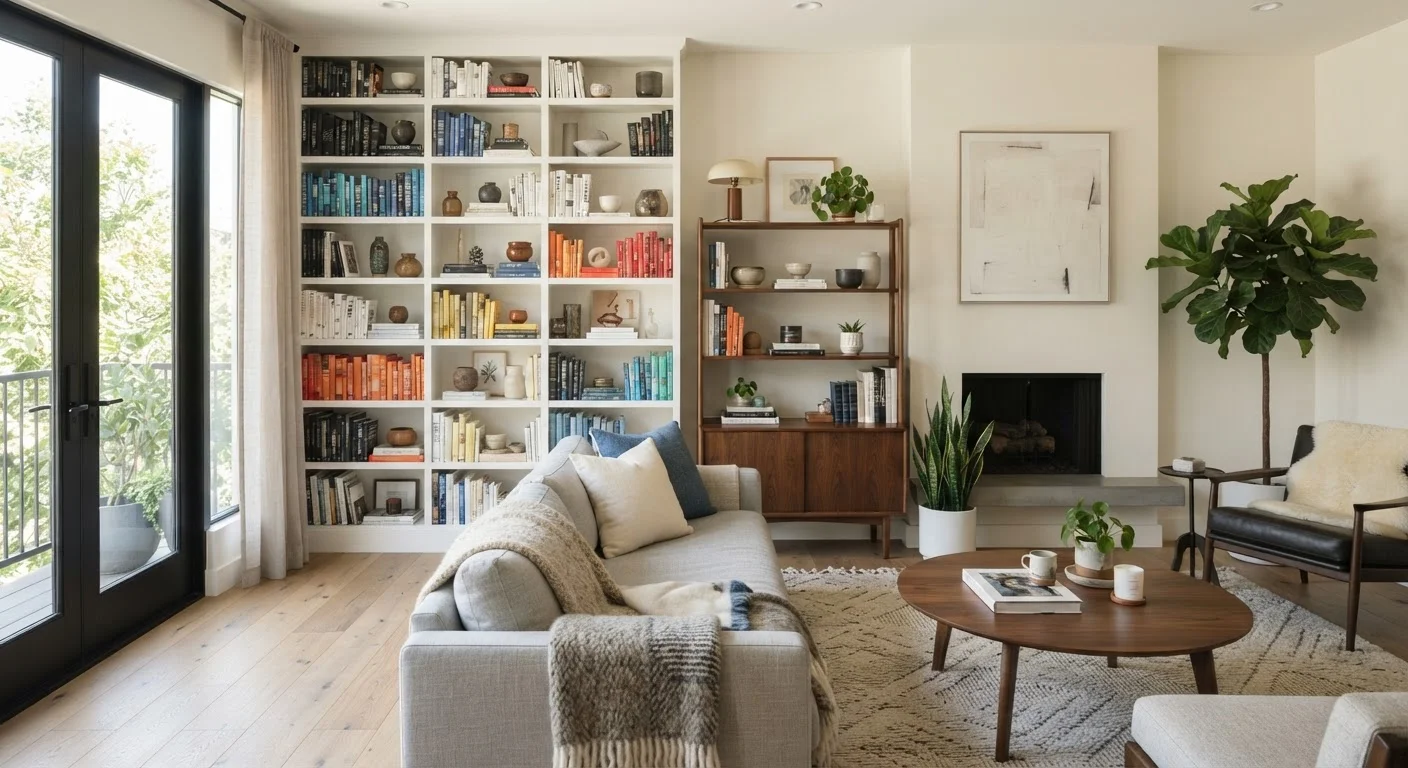
Photo: InsightsBlock.com | Access Information With Ease editorial
Key Takeaways
- Built-in shelving adds permanent storage and can increase a home's perceived value, but requires significant upfront investment.
- Freestanding units are flexible, portable, and far less costly, making them ideal for renters or frequently changing spaces.
- The right choice depends on your budget, whether you own or rent, and how long you plan to stay in the space.
- Wall-mounted built-ins require proper anchoring into studs or with rated hardware - always verify load capacity before loading shelves.
- A hybrid approach - combining fixed built-ins in permanent zones with movable units elsewhere - often delivers the most practical outcome.
What Separates These Two Approaches
Built-in shelving is constructed or permanently fixed to your walls, floor, or ceiling - typically by a carpenter or skilled DIYer. It's designed to fit a specific space, which means it can fill an alcove exactly or run floor-to-ceiling without wasted gaps. Once installed, it stays put.
Freestanding units, by contrast, are self-supporting structures that stand independently of your walls. They can be repositioned, taken apart, or moved to a new home entirely. Most are assembled from flat-packed components without professional help.
Both options address the same core problem - not enough storage - but through fundamentally different means. Understanding those differences is what makes the choice clear for your situation. For a broader look at where storage opportunities often go untapped, see our guide to using vertical space effectively.
The Case for Built-In Shelving
The primary advantage of built-ins is fit. A carpenter can design shelving to occupy every inch of an alcove, wrap around a chimney breast, or accommodate irregular ceiling heights that would leave a freestanding unit looking awkward and undersized. This custom fit typically translates to more usable storage per square foot.
Built-ins also tend to feel more intentional - they read as part of the architecture rather than furniture placed in front of it. For rooms where aesthetics matter, this integration can be significant.
On the financial side, built-in storage is generally considered a value-adding feature by real estate professionals, though outcomes vary widely by market, scope, and quality of installation. This is a long-term consideration rather than a guaranteed return.
Plan Your Built-In Layout Before Committing
The trade-offs are real. Professional installation carries labor costs that freestanding alternatives simply don't. Built-ins also require commitment: removing them later means patching walls, repainting, and potentially refinishing floors. Before committing, consider whether you plan to stay in the space long enough to justify that investment.
Any installation that involves anchoring into walls should follow proper load-bearing practices. Our article on drywall anchors vs. studs explains when each method is appropriate and how to avoid common mistakes.
The Case for Freestanding Units
Freestanding shelving wins on flexibility and cost. Most units can be assembled in under an hour, require no wall modifications, and can be reconfigured or relocated as your needs change. For renters, this is often the deciding factor - lease agreements frequently prohibit permanent wall alterations, and security deposit concerns make built-ins impractical.
Cost accessibility is another key advantage. Freestanding units span a wide price range, making storage improvements achievable on almost any budget. Our guide to home organization on a tight budget explores how to maximize these options without overspending.
Freestanding units are also adaptable to life changes. A bookcase in a living room can become a pantry unit, a garage shelf, or a child's bedroom organizer as household needs evolve.
Anchor Tall Freestanding Units - Always
The limitations are worth noting. Freestanding units generally can't match the seamless fit of custom built-ins, particularly in rooms with alcoves or sloped ceilings. Tall freestanding units should always be anchored to a wall stud using an anti-tip strap - this is a basic safety requirement, not optional, especially in homes with children.
Side-by-Side Comparison
The table below summarizes how both approaches compare across the criteria most households care about.
| Built-In Shelving | Freestanding Units | |
|---|---|---|
| Upfront cost | Higher - materials plus labor | Lower - assembly only |
| Installation complexity | Moderate to high; often needs professional | Low; most require no tools |
| Flexibility / portability | Permanent; not movable | Fully portable and reconfigurable |
| Space efficiency | Excellent; custom-fit to room | Good; limited by standard dimensions |
| Suitable for renters | Rarely - lease restrictions apply | Yes - no wall modifications needed |
| Aesthetic integration | High; reads as part of architecture | Moderate; furniture-like appearance |
| Long-term home value | Potential upside for owners | No direct impact on property value |
| Removal difficulty | Requires patching and repainting | Disassemble and relocate freely |
Making the Right Choice for Your Space
Start by asking three questions: Do you own or rent? How long do you expect to stay? What is your realistic budget for storage?
Owners planning to stay five or more years in a home with distinct storage challenges - an odd-shaped alcove, a wall of unused space in a home office, a garage with no built-in storage - are likely to get good value from built-ins. Renters, or those in transition, are almost always better served by quality freestanding units that move with them.
A hybrid strategy works well for many households: use built-ins in one or two high-priority, permanent zones (a home office, a mudroom) and rely on freestanding units elsewhere. This balances permanence with adaptability.
If you're starting from scratch in a new space, our guide on home organization basics for first-time renters walks through foundational decisions that apply whether or not you're renting. And for any room where a closet is involved, the principles in closet organization systems that function well apply regardless of which shelving type you choose.
The content provided on our blog site traverses numerous categories, offering readers valuable and practical information. Readers can use the editorial team’s research and data to gain more insights into their topics of interest. However, they are requested not to treat the articles as conclusive. The website team cannot be held responsible for differences in data or inaccuracies found across other platforms. Please also note that the site might also miss out on various schemes and offers available that the readers may find more beneficial than the ones we cover.