
Zoning vs. Categorizing: Two Different Ways to Organize a Room

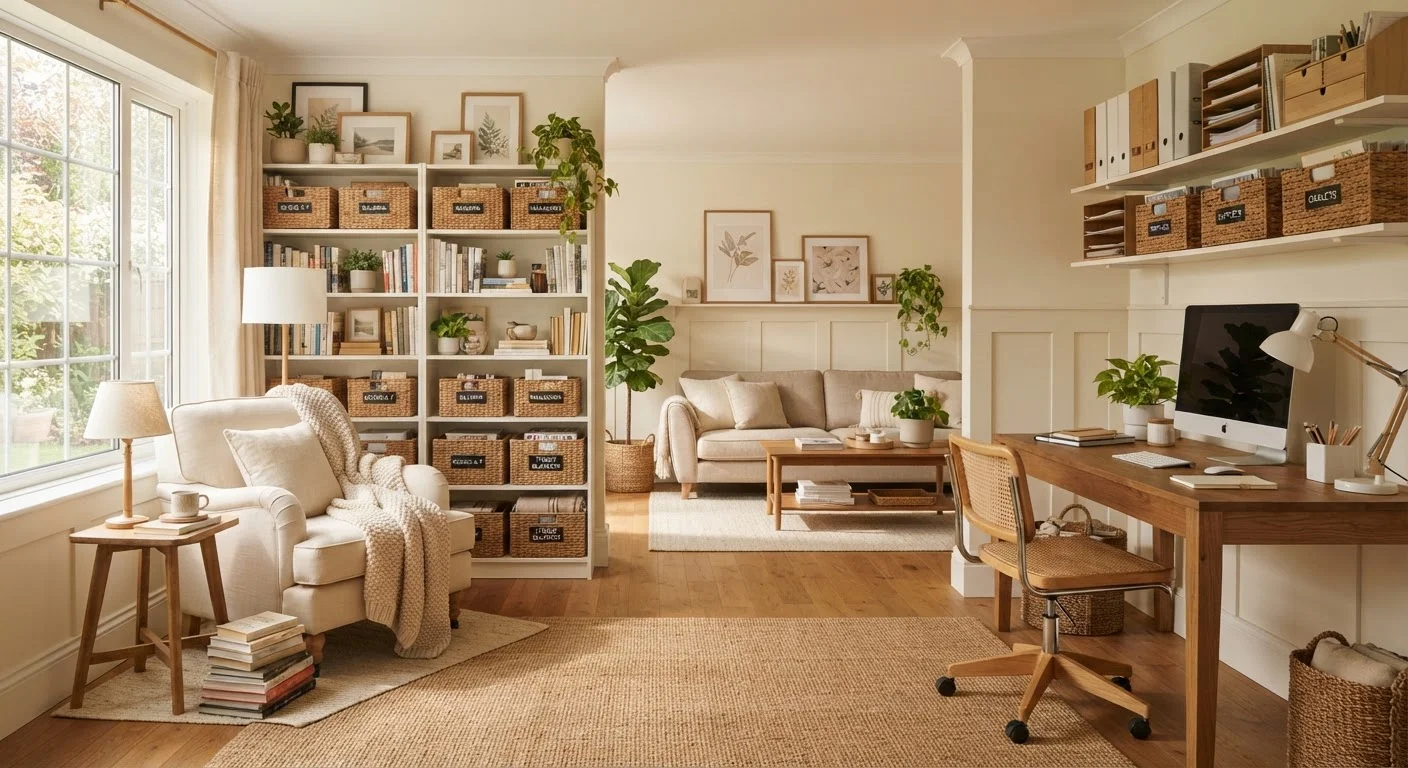
Photo: InsightsBlock.com | Access Information With Ease editorial
Key Takeaways
- Zoning organizes by location - items live where they're used, not where they're stored by type.
- Categorizing groups items by what they are, creating centralized storage for each object type.
- Neither method is universally superior; the best choice depends on how your household actually moves through space.
- Many homes benefit from combining both approaches in different rooms or contexts.
- Both methods work best when the whole household understands and agrees on the system.
What Zoning Actually Means
Zoning assigns storage based on where an activity happens, not what the item is. A zone-based room contains everything needed for a specific task within arm's reach of where that task occurs. The junk drawer near the front door that holds keys, pens, and small tools isn't disorganized - it's a zone. Its logic is location, not category.
This approach mirrors how people naturally move through a home. You charge your phone where you sleep. You keep scissors near the wrapping paper. You store dish towels next to the sink. Zoning formalizes those instincts into a deliberate system.
The biggest advantage of zoning is low friction. When an item lives exactly where it's used, putting it back requires almost no conscious effort. That's a meaningful benefit in shared households, where organizers often spend more energy convincing others to maintain systems than building them. For more on creating systems that hold up with multiple people, see managing shared spaces.
Zoning can create redundancy, though. If scissors belong in three zones - office, kitchen, and craft corner - you may need three pairs. That's a trade-off worth considering upfront.
| Criterion | Zoning | Categorizing |
|---|---|---|
| Organizing logic | Where items are used | What type of item it is |
| Best environment | Shared or active households | High-volume or inventory-heavy spaces |
| Ease of maintenance | High - items return to point of use | Moderate - requires consistent sorting |
| Item duplication | Likely - multiples needed per zone | Minimal - one location per category |
| Setup complexity | Low - mirrors existing habits | Higher - requires pre-sorting |
| Inventory visibility | Lower - items spread across room | Higher - all of a type in one place |
What Categorizing Actually Means
Categorizing groups items by what they are, creating a central home for each type. All batteries live in one drawer. All gift-wrapping supplies occupy one bin. All first-aid items sit on one shelf. The logic is taxonomic - the category defines the location, not the activity.
This method shines in spaces with high item volume and where you need to take stock quickly. A well-categorized pantry makes it obvious you have four cans of chickpeas before you buy a fifth. A categorized linen closet lets you grab the right sheet size without unfolding three others first.
The challenge is retrieval speed for items that cross categories - where do rechargeable batteries that belong to your kid's toys go? The toy zone or the battery category? These edge cases require agreed-upon rules, or the system quietly breaks down. Closet organization principles apply here: any system needs clear decision rules to stay functional over time.
23 min
Average daily time spent searching for items
Research cited by organizational studies suggests Americans lose significant time locating misplaced household items each day, underscoring how much the right system matters.
80%
Of clutter stems from disorganization, not lack of space
Professional organizers widely note that most household clutter is a system problem, not a storage-space problem - meaning method matters more than square footage.
Choosing the Right Approach for Each Room
Most homes benefit from applying both methods strategically rather than choosing one universally.
- Living rooms and bedrooms typically respond well to zoning - charging areas, reading corners, and hobby nooks each have their own contained logic.
- Kitchens and pantries often work better with categorizing - grouping baking supplies, canned goods, or spices makes cooking and restocking faster.
- Garages and storage rooms can use a hybrid: zones for projects (car maintenance, gardening) with categories inside each zone (hardware type, seed variety).
If you're working with a limited budget, the approach you choose affects what storage products you actually need. Zoning usually requires fewer containers because items are dispersed across the room naturally. Categorizing may call for more labeled bins or dividers to keep types separated. Either way, low-cost organizing strategies can support both methods without expensive systems.
For first-time renters or anyone starting fresh, zoning is typically the easier entry point - it requires no pre-sorting and aligns with behavior you already have. See home organization basics for new renters for a fuller starting framework.
The content provided on our blog site traverses numerous categories, offering readers valuable and practical information. Readers can use the editorial team’s research and data to gain more insights into their topics of interest. However, they are requested not to treat the articles as conclusive. The website team cannot be held responsible for differences in data or inaccuracies found across other platforms. Please also note that the site might also miss out on various schemes and offers available that the readers may find more beneficial than the ones we cover.